Get Full Government Meeting Transcripts, Videos, & Alerts Forever!
Get email alerts on the Indigent Defense topic
No spam. Unsubscribe anytime.
State public defender outlines expanded role in indigent defense and Racial Justice Act work
Summary
The Office of the State Public Defender told a California Senate budget subcommittee that it represents capital appeals, supports county public defenders through training and capacity building, and has seen a sharp rise in public-records requests tied to retroactive Racial Justice Act work.
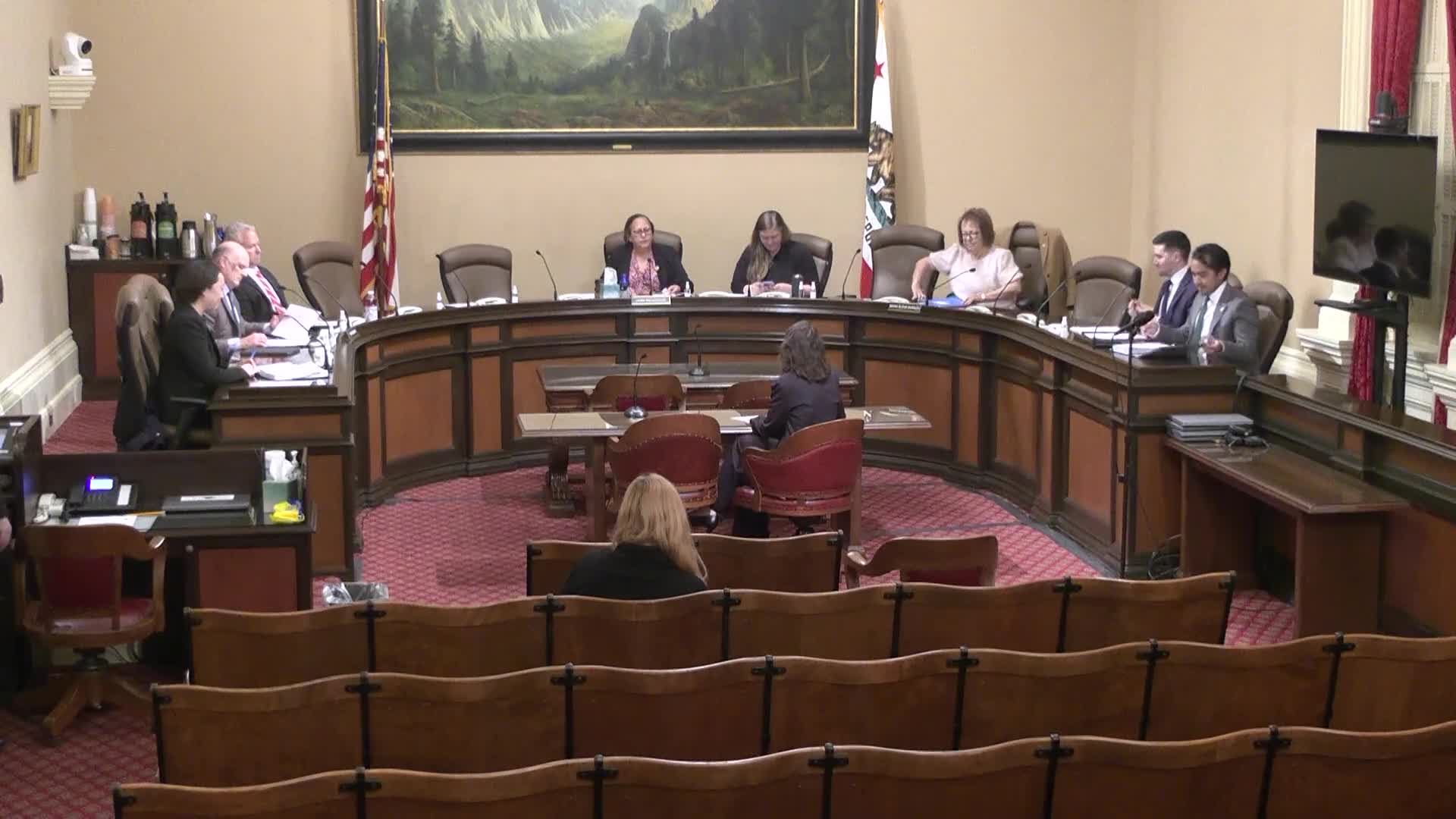
The Office of the State Public Defender told the California State Senate Budget Subcommittee No. 5 on Thursday that it has two core mandates: representing people on appeals, including capital cases, and supporting local public defender systems through training and technical assistance.
"The Office of the State Public Defender is an independent agency. We have 2 primary mandates. First, our lawyers represent people on appeals, primarily those sentenced to death," Gallit Lipa, a representative from the Office of the State Public Defender, told the panel. She added: "The cases that OSPD works on are, incredibly complex and multifaceted. Our lawyers are true experts on California criminal law."
Lipa said OSPD also provides statewide training, files amicus briefs, holds moot courts and offers technical assistance to policy makers. She described a newer duty, formed around 2021, to help counties that lack institutional public defender offices; she said 24 counties in California do not have institutional public defender systems and that OSPD works with small and rural counties on capacity building.
Lipa discussed the office's work on implementation of the Racial Justice Act (RJA), which the office said initially applied to capital defendants and then was expanded retroactively. "As RJA implementation has expanded, to more groups, our agency has become a resource and training hub for attorneys," she said, and added that the office has seen "more than a a tenfold" increase in California Public Records Act (CPRA) requests tied to that work.
Committee members asked about the office's data and public access. Lipa said OSPD collects sentencing data from CDCR and various counties and that some data are public now, with work ongoing to increase availability. She agreed to share links and materials with the committee and to provide additional detail on the office's Indigent Defense Improvement Division, which she described as having two programs: training and capacity building.
The committee chair noted interest in a fuller presentation on Proposition 36 impacts and other workload items before final budget decisions. The subcommittee did not take a formal vote on any budget item during the OSPD overview.
The OSPD testimony and the committee’s questions focused on staffing, data availability, training and the effect of expanded RJA implementation on the office’s workload and CPRA demand.