Get Full Government Meeting Transcripts, Videos, & Alerts Forever!
Get email alerts on the Syria Humanitarian Aid topic
No spam. Unsubscribe anytime.
UN coordinator says 16.5 million Syrians need aid as returns rise and funding lags
Summary
Adam Abdulmullah, UN resident coordinator and humanitarian coordinator for Syria, briefed reporters by video from Damascus that 16.5 million people in Syria need humanitarian assistance, returns have increased since Dec. 2024, and large funding shortfalls threaten relief and recovery efforts.
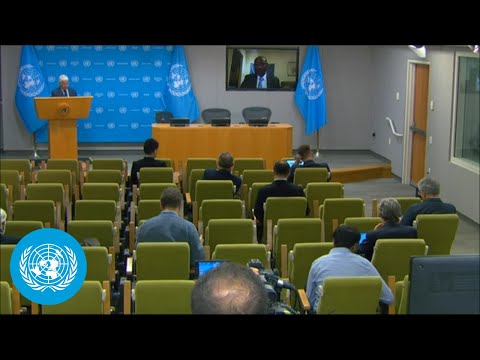
Adam Abdulmullah, the United Nations resident coordinator and humanitarian coordinator for Syria, told reporters in a video teleconference from Damascus that 16.5 million people in Syria need humanitarian assistance and that urgent funding shortfalls are limiting relief and recovery efforts.
"Syria stands at a critical turning point," Abdulmullah said, summing up changes since Dec. 8 and urging immediate support to avoid further suffering. He said 14 years of conflict have left widespread destruction of homes, infrastructure and services, and that land mines and explosive remnants of war remain an everyday threat.
Abdulmullah gave updated figures for population movements and needs. He said about 1.2 million people have returned to areas of origin since December 2024, including roughly 885,000 internally displaced persons and 302,000 refugees. He said only about 100,000 of an estimated 2 million internally displaced persons (IDPs) from northwest Syria have returned, citing lack of services, security risks and missing legal documents. He said UNHCR projects that as many as 3.5 million refugees and IDPs could return if hostilities continue in parts of the country.
The coordinator said hostilities and economic hardship are constraining humanitarian access and recovery. He reported more than 600 casualties from mines and explosive remnants since December and said recent violence in coastal areas has killed and injured hundreds and damaged health facilities.
On the scale of need and funding, Abdulmullah said the 2024 humanitarian response plan appealed for about $4.1 billion and received roughly 35.6% of that request. He said the January–March 2025 response plan was about 11.7% funded. For January–June 2025 he said about $2 billion is urgently needed to support 8 million people; he added that only about 10% of the required funds for that period had been secured.
Abdulmullah described humanitarian operational changes since Dec. 8. He said access has improved in former front-line areas such as Idlib, Latakia and eastern Aleppo, noting a sharp year‑over‑year increase in cross‑border truck movements from Türkiye. He said about 678 trucks have crossed from Türkiye so far this year, a roughly sevenfold increase from 2024. He said the UN is restructuring coordination and plans a unified Damascus-based coordination mechanism by mid‑2025 to replace the previous ‘‘whole of Syria’’ model.
To move beyond short-term relief, Abdulmullah outlined the UN’s Transitional Action Plan (TAP), which he said aims to reduce poverty and inequality, support refugee and IDP reintegration, strengthen governance and the rule of law, and drive economic recovery. He urged donors to increase funding and cited the recent donor conference in Brussels as evidence of international generosity. He also called for easing of sanctions that limit market access and economic prospects, and for locally led, transparent recovery efforts.
Reporters asked questions about specific operational issues. In response to a question about the coastal area, Abdulmullah said movement of humanitarian personnel depends on government approvals and that colleagues from several UN agencies and security teams had visited the area. He said humanitarian actors had relocated staff and dependents to two locations, in Tartus and As‑Suwayda, and that humanitarian support continued despite reported Israeli incursions in the south.
On Northeast Syria, Abdulmullah said OCHA (the UN Office for the Coordination of Humanitarian Affairs) now leads coordination in the entire northeast, with the deputy head of the OCHA country office based there. He identified funding shortfalls as the biggest obstacle in the northeast, saying that many international NGOs closed operations after U.S. funding freezes and that he had released $7 million from the Syria Humanitarian Fund to help fill immediate gaps.
He said the UN had asked field teams to assess conditions for returns to Afrin (Efrin) because that area is still experiencing military activity. On border crossings, Abdulmullah said the caretaker government had renewed authorization for three crossings with Türkiye — Bab al‑Hawa, Al‑Rai and Bab al‑Salama — for UN humanitarian operations, and that crossing points with Jordan will be open 24 hours a day starting next week. He said Iraq has not been a major supply route in the past decade but that plans exist to expand a small hub on the Iraqi side to support northeast operations.
Abdulmullah closed by warning that the cost of inaction would be higher than responding now to immediate and medium‑term needs. "The cost of inaction," he said, "is much more expensive than responding to the immediate and medium‑term needs of the Syrian people."