Get Full Government Meeting Transcripts, Videos, & Alerts Forever!
Get email alerts on the Speed Monitoring Administration topic
No spam. Unsubscribe anytime.
Bill would let technicians certify speed monitoring systems to free officers for policing duties, sponsors say
Summary
SB 390 would remove the requirement that law enforcement officers certify speed monitoring systems and allow trained technicians to perform certifications; sponsors argued this responds to law-enforcement staffing shortages.
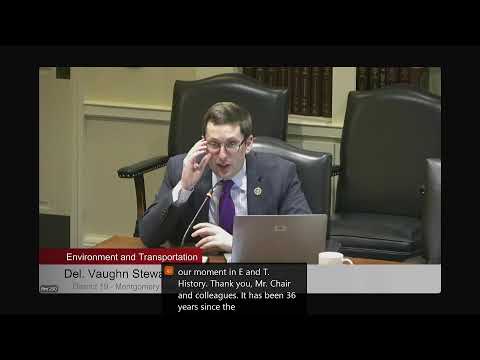
Senator (Chair) Smith presented SB 390 to the Environment and Transportation Committee and asked for a favorable report. The bill would remove the statutory requirement that a speed monitoring system be certified by a law enforcement officer and instead permit technicians to perform certification tasks.
Senator Smith told the committee that Maryland has about 150 law enforcement agencies with roughly 18,000 sworn officers and that many jurisdictions face vacancy rates (the sponsor cited Montgomery County at 13% and Baltimore City at 24% vacancies). The sponsor said allowing technicians to certify systems would let sworn officers focus on core law enforcement duties and public safety instead of administrative certification work.
A committee member briefly asked a separate procedural question about an unrelated bill (Idaho stop), and Senator Smith indicated colleagues would run that measure. The sponsor stood by to answer additional questions but no other substantive challenges or amendments were discussed in the hearing record.
Why it matters: The change would shift certification responsibilities from sworn officers to trained technicians, potentially speeding program administration where staffing shortages exist.
Next steps: The sponsor requested a favorable report; the transcript contains no committee vote or detailed implementation plan.