Get Full Government Meeting Transcripts, Videos, & Alerts Forever!
Get email alerts on the Speed Cameras topic
No spam. Unsubscribe anytime.
Delegation seeks speed cameras on I-695 and I-83 in Baltimore County; bill limits and revenue uses outlined
Summary
Delegates and senators presented cross-file bills to authorize speed-monitoring cameras on Baltimore County portions of I-695 and I-83, outlining camera limits, siting rules tied to crash risk, signage requirements and allowable uses of revenue.
Delegates and senators representing Baltimore County urged the House Environment and Transportation Committee to approve legislation authorizing speed monitoring systems on the county stretches of Interstate 695 (the Baltimore Beltway) and Interstate 83.
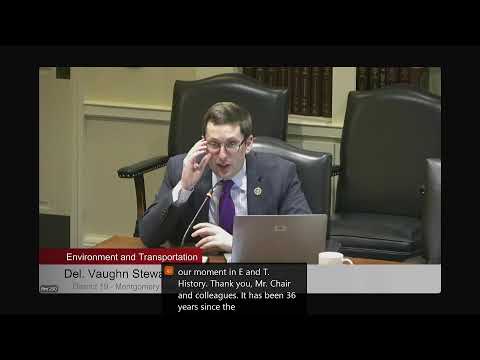
Delegate (presenter) said the House and Senate sponsors filed cross-file bills to permit cameras at locations identified by State Highway Administration as having "high risk for motor vehicle crashes that result in serious bodily injury or death." He told the committee that crash-mapping shows extensive problem areas on the Beltway and stretches of I-83 in the county and argued speed cameras have reduced speeds where allowed.
Senator Chris West, the Senate co-sponsor, said the committee should pass identical bills in both chambers. He described constituent reports that some residents avoid I-83 because of dangerous speeding and said the bill caps the number of cameras (up to four per direction on the Beltway, up to three per direction on I-83) and requires signs and digital speed displays to warn drivers. He said State Highway may use camera revenue to cover administrative costs and to fund safety and roadway improvements on the affected highways.
Committee members asked how the proposed cameras interact with work-zone camera programs and other speed-camera laws. Delegate Stein and Senator West said work-zone cameras are a separate program tied to active road work and are not affected by the bills. The presenters also described prior Senate amendments that corrected drafting errors and said the House committee had adopted compatible amendments so that identical bills could be sent back to the Senate.
Why it matters: The legislation would extend automated speed enforcement to major regional arteries in Baltimore County, set siting and signage requirements, and allow a portion of revenue for safety improvements. Sponsors described it as a public-safety measure focused on stretches with high crash/fatality rates.
Next steps: Sponsors urged a favorable report. The transcript records questions and discussion but no recorded committee vote or final action.