Get Full Government Meeting Transcripts, Videos, & Alerts Forever!
Get email alerts on the Wastewater Biosolids topic
No spam. Unsubscribe anytime.
Custer County schedules town hall after Round Mountain plan to apply treated wastewater sludge prompts public concern
Summary
Custer County commissioners called a public meeting after Round Mountain Water District outlined plans to dry and apply treated biosolids from its wastewater ponds. County officials said no decisions were made and said they will gather more information before acting; the planning commission will review zoning options.
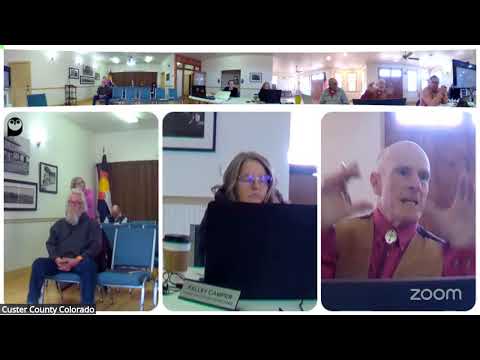
Custer County officials scheduled a public town hall for March 27 after residents raised concerns about a plan by Round Mountain Water District to remove and apply treated wastewater solids from its system.
At a March 20 meeting of the Custer County Board of Commissioners, county leaders said Round Mountain plans to test and then, if permitted, apply treated biosolids in the late May timeframe. County officials and residents asked for more data and time to review environmental testing and permitting options before any application occurs.
The discussion matters because the material at issue — commonly called biosolids — can contain trace contaminants and has been the focus of federal and state standards for decades. Residents expressed concern about potential impacts on groundwater, creeks and downstream users, including local irrigators and municipalities.
County officials said Round Mountain had not yet signed a contract with the company expected to handle removal and application, that the district plans follow-up testing in April, and that no spreading had begun. “The minute I found out about it was the minute Dorothy got it, and she came to me,” said Phil Candid, chairman of the Custer County Board of Commissioners, describing how the board first became aware of the plan. “No decisions have been made.”
Commissioners, staff and several residents said they wanted documented laboratory results, a detailed plan for transport and application, and citations for any past regulatory enforcement tied to the contractor Round Mountain intends to use. Commissioner Lucas said he had the April 2024 analytical report on the ponds and that Round Mountain expects to test again in April. “Their plan for Denali is to spray this biosolids — liquid biosolids — on the property the last 3 weeks in May,” Commissioner Lucas said, describing the timeline presented to the board.
Denali Water Solutions, the company named in public discussion, was referenced in the meeting record as previously subject to an EPA enforcement matter tied to sewage sludge application. County staff said they were gathering the relevant records; the board referenced an EPA-related penalty cited in county conversation and asked staff to compile any public enforcement records for the March 27 meeting packet.
County staff and commissioners described the immediate and longer-term steps they plan to take. In the near term the board directed staff to gather technical reports, state regulatory guidance and the Round Mountain operational plan for distribution to the public prior to the town hall. The county also flagged two regulatory pathways it can use if necessary: enforcement under state environmental rules and local land-use controls. County staff noted that the Colorado Department of Public Health and Environment (CDPHE) and the U.S. Environmental Protection Agency (EPA) set state and federal standards for biosolids and that the county’s landfill permit does not allow liquid waste or untreated biosolids.
From a land-use perspective, staff told the planning commission the county could require special-use permitting or change zoning language so that large-scale biosolids application would trigger additional local review. Planning staff told the board they planned to address the issue at a planning commission workshop scheduled the Monday following the March 20 meeting.
Public commenters urged caution and full transparency. Resident Jim McMahon asked the board for a clear accounting of who is protected and how: “If that stuff gets dumped over there on that ranch, I don’t even want to think about what’s going to happen.” Another commenter, James Gilbert, urged the board to weigh documented analytical results and not rely on hearsay. “Get all the data and make a considered opinion,” Gilbert said.
The board set a town-hall-style session for 5:35 p.m. on Thursday, March 27, at Wang Hall to hear presentations from Round Mountain, the contractor Denali (if present), and to accept public questions. The session will focus on the Round Mountain plan, the available laboratory data, transport and application procedures, and the county’s regulatory options. Commissioners said the session would include time to collect written questions from attendees so technical presenters could respond methodically.
The county emphasized it had not authorized any spreading on county land and that no permit or contract approving application in Custer County had been issued. Commissioners said they would consider the staff’s factual reports and legal opinions before taking further action. If the planning commission recommends regulatory changes, those would be subject to public notice and a separate formal process.
Next steps announced at the meeting include public distribution of laboratory data and the Round Mountain plan as they become available, an April round of confirmatory testing by Round Mountain, the planning commission’s workshop review of local land-use options, and the March 27 public forum. The county also said it would circulate any records of prior enforcement actions involving contractors named in the materials.