Get Full Government Meeting Transcripts, Videos, & Alerts Forever!
Get email alerts on the It Modernization topic
No spam. Unsubscribe anytime.
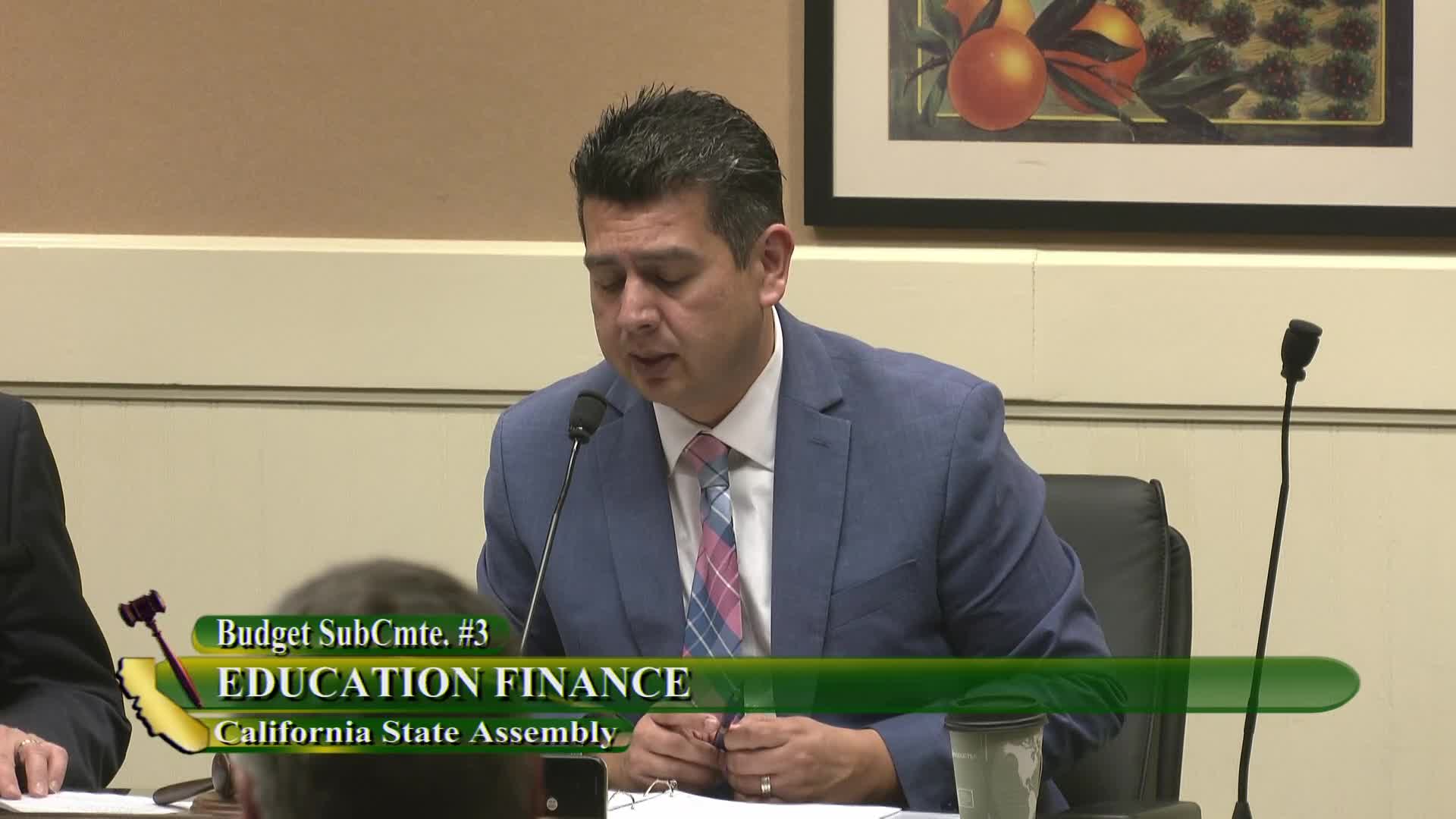
Committee questions $300M-plus IT push for a common cloud data platform and collaborative ERP for community colleges
Summary
The governor proposes large one-time investments (approx. $133.5M + $168M one-time and $29M ongoing) for a common cloud data platform and a common enterprise resource planning system; LAO recommended delaying large-scale commitments until demonstration and planning work complete, citing cost, scope, and change-management risks.
The subcommittee reviewed two major technology proposals intended to modernize community college data and business systems.
Justin Hurst (Department of Finance) described a proposed common cloud data platform ($162.5M total: $133.5M one-time and $29M ongoing) intended to provide near-real-time data reporting, unified governance, and dashboards for students, colleges and policymakers. He described a separate collaborative enterprise resource planning (ERP) request of $168M one-time to procure a standardized ERP for participating districts.
The Legislative Analyst's Office recommended rejecting or pausing the ERP funding and delaying a systemwide cloud expansion until the Chancellor's Office completes a June 2026 demonstration project and reports results. LAO cited missing procurement planning, uncertain total costs, and the risk of large out-year expenses (potentially hundreds of millions) and local change-management burdens.
The Chancellor's Office argued the common cloud will allow more timely student analytics, better support for at-risk students, and aggregate insights for policymakers; it described the ERP as "collaborative" and opt-in, noting many districts have outdated systems with cybersecurity and integration challenges. The Chancellor's Office said early pilots and internal engagement across CIOs and districts support moving forward with the investments.
Committee members pressed administration and the Chancellor's Office on why the projects did not undergo the state's typical Department of Technology planning and what safeguards and cost controls would apply. Finance said the Chancellor's Office is not required to follow the state's PAL (project approval lifecycle) and said the administration judged a targeted initial investment appropriate, but members asked for stronger planning detail, scope, schedule, and cost estimates before authorizing the full expenditures. The subcommittee left the items open and requested more detailed project plans and cost estimates prior to definitive budget action.