Get Full Government Meeting Transcripts, Videos, & Alerts Forever!
Get email alerts on the Public Assistance Programs topic
No spam. Unsubscribe anytime.
House oversight committee hears briefing on Michigan public-assistance programs, TANF accounting changes
Summary
The Michigan House Oversight Committee on State and Local Assistance Programs received a briefing from the House Fiscal Agency on five major public-assistance programs, recent caseload trends and how federal and state funding rules — including TANF maintenance-of-effort accounting — have shifted program reporting and funding levels.
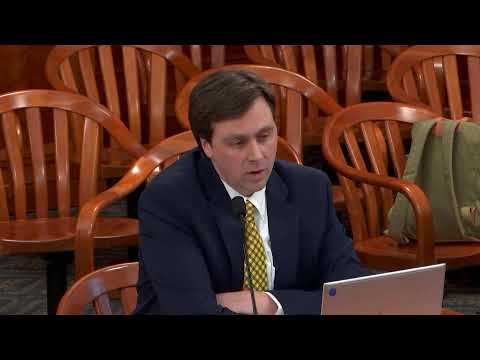
The House Oversight Committee on State and Local Assistance Programs heard a briefing from Kevin Korstra, deputy director of the House Fiscal Agency, on the structure, funding and recent trends in five major Michigan public-assistance programs and the federal rules that shape them.
Korstra told the committee the agency exists under the Legislative Council Act to provide "objective, nonpartisan, expertise and information" to legislators and outlined program details for the Family Independence Program (FIP), the Food Assistance Program (FAP/SNAP), State Disability Assistance (SDA), the State Emergency Relief Program (including energy assistance), and the Child Development and Care (childcare subsidy) program.
The briefing noted several fiscal and policy points that affect eligibility and funding. Korstra said the FIP cash-assistance program has a 60-month lifetime limit for individuals and cited a fiscal year 2025 budgeted amount of $104,800,000 for the program; he said roughly 86% of that was financed through federal TANF block grants, about 9% from state restricted funds (largely retained child support) and about 5.6% from the general fund. He described the program's income and asset tests as presented: about $925 per month (about $11,000 annually) income limit and a cash-asset test of $15,000 with a $20,000 property-asset threshold (figures as provided in the briefing).
On food assistance, Korstra said benefits are 100% financed at the benefit level by the federal government, with administration shared about 50/50 between federal and state funding. He said eligibility broadly reaches up to 200% of federal poverty (the presentation listed $51,640 as an example for a family of three) and noted an asset limit of $15,000. Korstra described the food assistance caseload as responsive to economic conditions: after a peak in 2011, the program declined 22% through 2019 and rose about 19% from the 2019 trough through 2020–2024.
The State Disability Assistance program, Korstra said, is a state-administered cash program for adults unable to work; the slide cited an income threshold of $600 per month and an average maximum cash benefit of about $200 per month for an individual, with an asset test of $15,000. Korstra described SDA as often temporary while applicants pursue federal SSI approvals.
State Emergency Relief (SER) and energy-assistance funding reflect a mix of state and federal sources, Korstra said. The Michigan Energy Assistance Program (MEEP) was described as receiving a $50,000,000 state restricted surcharge on energy bills; federal LIHEAP grants and COVID-era funds (CARES Act and ARPA) increased resources in fiscal 2022–2023. Korstra said the state temporarily raised some emergency payment levels under those grants and that, for one example in the briefing, the state provided larger one-time heat/electric payments during the COVID response and later reduced the payment level in fiscal 2025.
On childcare subsidies, Korstra said the Child Development and Care program generally covers families up to 200% of federal poverty (the briefing listed $51,648 annually) and that reimbursement rates vary by provider type, quality rating and hours. He said the CDC program totaled about $400 million in fiscal 2025 in the briefing and that funding sources include a federal CCDF grant, TANF funds and state resources (Korstra cited roughly 68% federal CCDF, 15% state resources and TANF contributions in the slide summary).
Korstra explained how TANF block-grant accounting affects how the state reports and claims spending. He said Michigan receives roughly $770 million annually in federal TANF block grants and must identify a maintenance-of-effort (MOE) amount from state resources to draw that funding. Korstra said recent federal guidance narrowed what state programs can count as MOE for TANF, meaning some programs that were previously claimed as TANF MOE no longer qualify as "generally available" educational activities. The result, he said, was an accounting reallocation in fiscal 2024–25 that shifted how certain K–12 and school-readiness program funds were treated for TANF reporting rather than eliminating those programs.
Committee members pressed Korstra on specific impacts. Representative Carl asked whether the 60-month time limit explained the long-term decline in FIP caseloads; Korstra said a 2012 policy change that stopped exceptions to the federal time limit caused tens of thousands of cases to close. Representative Metzmer recalled earlier work-training programs and asked whether similar mandatory work-placement programs remain; Korstra said Michigan Works and other job-training requirements remain part of FIP eligibility but noted families now often have multiple barriers to employment (childcare and transportation were cited by members as common obstacles).
Representatives asked about residency and verification, citizenship requirements and whether people can receive benefits in multiple states. Korstra said program rules require proof of residency, data matches across states and, for noncitizen applicants, use of federal verification processes (SAVE was named in the briefing). He said one limited exception is emergency Medicaid for hospital services, which federal rules require be provided regardless of immigration status.
The committee took one formal procedural action at the start of the meeting: Representative Cara moved to adopt the minutes of the March 13, 2025 meeting; the motion "prevailed by unanimous consent," as recorded on the meeting agenda.
The briefing materials Korstra cited are publicly available on the House Fiscal Agency website, and he directed members to additional agency budget briefs and a prior Medicaid presentation by a colleague for further detail. The committee adjourned after a question-and-answer period.
Votes at a glance: Representative Cara's motion to adopt the minutes of 03/13/2025 was approved by unanimous consent (no roll-call tally recorded in the transcript).