Get Full Government Meeting Transcripts, Videos, & Alerts Forever!
Get email alerts on the Blight And Housing Rehabilitation topic
No spam. Unsubscribe anytime.
Committee advances 'Better Georgia Without Blight Act' to help cities, counties rehab abandoned properties
Summary
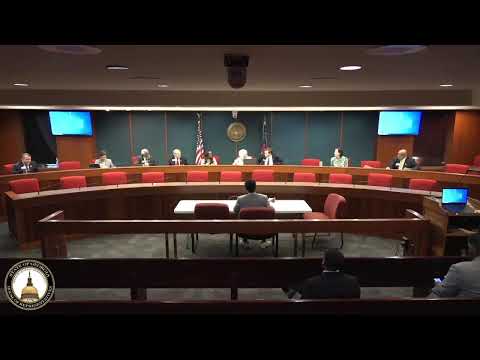
A State Planning & Community Affairs committee meeting advanced HP753, the Better Georgia Without Blight Act, authorizing the Department of Community Affairs to assist local governments with technical support and grant administration to identify and rehabilitate blighted properties into housing.
A State Planning & Community Affairs committee meeting advanced HP753, the Better Georgia Without Blight Act, after a voice vote that produced no recorded opposition. Representative Berry, who introduced the measure, said the bill would let the Department of Community Affairs (DCA) provide technical and funding assistance to cities and counties that identify blighted properties and move them toward rehabilitation and affordable housing.
Representative Berry cited state law and data to explain the bill's purpose. “According to OCGA in chapter 8, section 4, subsection 8 ... there are over 582,000 blighted properties in the state of Georgia,” he said, and he referenced the National Low Income Housing Coalition's estimate that the figure represents about 15% of properties in the state. Berry said the bill would give local governments state-supported tools and allow DCA to apply for outside grants to fund remediation and redevelopment.
The bill outlines a five-part procedure localities must follow before using the program: a public inspection, written notice to the property owner, a stakeholder meeting to identify development issues, a calculation of revenue loss to city, county and state, and a local commitment to rehabilitation. Representative Berry said those steps mirror existing legal definitions and local procedures and that the measure does not change the statutory definition of blight.
Committee members questioned funding, oversight and the bill's duration. Representative McLean asked about an automatic repeal provision; Berry said the bill is structured as a five-year program with a sunset to allow state and local officials to assess effectiveness and potential renewal. Representative Wade asked whether the bill would affect local powers such as condemnation; Berry replied the measure is intended to preserve local autonomy, saying it “leave[s] the city and counties [with] autonomy to do what they need to do” while adding state assistance.
On financing, Berry acknowledged DCA had not provided a targeted funding estimate and said DCA would have authority under the bill to apply for and administer grants. “DCA's funding already is very little from the state. So they have the ability ... to apply for grants,” he said. Several legislators from communities with active blight programs, including Macon-Bibb and other middle Georgia areas, supported the measure as a way to augment local efforts.
John Moy, senior director for policy at the Urban League of Greater Atlanta, testified in support of the bill during public comment, calling blight “not merely an aesthetic issue” and saying it poses threats to health, safety and economic vitality. “Blight breeds crime, diminished property values, and undermines the sense of pride and belonging that every citizen deserves,” Moy said, and urged the committee to pass the legislation.
After brief discussion, a member moved and another seconded that the committee approve the bill. Committee members voted by voice; the chair recorded no opposition and announced the bill had been approved. The bill requires reporting of recommendations to the General Assembly and the governor, and Representative Berry said the reporting and sunset will allow lawmakers to evaluate program outcomes.
The bill text, as discussed in committee, references the Official Code of Georgia Annotated (OCGA) definition of blight and names the Department of Community Affairs as the administering agency. The committee did not receive a DCA funding estimate during the hearing; DCA officials are expected to work with sponsors during the interim.