Get Full Government Meeting Transcripts, Videos, & Alerts Forever!
Get email alerts on the Public Health Education topic
No spam. Unsubscribe anytime.
Students and advocates urge adding overdose recognition, response to school health standards; committee holds bill over
Summary
Representative West's bill to add overdose recognition, prevention and response education to Minnesota health standards drew extensive student testimony and bipartisan support from committee members; the committee voted to hold House File 20-23 for possible inclusion in broader work.
The House Education Policy Committee on March 18 heard testimony and discussion on House File 20-23, which would add "overdose recognition, prevention and response" education to Minnesota's health standards. The committee voted to hold the bill over for possible inclusion in future work.
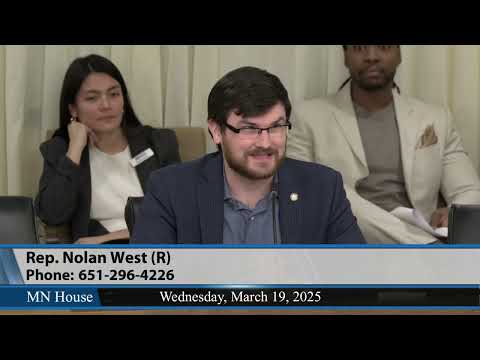
Representative West, the bill's author, told the committee the change is "merely a sentence" appended to the health standards and said students brought the idea to her after researching gaps in current health education. "If we are going to have [state standards], we know our country and state ... are dealing with [an opioid epidemic]." She described fentanyl's lethality and the need for students to know how to recognize an overdose and respond, including use of naloxone.
Youth and community witnesses provided testimony in support. Kalique Rogers, executive director of Catalyst for Systems Change, said overdose prevention education was the top legislative priority identified by youth in the organization's Changemakers program. Metria Reeder, a junior at St. Anthony Village High School and a youth leader, described national overdose statistics and urged the committee to adopt the change. Sofia Templos, a senior and nursing assistant, recounted personal experience with fentanyl-related death in her community and emphasized naloxone's life‑saving potential. Dexter Posh, a junior, cited overdose death counts in his county and in Native communities and said education could reduce fatalities.
Medical testimony included Dr. Thomas Kotke, a retired cardiologist, who said many overdoses occur among peers or family members rather than medical professionals and that training students in recognition and response could enable lifesaving interventions.
Committee members expressed strong support. Representative Bierman called the student testimony "powerful" and urged a near-unanimous vote, saying education is an important harm-reduction strategy. Representative Keeler asked about the bill's starting grade (sixth grade) and whether districts could introduce content at younger ages; Representative West said the sixth-grade start is carried from existing statutory language and that local districts retain discretion. Chair Bennett encouraged advocates to consider whether existing statute (section 120B.215) on local comprehensive substance-use programs might be a vehicle for broader work.
Representative Bennett moved to hold over House File 20-23 for possible inclusion; the committee agreed by voice vote. The bill will be available for further refinement and possible placement in an audit or omnibus package.