Get Full Government Meeting Transcripts, Videos, & Alerts Forever!
Get email alerts on the Mental Health topic
No spam. Unsubscribe anytime.
Human-services consultant Rachel Anderson urges value-based 'self care compass' after severe burnout
Summary
Rachel Anderson, founder of RCA Advising, described repeated panic episodes and severe burnout and outlined a values-based "self care compass" she used to prioritize recovery.
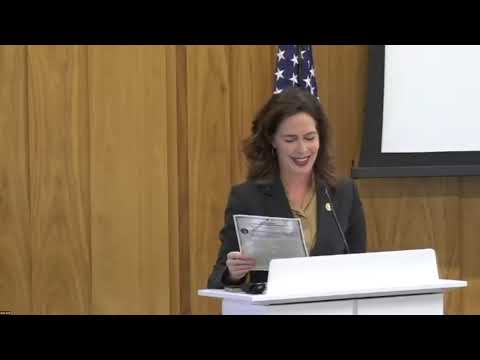
Rachel Anderson, founder of RCA Advising and a human-services consultant, described a multi-year experience of severe burnout and offered a structured approach she said helped her recover during a presentation at Davis County's Community Resilience Symposium.
Anderson recounted repeated panic episodes that she said included uncontrollable vomiting during public and work events and multiple visits to the emergency department. "Something had to be so in my face that I couldn't miss it," she said, describing the moment she recognized she was past the point of ordinary stress and needed professional help. Anderson said she eventually sought medical care, adjusted clinical treatment for anxiety and altered her work and life routines.
"I probably will make you a little bit uncomfortable today," Anderson told the audience as she introduced candid details of her experience. She said that typical short-term stress measures (sleep, short breaks or vacations) were not sufficient for true burnout, which she defined as long-lasting, deep exhaustion that requires significant change or professional support.
To prioritize recovery, Anderson described using a business-style risk matrix reframed as a "self care compass." She said the tool let her compare life domains against personal values and identify the highest-impact changes to make first. Her most urgent priorities were, she said, "health and wellness, career and ambition, and recreation and leisure." To create practical space for care she adopted a rule of no meetings on Mondays so she could schedule appointments and reduce decision fatigue.
Anderson emphasized work-life integration over the idea of perfect work-life balance and described strategies to reduce microdecision exhaustion, such as automating routine choices (meal planning, scheduled workouts) and setting enforceable boundaries. She also recommended using professional help when recovery required more than rest: "Recovery requires significant change or support," she said, "and that typically is going to have to get a professional involved."
She closed by encouraging attendees to be intentional, stay curious and align daily choices with individual values. Anderson said she has made the self care compass available through her website, rcadvising.com, and invited interested people to test the tool.