Get Full Government Meeting Transcripts, Videos, & Alerts Forever!
Get email alerts on the Public Safety Fire topic
No spam. Unsubscribe anytime.
Bakersfield council approves purchase of two fire engines and moves to plan new fire stations
Summary
Council approved acquisition of two fire engines and members urged a citywide fire master plan and staffing review following recent large wildfires; council also requested updates on mutual aid and water infrastructure.
The Bakersfield City Council voted to approve the purchase of two new fire engines and discussed launching a fire master plan and studies of staffing and infrastructure preparedness.
The action to buy two engines was taken on Jan. 22 during the council's consent calendar votes. Councilmember Arias moved approval of the purchase of two engines; the motion passed with Councilmember Weir absent.
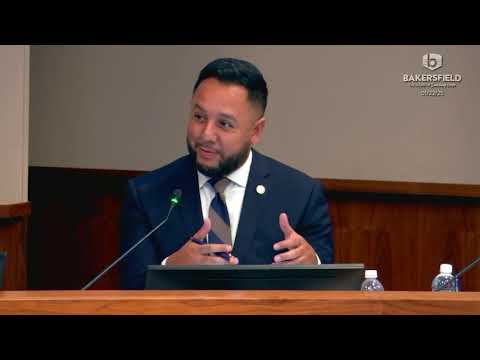
Council members pressed for a broader review of fire response needs after recent large wildfires in Southern California. Vice Mayor Kaur asked staff to develop a fire master plan and to explore funding and siting for a new station, particularly in South Bakersfield as the city grows. Kaur said the city should “begin the design process for a new fire station” and consider embedding substations next to parks and schools when master-planning new neighborhoods.
Bakersfield’s Fire Chief (name not provided in the meeting) briefed the council on lessons from the Palisades and Eaton fires, saying those incidents were driven by a combination of dry vegetation and high winds and that “when you hook up a hundred fire engines to water systems, it’s very difficult to design a system to handle that much water flow.” The chief told the council the city’s hydrants do have water and that the city annually tests hydrants and coordinates with Cal Water on pressure boosting during large incidents.
Councilmembers urged that any master plan include staffing and mutual-aid considerations. Councilmember Coleman noted that recruiting and training personnel takes years and called for the master plan to “future-proof” the department; Councilmember Komen asked that the report include current call volumes and staffing needs. Councilmember Arias requested that staff also brief the council on the existing joint powers agreement (JPA) with county fire partners and whether it meets current needs.
Vice Mayor Kaur noted that each modern engine can take about three years to build and said the ones recently delivered to the department were manufactured in Appleton, Wisconsin. The vice mayor also suggested the city explore Public Safety & Vital Services (PSVS) funding and other buckets for design and construction costs. The Fire Chief said state-level advance funding has been made available in recent years for pre-positioning equipment during red-flag events; the chief referenced recent state actions that made roughly $25 million to $40 million available for pre-positioning during extreme events.
No specific timeline for the master plan was set during the discussion; councilmembers asked staff to return with options quickly and to include budget-cycle and funding recommendations.
Votes at the council meeting recorded the purchase of two engines as approved; the exact roll-call tally was not read aloud beyond noting that Councilmember Weir was absent at the time of the vote.
For residents, the council emphasized that the city maintains an emergency operations plan and coordinates with ReadyKern for public information.