
Children First and NAMI speakers call for expanded children’s mental-health access as 36% of students report daily sadness or anxiety
Get AI-powered insights, summaries, and transcripts
Sign Up Free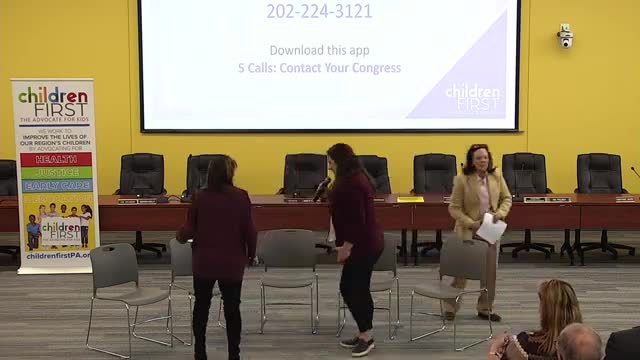
Summary
At a Children First presentation, speakers highlighted a reported 36% of high school students self-reporting daily sadness, depression or anxiety and described limited local mental-health capacity. NAMI Bucks County's executive director outlined family supports the organization provides and called for more timely access to therapeutic services.
Children First and mental-health advocates told an audience in Bucks County on Oct. 27 that many local students report frequent mental-health symptoms while local clinical capacity and insurance coverage create barriers to timely care.
Kate Fox, Children First policy lead for mental health, said the report shows roughly 36% of high school students in the county self-report feeling sad, depressed or anxious daily. She said the county has limited clinical capacity, citing a presentation figure of about one licensed mental-health professional for every 330 people in the county.
Debbie Morris, executive director of NAMI Bucks County, described long waits for psychiatric appointments, stigma that deters families from seeking care, and families’ difficulty navigating services. Morris said NAMI offers support groups, youth programming, educational classes and a warm line, and she urged more public funding to expand services and reduce wait times.
Why it matters: Presenters said lack of timely access to outpatient therapeutic services means many children do not receive care until symptoms worsen and psychiatric medication or inpatient care is required. Children First announced plans to convene a local coalition, Strong Minds, Bright Futures, to advocate for insurance and system changes that would allow therapeutic care without a severe diagnosis as a prerequisite.
Details and context
- Prevalence and capacity: Presenters cited county-level survey data on student mental health and a shortage of licensed providers relative to need.
- Barriers: Morris and other speakers said long appointment waits, misinformation about medications, stigma and lack of awareness of available supports are key obstacles. They described many families relying on volunteer- or community-driven supports rather than sustained, funded services.
- Local services: NAMI Bucks County runs about 80 support groups monthly, youth and family education programs (including NAMI Basics and an age-appropriate program called Small Talk), and school outreach. Morris described lived experience and urged normalization of conversations about mental health.
Attribution and next steps
This article is based on remarks by Kate Fox and Debbie Morris at the Children First event. Children First invited attendees to a March 11 webinar to help organize the Strong Minds, Bright Futures coalition and urged local advocacy for insurance reforms and expanded state and federal funding for children's mental-health services.