Get Full Government Meeting Transcripts, Videos, & Alerts Forever!
Get email alerts on the School Bond topic
No spam. Unsubscribe anytime.
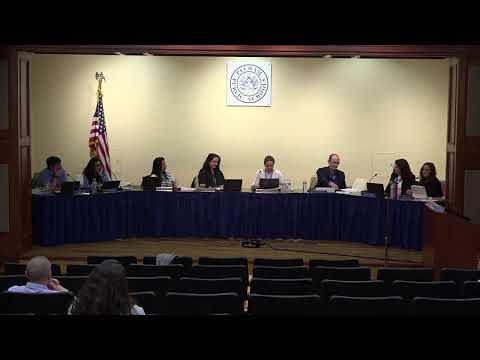
Pelham board splits bond proposals, puts ADA work at Simonoy before voters and keeps geothermal separate
Summary
The Pelham Union Free School District Board of Education on March 19 agreed to divide a proposed capital-improvement bond into multiple propositions — separating districtwide infrastructure and elementary air conditioning from a Simonoy-specific ADA/expansion package, and keeping geothermal and the high-school expansion as separate questions for voters.
The Pelham Union Free School District Board of Education on March 19 agreed to divide a proposed capital-improvement bond into multiple propositions rather than present a single omnibus question to voters.
The board and district staff said the split is intended to give voters clearer choices on urgent building repairs and accessibility work while allowing individual projects to move forward without dragging unrelated items into a single yes-or-no decision.
Board discussion and public comment focused on the Simonoy School (Sowenoy/Sinoinoy in some materials), which requires elevators and other changes to meet the Americans with Disabilities Act and would need an expansion to replace classrooms lost when elevators are installed. The board agreed to make Simonoy’s package a separate proposition and to include elementary-school central air conditioning in the districtwide infrastructure proposition rather than in a geothermal proposition.
Why it matters: District officials said separating the items reduces the risk that voters will reject essential districtwide infrastructure if they oppose elements specific to one school. The board also asked bond counsel to draft ballot language that will reflect the board’s direction and any dependencies among propositions.
What the board decided and the reasons given - Structure: The district will ask voters to consider (1) a districtwide infrastructure package that includes elementary central air conditioning (excluding Simonoy), (2) a Simonoy package that combines ADA compliance and an 8-classroom addition, (3) a high-school expansion package, and (4) a geothermal energy package. The board asked counsel to draft final ballot language and to identify any propositions that should be conditional on others. - Simonoy separation: Jackie (board president) told the meeting the district cannot complete major infrastructure work at Simonoy without doing the ADA upgrades that trigger the loss of several existing rooms. “In order to do any major work at SAWENOY, we need to do the ADA work,” Jackie said, explaining why the Simonoy package was pulled out. - Elementary air conditioning: The board settled on including elementary central air conditioning with the districtwide infrastructure package, not with the geothermal item. Board members said central AC in elementary schools is needed for student comfort and to support year-round programming. - Geothermal left separate: The board left a geothermal proposal separate so voters can decide on that measure independently. The board also asked architects and engineers to provide additional technical details on geothermal so bond counsel can draft clear, implementable ballot language.
Costs and tax estimates presented to the board District staff and consultants presented a range of cost scenarios and estimated tax impacts for several packaged outcomes. The board received these figures during the meeting and discussed them as it finalized the proposition structure: - Districtwide infrastructure (excluding Simonoy) plus elementary AC: approximately $56 million; district staff said that package would be essentially tax neutral based on the district’s current capacity. - Simonoy package (ADA/expansion): roughly $42.57 million (figure presented by staff during the meeting). - High school expansion package: roughly $40.35 million (figure presented during the meeting). - Geothermal add-on (prospect and Simonoy as initially scoped): staff said the incremental cost presented earlier was about $4.5 million for those two schools. District staff provided example household impacts for the full set of projects as presented that night. Using the full combination shown by the district, staff cited an illustrative total annual tax increase of about $926 for a house assessed at $850,000, $1,297 for a house assessed at about $1.19 million, and $1,662 for a house assessed at $1.5 million if every package were approved and fully implemented. The district emphasized these were model scenarios to help voters compare options and that the final ballot language and scope could change based on the board’s direction and bond counsel’s drafting.
Geothermal and system options: technical overview and concerns Engineers and an energy consultant who attended the meeting described tradeoffs among ground-source (geothermal), air-source heat-pump or variable-refrigerant-flow (VRF) systems and conventional high-efficiency hydronic heating. Jim Dolan of OLA Consulting Engineers, who advised on systems, said closed-loop ground-source systems are widely used in the region and can avoid outdoor noise from condensers: “Air-source equipment, it’s louder. Ground loop quiet.” He added closed-loop systems use HDPE piping and do not directly exchange with groundwater.
Several residents raised concerns about geothermal reliability, cost, and potential construction impacts. Rich Ellenbogen, a local resident who described long experience with geothermal installations, told the board: “The geothermal system is not the best way to go for school. A variable refrigerant flow system with a gas backup for 500 hours a year would be much more cost effective and much cheaper.” Board members asked engineers to provide additional comparative lifecycle, maintenance and resiliency estimates before the final bond resolutions are drafted.
Next steps Bond counsel will draft the formal proposition language to reflect the board’s direction and any contingencies the board wants on geothermal or other elements. The board asked staff to return proposed resolution language at the next meeting to meet statutory timelines for a May bond vote. Officials also said they will continue to publish detailed cost breakdowns and hold community briefings so voters can compare propositions before the vote.
Community reaction at the meeting Dozens of residents spoke at public comment. Parents and neighbors voiced a range of positions: several stressed the urgency of Simonoy’s ADA and space issues and said they supported the Simonoy package, while others urged a smaller scope or a pause so the community could consider alternatives. Concerns included construction noise, parking and utility disruptions, water-table and foundation effects from drilling, and whether the district can staff newly built classrooms under current operating-budget constraints.
Ending Board members said they will continue community outreach and data-sharing ahead of finalizing ballot language. The board’s next steps include having bond counsel draft the propositions as directed and returning the draft resolutions for board action at the next regular meeting.