Get Full Government Meeting Transcripts, Videos, & Alerts Forever!
Get email alerts on the Parking Occupancy topic
No spam. Unsubscribe anytime.
Weekday parking occupancy edges up as permit holders rise; farmers market and film festival boost lot revenue
Summary
City parking staff reported about 300 more monthly permit holders this fiscal year, modest weekday occupancy gains and measurable revenue increases in lots adjacent to the relocated farmers market and during the film festival.
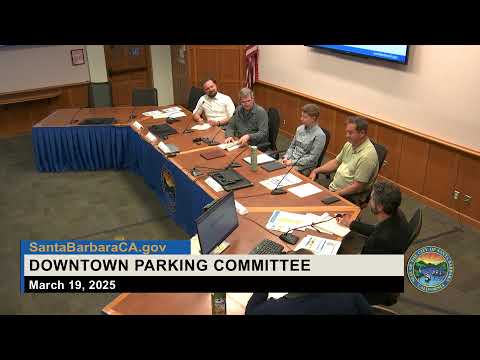
Ethan Pitney, downtown parking staff, told the Downtown Parking Committee on March 19 that weekday parking occupancy is rising modestly year over year as more drivers hold monthly permits.
Pitney said the “story for fiscal year ’25 is more permit holder occupancy,” noting about 300 additional permit holders compared with fiscal 2024, with roughly 200 of those coming from a commuter transition into Lot 10 and Lot 2 and about 80 coming from the county (40 permits in Lot 7 and 40 in Lot 6). That added permit volume, he said, is driving roughly a 5% increase in peak weekday occupancy across the system compared with fiscal 2024.
The data presentation gave a lot-by-lot picture of where demand is growing and where it has softened. Pitney highlighted Lot 7 as “very in demand,” saying staff stopped issuing new permits after occupancy approached an 85% threshold. Lot 10 showed about a 10% average peak increase Monday–Thursday, which Pitney attributed largely to the legacy COTA permit holders relocated there. Lot 9 saw a slight decline year over year — “roughly 5%” — which staff suggested could reflect temporary closures of nearby venues.
Events and program changes drove discrete shifts. Pitney said the city sold roughly 380 film-festival permits at a $50 flat rate that covered Lots 2, 6 and 10 during festival week; staff chose to include Lot 2 this year because it had additional capacity. He also showed that the farmers market’s relocation closer to State Street produced large midmorning and midday occupancy spikes in Lots 2, 3, 8 and 9, and nearly doubled short-term revenue at peak market times in those four lots (from about $1,000 to a little over $2,000 on one sample date). Pitney said revenue per vehicle was “slightly down” at market times because many visitors parked for less than 75 minutes and benefited from the courtesy period.
Pitney reported a longer-term trend in the mix of free versus paid hourly transactions: paid hourly transactions remain material but the share of free transactions rose to about 66% this year, and the average stay for hourly parkers has declined slightly. Committee members asked about the source of that change and whether it reflected more short visits or more use of courtesy periods.
Committee members and staff also discussed the Helena (funk zone) lot. Staff said a sample-day assessment found that more than 85% of vehicles there violated posted time limits under the lot’s current enforcement configuration, a signal staff cited as supporting a planned pilot to convert the Helena lot to paid, pay-by-plate parking and a revenue-control model similar to the waterfront operation. Staff emphasized outreach to nearby businesses and potential permit options for employees if the city converts the lot.
Committee members asked for future reports to include the number of spaces in each lot so percentage occupancy can be understood in absolute terms. Pitney agreed to add that information to subsequent reports. The presentation and questions will inform the committee’s budget discussion and the staff’s recommendations at the committee’s April meeting.
The committee heard no public comments on the occupancy presentation and had no formal votes tied to the occupancy report.