Get Full Government Meeting Transcripts, Videos, & Alerts Forever!
Get email alerts on the Airfield Operations topic
No spam. Unsubscribe anytime.
FAA approach changes reduce options at Santa Barbara Airport; pilot‑controlled lighting to be enabled
Summary
Airport staff told the commission that recent FAA changes removed some GPS overlay approaches, raised ILS minimums and temporarily curtailed a VOR night listing; staff said pilot‑controlled lighting will be switched on after tower hours and officials are pressing the FAA for faster fixes.
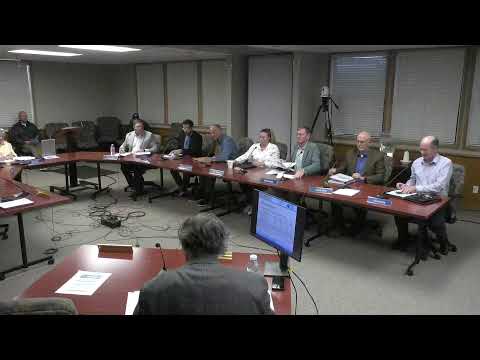
Director Chris Hastert told the Santa Barbara Airport Commission on March 13 that several recent federal actions have reduced available instrument approaches and increased minimums for some approaches into Santa Barbara Airport, and that the airport will enable pilot‑controlled lighting after tower hours.
The developments came during the director’s regular report. “Pilot controlled lighting, I have just been informed, is ready to go at the flip of a switch,” Hastert said, adding that the change will let pilots adjust runway lighting after tower closure and reduce energy costs.
Why this matters: fewer or higher‑minimum instrument approaches can reduce access during fog or low‑visibility conditions, affecting general aviation pilots and commercial operations. Commissioners pressed staff for details on how long the limitations will last and what pilots and the public should expect.
Hastert described three problems the airport is addressing with the FAA: raised ILS minimums (in part the result of trees that had grown into the approach and were removed), removal of a GPS overlay to a VOR approach that has been discontinued nationwide, and a VOR approach that was incorrectly listed as unavailable at night. Hastert said the airport worked quickly with a property owner to remove the trees but that the FAA’s approach redesign process had already moved forward and new, higher minimums were published.
“Even though [the trees] hadn’t been published yet, [the FAA] published with new minimums that are not good for getting into the airport during foggy weather,” Hastert said.
On the GPS overlay, Hastert said the overlay approaches are being removed nationwide and that a standalone GPS approach is still under design; where the GPS overlay vanished and the GPS replacement is not yet final, there is temporarily no replacement. On the VOR approach, staff said the tower is working with the FAA approach design team to issue a NOTAM so pilots may use the VOR approach at night while a permanent correction is processed.
Commissioners asked for timing and operational implications. Vice Commissioner Jeremiah asked whether the VOR station being out of service would make approaches on Runway 25 unusable; Hastert said he would follow up with the tower on the specific dependencies and cautioned that he is not instrument rated and relied on tower guidance for technical detail. Commissioner Bowen asked whether the noise working group had made progress on encouraging aircraft to turn out to sea before 6 a.m.; Hastert said staff had again contacted air traffic control and that the airport is “making that big push literally as we speak.”
Hastert recommended pilots file FAA ASAP reports if they are inconvenienced by the approach changes to help prioritize corrective action. He also said the airport will coordinate communications about the pilot‑controlled lighting and continue applying pressure to the FAA for faster updates to approach plates and procedures.
Next steps: staff will continue to press the FAA and to work with the tower and the approach design team on NOTAMs and revised plates; the commission was told staff will report back when the FAA sets new cycle dates or issues NOTAMs that alter approach availability.