Get Full Government Meeting Transcripts, Videos, & Alerts Forever!
Get email alerts on the Water Infrastructure topic
No spam. Unsubscribe anytime.
Residents and staff press Gates County on water fluoride, frequent breaks and contractor damage
Summary
Public commenters and county staff raised longstanding concerns about fluoride levels, repeated water-main breaks, contractor damage to county water lines, and mapping gaps; county staff said they have purchased ground‑penetrating equipment and will continue targeted testing of supply wells.
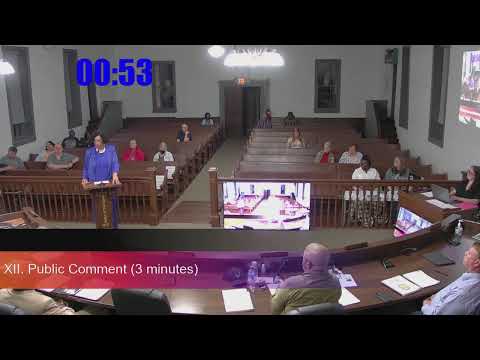
Residents and county staff urged the Board of Commissioners to accelerate testing and mapping of water sources after multiple water main breaks and recurring water‑quality concerns were discussed at the meeting.
A resident who submitted written comments through county channels — read aloud to the board by a staff member — asked for a review of fluoride levels, a request that county officials said they are addressing. County Manager Scott Sauer said staff have coordinated with Green Engineering and geologists to look at fluoride and that the Coastal Community Resilience interns could, if partnered, assist with mapping related data.
Public utilities manager Brad Arnold told the board that the county has recorded nine water breaks since Jan. 1 — six mains and three service lines — and said several were caused by contractors beginning work without waiting for line locates. "Since January 1, we've had 9. That would be 6 mains and 3 service lines," Arnold reported.
Arnold said the county is pursuing reimbursement from contractors responsible for damage and that one contractor is expected to leave the county. He also said the county has ordered a ground‑penetrating radar (GPR) unit to speed locating buried lines and to help produce more accurate maps of water infrastructure.
County staff described ongoing packer (screen‑isolated) testing of a test well to determine fluoride concentrations at different depths. The first (upper) screen returned a low fluoride reading (about 0.6–0.7 mg/L), but staff said flow volume there is lower than desired. A contractor will test additional screens to determine which zones may yield both adequate flow and lower fluoride.
Commissioners asked staff to continue pursuing contractors that perform unmarked excavation work, to document incidents for reimbursement, and to prioritize improved mapping and as‑built records for the system. Staff said they will return with follow‑up data once the GPR is in service and additional well testing is completed.
No county policy or ordinance changes were proposed at the meeting; the discussion focused on follow‑up testing, contractor reimbursement and infrastructure mapping.