Get Full Government Meeting Transcripts, Videos, & Alerts Forever!
Get email alerts on the Transit Governance topic
No spam. Unsubscribe anytime.
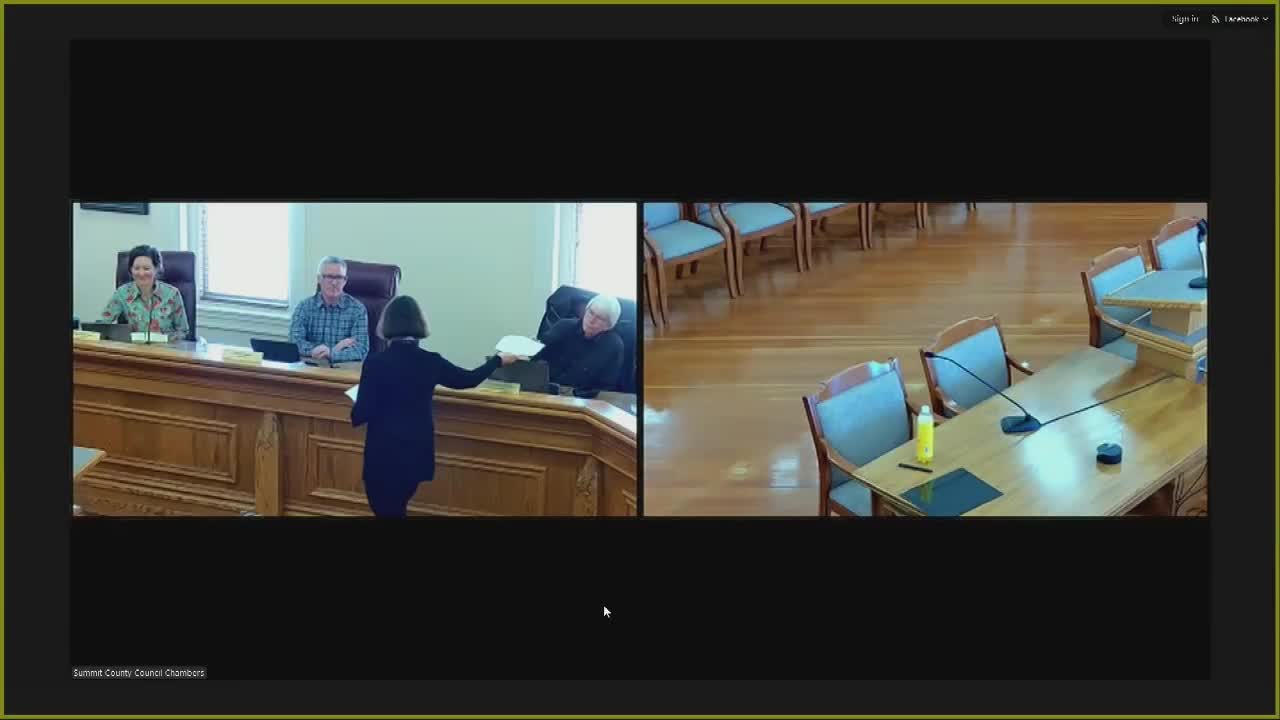
Council hears High Valley Transit request to expand board amid fast growth
Summary
High Valley Transit asked the Summit County Council to add two appointed members to its five-member board to ease workload as projects accelerate. Council members generally supported the idea and asked staff to place a formal change on a future agenda.
High Valley Transit (HVT) staff told the Summit County Council on March 19 that rapid program growth and an expanding slate of capital and finance work has left existing board members stretched thin, and asked the council to consider increasing the board from five to seven members.
"High Valley Transit has been in operation for just over 3 years now," Caroline Rodriguez told the council, opening the work-session briefing. She said the board currently includes three municipal council members and two citizen appointees, plus a nonvoting Wasatch County ex‑officio. Rodriguez said the system now needs more sustained board bandwidth to staff committees and rapid capital- and finance-related decisions.
Board vice chair David Geffen and Council member Roger (who previously served on the HVT board) described the current workload: frequent committee meetings—some weekly—for finance, capital and BRT subcommittees. Geffen said he supports adding appointed, non-elected members: "I would rather see 2 more board members come from the public, people who feel like they don't already have, possibly, 2 jobs and... wanna dedicate their free time to working with us on High Valley Transit."
Council members asked about alternatives such as adding staff capacity and limiting board-level involvement in operational detail. Rodriguez said HVT has staff but the board has frequently assumed a hands-on role during rapid project phases, sometimes to the detriment of timeliness. Geffen agreed; he also recommended developing a training/onboarding pipeline so future board members can quickly absorb HVT's technical workload.
Council members expressed general support for expansion but sought clarity about the mechanics: whether the two new members would be appointed citizens or council members, and how adding council appointees would interact with notice or quorum rules. Christopher Robinson (council) and other members recommended placing a formal agenda item to amend HVT's governance structure so the council could record a vote.
No formal change was adopted at the March 19 meeting. Staff said they will prepare an agenda item for a future council meeting with draft governance language and options for how the two seats would be filled.
Quotes from the meeting and next steps:
- Caroline Rodriguez, representing High Valley Transit: "...because High Valley Transit is growing so quickly and we have a few very aggressive projects, it just doesn't feel like each board member has enough bandwidth to dedicate to High Valley board work in addition to their council work and other work."
- David Geffen, vice chair, High Valley Transit Board: "I support expansion of the board... I also support expansion of the board by adding appointed members to the board as opposed to elected officials."
The council asked staff to return with formal language and scheduling so members can vote on any governance change. If the council approves an expansion it would later be followed by a public recruitment and appointment process for any citizen seats.