Get Full Government Meeting Transcripts, Videos, & Alerts Forever!
Get email alerts on the Open Meetings Brown Act topic
No spam. Unsubscribe anytime.
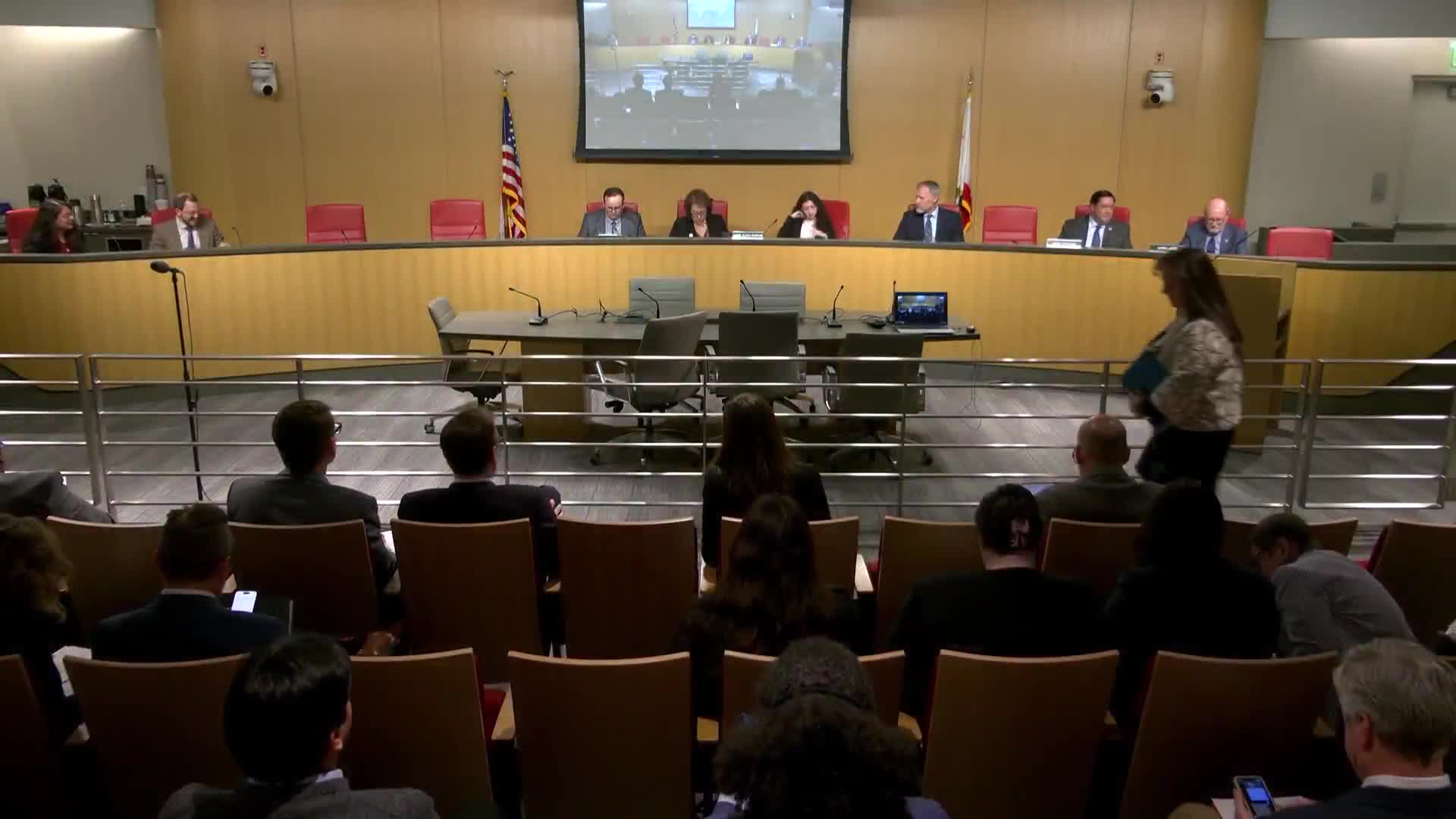
Senate panel examines Brown Act modernization, weighing remote access against transparency and cost
Summary
The Senate Committee on Local Government held an informational hearing on California's Brown Act, hearing proposals to expand remote participation and language access while warning of enforcement, budget and disruption challenges for small jurisdictions.
The Senate Committee on Local Government convened an informational hearing on the Ralph M. Brown Act and related open-meeting practices, focusing on remote participation, language access and enforcement challenges. Witnesses included municipal clerks, academics, county supervisors, disability advocates and civic groups who described both increases in public participation during the pandemic and new barriers since remote options narrowed.
The hearing opened with Mark Newmanville, City Clerk of Berkeley, outlining the Brown Act's role in California. "The public's business must be conducted in plain view and not behind closed doors," Newmanville told the committee, describing pandemic-era remote meetings as a period that widened participation for people with disabilities, caregivers and parents but said recent rollbacks have made maintaining that participation difficult for many jurisdictions.
Experts and local officials described a range of competing priorities. Assistant Professor Dominika Bukulova (San Diego State University) summarized research showing higher participation when virtual options are available and urged regional coordination on training, shared technical resources and "careful weighing" before wholesale adoption of new technologies. Napa County Supervisor Anne Cottrell and other local officials warned that many small counties and special districts lack staff and funds to meet new mandates such as live translation or two-way audiovisual setups unless the state provides funding. "If the legislature believes that services like live interpretation or two-way AV meetings should be mandates, then there should be funding to support that," Cottrell said.
Panelists also described practical problems with existing teleconferencing rules. Jaime Patino, Union City council member and League of California Cities board member, said requirements that remote participants publicly post a location can create safety and privacy concerns and discourage use of teleconference options. Ryan Klausnitzer, general manager of the Alameda County Mosquito Abatement District, described the compliance burden for a small district with a lean staff, noting that audits, minute-taking and technical support are absorbed locally.
Advocates urged more consistent statewide rules to protect access. Angelica Alceda of the ACLU said remote options are "essential to maintaining the integrity of our democratic institutions," and called for more language access and oversight to prevent closed-door decision making. Eric Harris of Disability Rights California told the committee that nearly one in four Californians has a disability and that remote participation "shows examples to all disabled people" that they can serve and participate in government.
Speakers from the senior community and neighborhood-level organizations also described benefits. Steve Lipson, senior senator for the California Senior Legislature, urged modernization of teleconferencing rules so older adults need not post home addresses to participate. Jacob Wasserman, secretary of the Northwestwood Neighborhood Council in Los Angeles, described how his council's hybrid meetings restored participation by students and other stakeholders who otherwise could not attend in person.
Committee members and witnesses repeatedly raised the problem of meeting disruptions and "Zoom bombing." Several panelists urged narrowly tailored decorum rules and procedural flexibility to preserve meetings when disruptions occur while protecting free-speech rights. Senator Laird summarized that the proliferation of hearings and administrative requirements since the 1950s means participation must be made easier and more relevant to increase meaningful engagement beyond simply attending hearings.
Public commenters and civic groups echoed the panels: the League of Women Voters and First Amendment organizations called for robust streaming, post-meeting video archives and better pre-meeting access to records; community media advocates urged state and local outreach funds for ethnic and community media to reach non-English-speaking residents.
The hearing concluded with repeated calls for a balanced approach: expand remote access and language services where they demonstrably increase equitable participation, but build in funding, technical support and targeted safeguards so small agencies can implement any new requirements without diverting money from core services.
Less-critical details noted by witnesses included local cost examples (Wordly interpretation costs cited at about $14,000 per year in Napa County and Zoom platform costs cited by one witness at $50,000'$500,000 per year for larger jurisdictions), and examples of local experiments such as web-based "disaster navigators" described by Los Angeles staff in a separate panel earlier in the hearing.