Get Full Government Meeting Transcripts, Videos, & Alerts Forever!
Get email alerts on the Gender Affirming Care Minors topic
No spam. Unsubscribe anytime.
Delaware committee hears hours of testimony on bill to restrict gender-transition care for minors
Summary
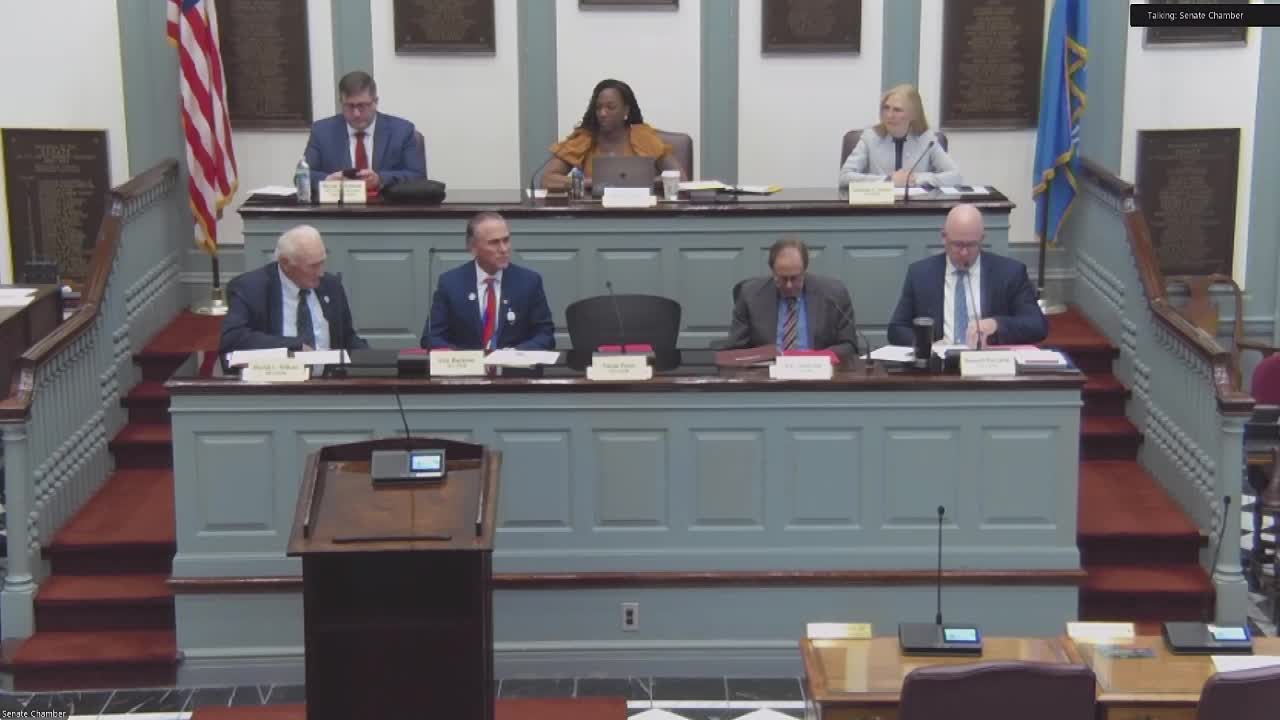
Senate Health and Social Services Committee members spent more than two hours on Oct. 27 hearing testimony about Senate Bill 55, which would ban gender‑transition medical interventions for minors in Delaware and impose disciplinary and civil penalties on clinicians who provide or refer such care.
Senate Health and Social Services Committee members spent more than two hours on Oct. 27 hearing testimony about Senate Bill 55, a proposal that would ban gender‑transition medical interventions for minors in Delaware and impose licensing and civil penalties on clinicians who provide or refer such care.
Sponsor Senator Richardson framed the bill as child‑protection legislation and said lawmakers should act regardless of decisions elsewhere, noting a pending U.S. Supreme Court decision he expected “probably sometime in June.” He told the committee SB 55 would bar “gender transition procedures for children due to the potential for irrevocable harm” and would provide civil remedies and disciplinary actions against clinicians who participate in prohibited care.
Supporters told the committee the practices currently used in pediatric gender clinics are experimental, cite poor evidence, and risk permanent physical harm. Jamie Reid, introduced as a former pediatric gender clinic employee and whistleblower, said she worked with nearly 1,500 patients over five years and described changes in referral patterns: “We went from screening 4 to 5 new patients per month to screening 40 to 60,” and she said one parent told staff “my child is a shell of their former self.” Reid said she believes the protocol harms patients and described her decision to blow the whistle as closing a clinic and contributing to a Missouri law change.
Detransitioner Camille Kiefel, president of D Trans Health, described having top surgery as an adult and later regretting it, saying she was not fully informed about surgical consequences and the effects on breastfeeding and intimacy. “I am grieving the loss of my body parts, and I don't want any child to go through this,” she said, asking the committee to consider children with trauma or mental‑health conditions who may seek transition as a response to distress.
Retired surgeon Cede Cassells, who identified himself as a four‑decade surgeon and life member of the Delaware Academy of Medicine, told senators he sees the issue as a public‑health and medical‑ethics question. He said randomized controlled trials supporting pediatric gender‑affirming interventions do not exist and asserted longitudinal studies show harms; he called the World Professional Association for Transgender Health (WPATH) “a self‑designated organization” and characterized some professional guidance as conflicted.
Opponents argued medical organizations, peer‑reviewed evidence and clinical practice support gender‑affirming care for youth in appropriate, individualized circumstances. Multiple public commenters — including medical professionals, parents, LGBTQ advocates and young people — urged the committee to reject SB 55. Vanna Cavazos, public policy director of Bulletproof Pride, said the bill is “a misguided ban” and cited a study she said shows bans are associated with higher suicide attempts; she added that major medical organizations support age‑appropriate gender‑affirming care.
Other speakers opposing the bill included Nandi Randolph of the Delaware Family Policy Council (supporting the bill), Jovan Rich of the ACLU of Delaware (urging a no vote), Lena and Mira Jade (who run an LGBTQ youth program), and Atlas McGinnis, a 15‑year‑old trans youth who described moving to Delaware for safety and said they plan to begin medical transition when eligible.
Chris Haas, speaking for Delaware's Insurance Department on behalf of Commissioner Trinidad Navarro, told the committee the bill raises potential conflicts with federal non‑discrimination law. He cited 42 U.S.C. §18116 and related rules under the Affordable Care Act that prohibit insurers from denying coverage on the basis of gender identity and warned carriers could not “deny or limit coverage solely because health care is related to an individual's gender identity or their age.”
Committee senators asked witnesses about evidence, consent and clinical protocols. Jamie Reid described protocols as a three‑step pathway she associated with puberty suppression at Tanner stage 2, then cross‑sex hormones, then surgical interventions; she said clinical guidance followed WPATH standards, Endocrine Society guidance and American Academy of Pediatrics material. Multiple questioners asked where Delaware counts or tracks pediatric patients receiving these interventions; Reid said reliable statewide numbers are “not known” and recommended querying hospitals and insurers for claims data.
Several senators pressed for peer‑reviewed studies and asked whether major professional bodies — the American Medical Association, the American Academy of Pediatrics, the Endocrine Society and the American Psychiatric Association — take positions on restricting care. Sponsor Richardson said he expects professional positions to evolve as new evidence emerges; other senators — including Senator Pinkney, chairing the committee — repeatedly cited the named national medical organizations in questioning the bill's likely impact on patient access and suicide risk.
No formal vote was recorded in the hearing. Chair Pinkney said public comments would be accepted for 24 hours after adjournment and announced plans to circulate the bill for sponsors. The committee adjourned after taking public comment.
Why this matters: SB 55 would change which medical options are available to minors in Delaware, affect how clinicians document and refer care, and raise questions about state law, insurance coverage and potential federal conflicts. The bill drew both personal accounts of harm and appeals to national professional guidance, producing a pronounced split between witnesses who say current pediatric interventions are harmful and witnesses and clinicians who say access to evidence‑based care reduces mental‑health risks among transgender youth.
What the committee heard next: senators asked for documentation. Witnesses and staff indicated they would submit articles, studies and court records to the committee record; Senator Richardson offered to provide the packets he mentioned earlier. The Insurance Department asked for clarification in statutory language if the committee intends to restrict coverage, noting the bill's text refers to “insurance reimbursement” as well as coverage.
No implementation date or effective action was decided in the hearing. The bill remains under committee consideration and will move forward only if formally scheduled for a vote at a subsequent committee meeting.