Get Full Government Meeting Transcripts, Videos, & Alerts Forever!
Get email alerts on the Family Law Marriage Recognition topic
No spam. Unsubscribe anytime.
Committee releases bill to recognize out‑of‑state first‑cousin marriages for Delaware residents
Summary
House Substitute 1 for HB 8 would amend Title 13 to recognize marriages between first cousins that are valid where solemnized or in the state where the couple will reside, allowing some immigrant couples to complete family-reunification applications without leaving Delaware.
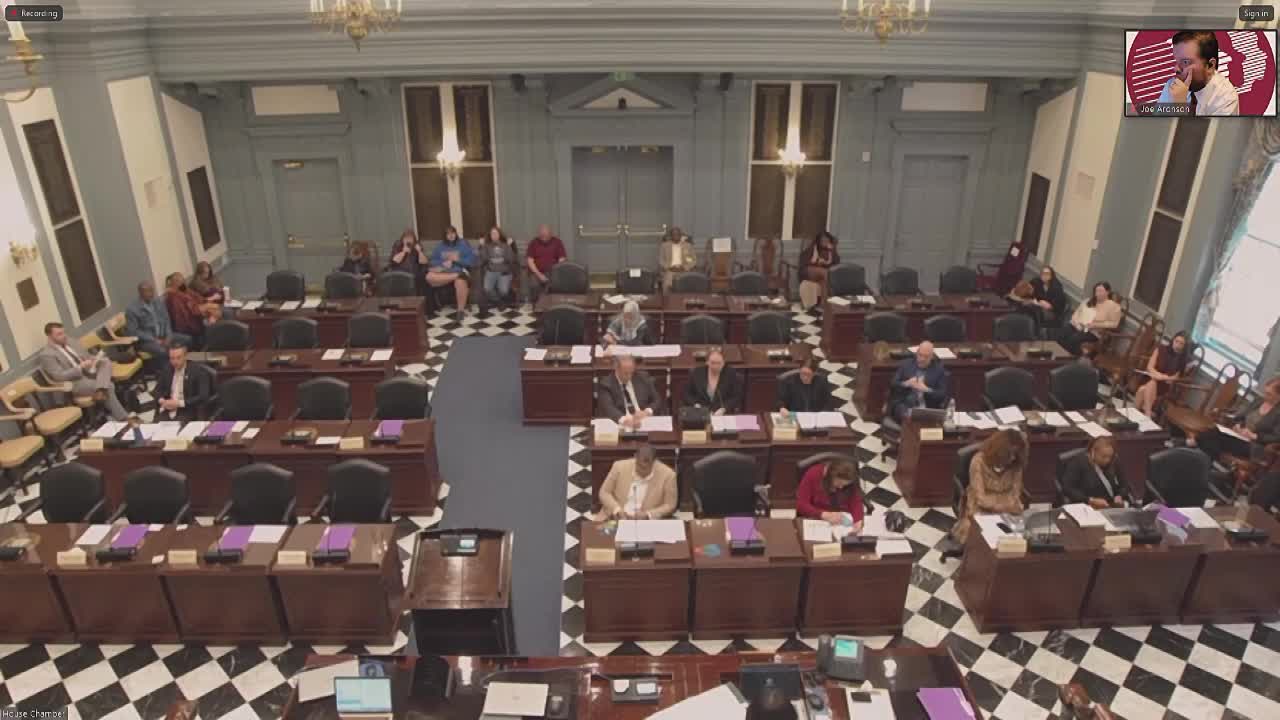
The House Health & Human Development Committee voted to release House Substitute 1 for House Bill 8, which would amend Title 13 of the Delaware Code to recognize marriages between first cousins that were obtained or recognized outside Delaware and where one party is a Delaware resident.
Sponsor Representative Wilson Anton told the committee the bill was prompted by a constituent who was told his marriage to his first cousin made him ineligible to reunify his family while living in Delaware. Anton said the change is intended to prevent residents from having to relocate or "skirt the law" to keep families together.
The sponsor described research showing that about 10 percent of the world's families are headed by couples who are second cousins or closer, and that laws vary across states and countries. He noted that 25 states prohibit marriage between first cousins while others permit it, sometimes with conditions such as genetic counseling or age thresholds.
Committee members asked how recognition would affect internal processes at vital records and whether the change could have legal consequences for state criminal statutes. Representative Anton and counsel explained the bill would recognize an out‑of‑state marriage for purposes such as immigration and vital-record recognition but would not create a Delaware-issued marriage license; for example, the state would accept an existing foreign or out-of-state marriage certificate for recognition purposes. The sponsor said there was no fiscal note associated with the bill.
Representative Neal and other members queried whether other states that allow first‑cousin marriage impose conditions (for example, genetic counseling or age limits). Anton noted Maine and Arizona as examples of states that require genetic counseling or age thresholds in some circumstances and said most states that allow such marriages do not require additional safeguards.
The bill was released from committee after a motion to release by Representative Morrison with a second from Representative Burns. A roll call recorded yea votes from Representatives Chukwuocha, Morrison, Ross Levin, Kay Smith and Snyder Hall; Representative Michael Smith voted no. Several members were listed as absent during the vote.
Witnesses and public commenters were limited for this item; the committee did not record in-person public testimony for HB 8 during the hearing and remote public comment concluded with no substantive submissions listed in the record.
Committee counsel referenced U.S. Citizenship and Immigration Services guidance in the discussion, noting that USCIS historically treats certain marriages as not recognized for immigration purposes when a state of residence maintains a strong public policy refusing recognition; the sponsor said the bill is intended to avoid that outcome for Delaware residents. Committee members discussed whether additional statutory conditions (age, genetic counseling, or infertility provisions) would be required to align with other states; the sponsor said adding such requirements would require separate legislation.
The committee will report the substitute to the full House for further consideration.