Get Full Government Meeting Transcripts, Videos, & Alerts Forever!
Get email alerts on the Postconviction Forensics topic
No spam. Unsubscribe anytime.
Senate committee hears testimony on bills to expand postconviction DNA and forensic-review pathways
Summary
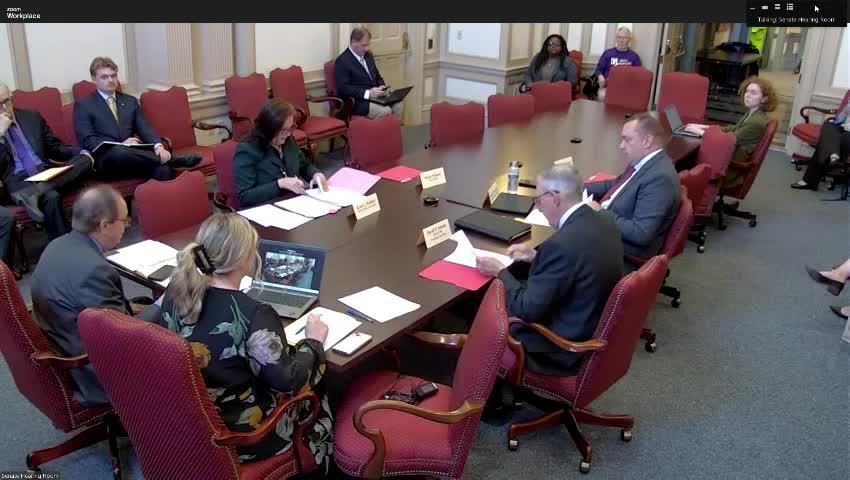
The Senate Corrections and Public Safety Committee on an online and in-person hybrid hearing reviewed two related bills — Senate Bill 57 and Senate Bill 58 — aimed at updating Delaware law to allow broader postconviction DNA testing and to permit challenges when forensic methods used at trial are later discredited.
The Senate Corrections and Public Safety Committee on an online and in-person hybrid hearing reviewed two related bills — Senate Bill 57 and Senate Bill 58 — aimed at updating Delaware law to allow broader postconviction DNA testing and to permit challenges when forensic methods used at trial are later discredited.
Senator Hoffner, sponsor of the measures, told the committee SB 57 would remove a three-year filing limit for DNA testing motions, allow people who pleaded guilty to seek postconviction DNA testing, and authorize testing of previously tested evidence with newer methods. "This bill aims to broaden access to DNA testing for postconviction relief and update the standards for granting new trials based on DNA testing," Hoffner said.
The bills drew support from criminal-justice reform groups, Innocence Project Delaware and other civic organizations. Caitlin Richards, associate director of Tideshift Justice Project, told the committee SB 57 "removes unnecessary barriers for DNA testing and provides a fair legal standard for granting new trials based on DNA evidence." Jessica Aleta, interim co-executive director of Innocence Project Delaware, said Delaware lags other states on exonerations and noted that some of the organization's clients have cases predating DNA testing.
SB 57: key provisions and discussion
Sponsor remarks and the bill text presented by Hoffner say SB 57 would: remove the three-year limitation on filing a motion for postconviction DNA testing; permit people who pleaded guilty to seek testing; allow retesting of evidence with methods unavailable at the time of conviction; and set six criteria courts must consider before granting testing, including chain-of-custody and that the proposed testing uses scientific methods "generally accepted within the relevant scientific community" and that the results would be relevant to identity or other core issues. The bill also delegates to the court a determination whether the state or applicant should pay testing costs based on the applicant's financial means.
Committee members asked practical questions. One member asked, "What does one DNA test cost?" Hoffner replied she did not know and recalled older estimates around $3,500. Committee members pressed staff and sponsor about timing language in the bill: the bill would require the superior court to set a hearing within 90 days of filing and give the Department of Justice 30 days to respond, but members and staff said that timeline may be tightened or changed after consultation with the courts. Hoffner said she has discussed the wording with court staff and will adjust the bill language where necessary.
Public comment and stakeholder positions
Organizations and individuals who testified in support included Tideshift Justice Project, the League of Women Voters of Delaware, Innocence Project Delaware, YWCA Delaware, the Office of Defense Services (ODS), and veterans' advocates. Becca Cotto of YWCA Delaware said the bills "ensure our justice system delivers real justice" and noted that most states now permit guilty pleas to be subject to postconviction testing. Joseph Walls, CEO of Veteran Services, urged the committee to "get past these procedural bars" and said an innocent person in prison is also a victim.
The Office of Defense Services, represented by Alana Mozek, legislative director, supported modernization of postconviction testing but emphasized resource and role questions: ODS does not typically represent individuals in most postconviction matters and said the bill "doesn't establish a right to counsel" but that courts could appoint counsel for meritorious petitions. The Department of Justice submitted concerns about SB 58's standard for vacating convictions and asked the committee to consider whether "reasonable likelihood" is an appropriate standard when compared to the higher standards used to obtain convictions at trial.
SB 58: scope and concerns about standards
SB 58 would create a process for petitions where new forensic science undermines evidence used at trial or where forensic methods used in the past are discredited. Witnesses described the bill as "narrowly tailored" to allow hearings only where petitioners meet specified criteria. Christine Iannelli, representing the Department of Justice, urged careful attention to the vacatur standard in SB 58, saying the proposed standard ("reasonable likelihood" that a different outcome would have occurred) is lower than civil standards such as "preponderance" or "clear and convincing," and is much lower than the state’s beyond-a-reasonable-doubt standard at trial.
Witnesses and committee members also discussed laboratory practice and forensic oversight. Several speakers asked that the Division of Forensic Services provide information on its scientific methods, calibration and quality-control practices, and how often laboratory policies are reevaluated. "When we talk about testing ... it would probably be helpful for them to give some sort of presentation or information about the kinds of science they're using and how often they're reevaluating these tools," a Department of Justice representative said.
Procedure and next steps
No committee vote on either SB 57 or SB 58 was recorded at the hearing. The committee approved the minutes of its Jan. 29, 2025 meeting by voice vote earlier in the session. Sponsor Hoffner and committee staff said they will work with the courts and interested agencies to refine timing language (including the 90-day hearing requirement and the Department of Justice response timeline) and other technical corrections before the bills move forward.
Why it matters
Supporters said the bills bring Delaware into alignment with the majority of states and modern forensic science, allowing potentially innocent people to seek reliable scientific review of their convictions. Critics, including the Department of Justice at the hearing, urged caution on the standard for vacating convictions and stressed engagement with victim communities and forensic laboratories to ensure both fairness and finality where appropriate.
The committee will take additional drafting and stakeholder input before any final committee action on SB 57 or SB 58.