Get Full Government Meeting Transcripts, Videos, & Alerts Forever!
Get email alerts on the Mental Health Suicide Prevention topic
No spam. Unsubscribe anytime.
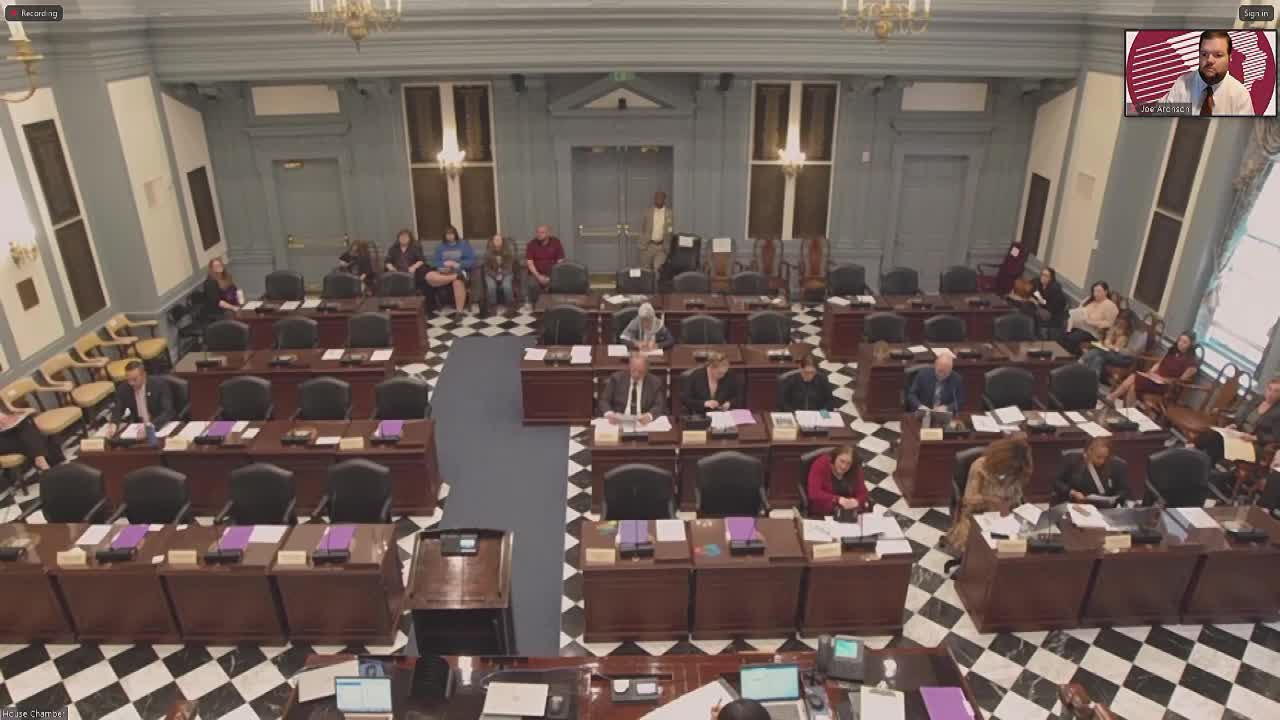
House committee advances bill to create Delaware Office of Suicide Prevention
Summary
The House Health & Human Development Committee voted to release House Bill 54, which would establish a state Office of Suicide Prevention housed within DSAMH and begin as a single director position to coordinate suicide prevention, intervention and postvention efforts.
At a meeting of the House Health & Human Development Committee, lawmakers voted to release House Bill 54, an act to amend Title 16 of the Delaware Code to establish an Office of Suicide Prevention.
The office, sponsored by Representative D. Morrison, would be housed under the Division of Substance Abuse and Mental Health (DSAMH) and begin with one reclassified position: a full-time director responsible for coordinating prevention, intervention and postvention services statewide.
Supporters said the office would serve as a central hub for resources, improve coordination between state agencies and community organizations, and help the state apply for federal grants. "One of the things they'll be doing is serving as a hub," Representative Morrison said, adding that the goal is to reduce the confusion that occurs when people must call multiple numbers to find help.
Family members and advocates described gaps in support and urged the committee to act. "Postvention is prevention," Jennifer Antonick, founder and executive director of DJ's Alliance, told the committee, describing postvention services she said her volunteer-run group lacks: office space, a budget and real-time data collection. Antonick said the organization responds to calls from employers and families after deaths by suicide and urged members to "vote yes to saving lives."
Health officials and coalition leaders also endorsed the bill. Heather Doncaster of DSAMH said the statewide Suicide Prevention Coalition already includes the Commission of Veterans Affairs and the Delaware National Guard, and that a coordinator would strengthen collaboration and the state suicide prevention plan. "Adult crisis calls currently exceed 1,100 per month, and the Delaware 988 line fields another 370 calls per month," Doncaster said, citing call-volume data presented to the committee.
Eileen Fink of the Department of Services for Children, Youth and Their Families told the committee that school survey data show youth risk indicators: in a recent year, 18 percent of Delaware high school students seriously considered suicide and 9 percent attempted suicide; 37 percent reported feeling sad or hopeless for two consecutive weeks or more. "It is critical that we continue to expand public awareness, ensure access to resources for individuals at risk of suicide, and work together to build a strong, effective, and responsive system of care," Fink said.
The Delaware Suicide Prevention Coalition cited a February 2024 needs assessment by the Suicide Prevention Resource Center that identified Delaware as one of four states without a half-time or greater suicide prevention coordinator and one of 17 states with limited or no dedicated funding for suicide prevention staffing. Coalition chair Jennifer Smolowitz said the office would allow more frequent updates to the state strategy and annual reporting to identify trends.
The committee approved the bill by roll call after a motion to release by Representative Heffernan and a second from Representative Ross Levin. The roll call recorded yea votes from Representatives Chukwuocha, Neal, Burns, Harris, Heffernan, Johnson and Morrison. The bill will be reported out of committee to the full House for further consideration.
Clarifying details presented to the committee included suicide counts (about 130 deaths per year in recent years, rising to 145 in 2023), monthly crisis line volumes (adult crisis calls >1,100; 988 ~370; child crisis ~400) and school-based survey percentages of youth ideation and attempts. Supporters noted the office would start as a single position with the intention of expanding through grant funding and other revenues.
The committee hearing included multiple public commenters and representatives of health-care and advocacy organizations who urged passage; no fiscal note was presented indicating new appropriations for a separate full-time hiring package, and DSAMH said it would reclassify an existing position to serve as director.
If enacted, the bill would add a statutory definition of "postvention" to Delaware law and create the coordinator role responsible for convening partners, producing annual reporting, and pursuing federal grant opportunities to expand services.