Get Full Government Meeting Transcripts, Videos, & Alerts Forever!
Get email alerts on the Insurance Fraud topic
No spam. Unsubscribe anytime.
Delaware committee reviews bill to criminalize insurance application fraud
Summary
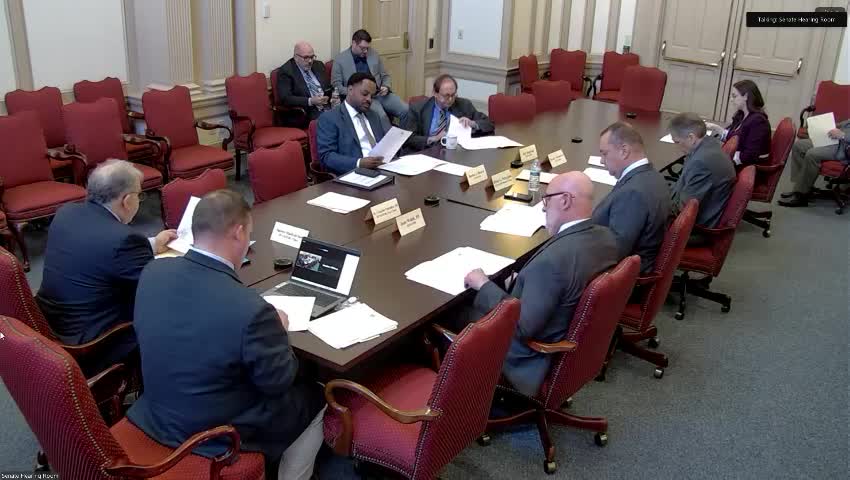
Senate leaders and Department of Insurance officials discussed a bill March 19 that would create a specific crime for false statements on insurance applications and adjust criminal penalties based on the amount sought.
Senate leaders and Department of Insurance officials discussed a bill March 19 that would create a specific crime for false statements on insurance applications and adjust criminal penalties based on the amount sought.
Senate Bill 45, introduced by Senator Spiroz Mantonioz, would add an offense for “application insurance fraud” to Delaware’s criminal code. Under the bill as read to the Senate Banking, Business Insurance, and Technology Committee, application-related insurance fraud would be a class A misdemeanor unless the benefits wrongly obtained or sought equal or exceed $1,000, in which case the offense would be a class G felony.
The measure was introduced to the committee by Department of Insurance staff. Chris Sasse of the Delaware Department of Insurance told the committee the bill was drafted after referrals to the department's fraud bureau showed an increase in application-related misrepresentations and that other states in the region have similar statutes. "Insurance fraud is not a victimless crime. Estimates are that, between $400 and $700 in consumer premium a year can be attributed to paid out insurance fraud," Sasse said.
Committee members asked how application fraud is detected and whether agents would be held liable. Gerald Pepper, director of the Department of Insurance fraud bureau, described common "red flags" insurers investigate, including the timing of a policy application immediately preceding a claim and apparent weather discrepancies for property claims. "If someone files a claim at 2:55 in the afternoon and they applied for and received or renewed a policy at 2:50 in the afternoon, that would be a red flag," Pepper said. He also cited examples such as misreported business payroll or occupation, residency used to obtain a cheaper premium, and medical-history omissions in life insurance applications.
Department staff advised the committee that the proposed statute would focus on the applicant's intent rather than on licensed producers: "The statute is and will continue to be very specific about the individual or the agent's intent," Sasse said, adding that liability would generally fall on the applicant, not the broker. Staff also noted a state hotline that accepts anonymous tips about potential fraud.
Committee members pressed staff for why the bill uses a $1,000 threshold for felony treatment; staff said the deputy attorney general who drafted the provision is no longer with the team and that they would report back with an explanation. No formal vote on the bill was recorded during the meeting. Public comment on the bill was limited to Department of Insurance staff and no members of the public registered to speak.
The bill remains under committee consideration; staff said they would follow up with the committee on the drafting rationale for the $1,000 threshold and other technical questions raised by members.