Get Full Government Meeting Transcripts, Videos, & Alerts Forever!
Get email alerts on the School Foods Additives topic
No spam. Unsubscribe anytime.
Senate committee considers bill to restrict Red Dye 40 in school meals and competitive foods
Summary
Senate Bill 69 would ban Red Dye 40 from school breakfasts, lunches and school-managed vending during school hours; the Department of Education and several medical and advocacy groups expressed support while industry groups and food-safety coalitions opposed the measure, citing existing federal regulatory reviews and implementation burdens.
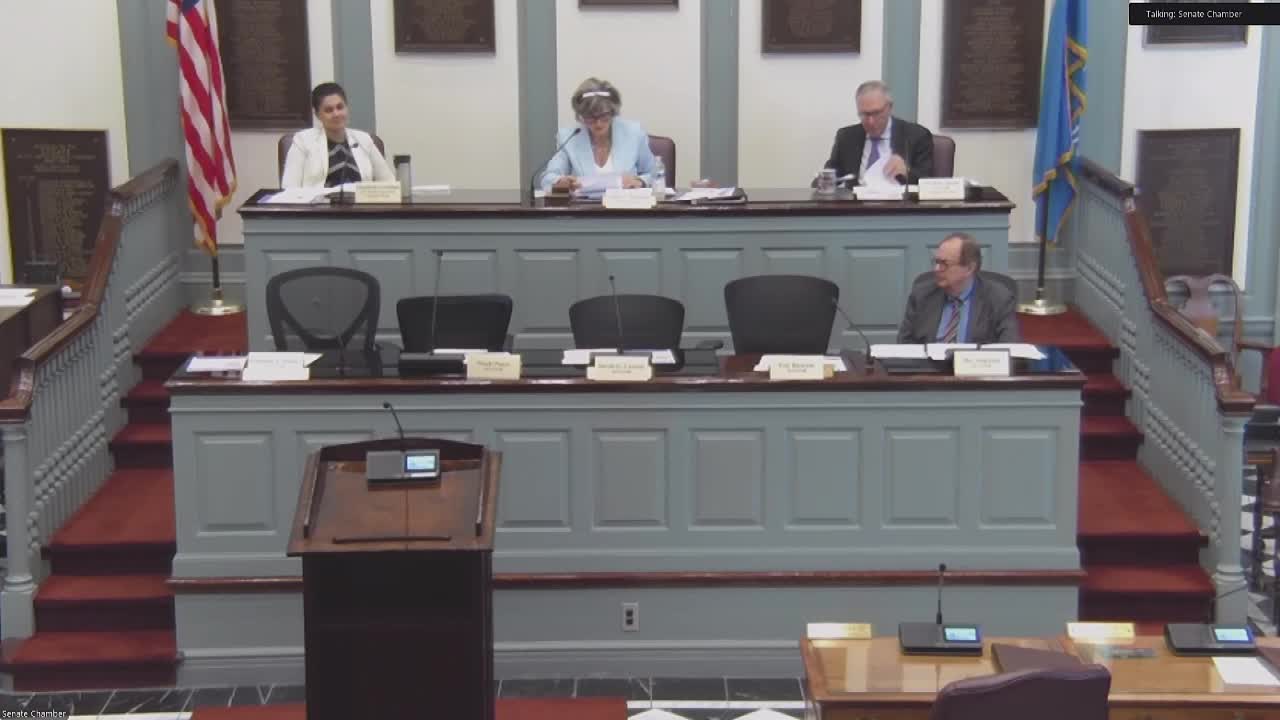
The Delaware Senate Education Committee heard testimony on Senate Bill 69, which would prohibit the use of the color additive commonly known as Red Dye 40 in school breakfasts, lunches and vending machines managed by school nutrition programs during the official school day.
Senator Eric Buxton, the bill’s sponsor in the Senate, told the committee the measure was drafted to apply narrowly to food served under government-run school programs: it "only applies to school breakfast, lunch and vending machines managed by the school nutrition program during the school day," he said, adding that the bill is not intended to regulate items brought by parents for classroom celebrations or after-school events.
Supporters who testified said reducing children’s exposure to certain artificial color additives in schools could have public-health and behavioral benefits while giving parents and districts an incentive to choose alternatives. Dr. Richard Henderson, chair of the Governor Affairs Committee for the Medical Society of Delaware, said limiting exposure in schools "may be the best path forward until we have additional information." Amy Beam, director of nutrition programs at the Department of Education, told the committee that schools typically order through large vendors such as Sysco or US Foods and that "they have access to all of the nutrition facts and labels when they place the order," a point she said makes identification of ingredients feasible at the procurement stage.
Industry and food-safety groups urged caution. Lauren Vela of the Maryland-Delaware-D.C. Beverage Association told the committee that Red Dye 40 is approved by federal and international regulators and said, "it is important to make clear that these products are safe." Representatives from the Consumer Brands Association, the Food Industry Safety Coalition and other trade groups said the FDA and international bodies have repeatedly reviewed the additive’s safety and urged that policy decisions be coordinated at the federal level. The groups warned a state-level restriction could impose procurement and cost burdens on school systems.
Committee members asked about timing and cost. Senator Buxton said the bill’s language includes ramp-up provisions and that implementation would be scheduled to begin July 1, 2026, with earlier activities to allow districts to use existing inventory and adjust procurement. He and Amy Beam noted schools must follow procurement rules that can require bidding and lead times for changing contracts.
Several witnesses recommended implementation flexibility. The beverage industry asked for an extended implementation date to match procurement cycles. Kendall Masset, executive director of the Delaware Charter Schools Network, said school staff may lack time and capacity to verify ingredient lists for every product and urged clarity on enforcement responsibilities.
The committee took public testimony from medical, education and industry witnesses representing both support and opposition. No committee vote on SB 69 was recorded at the hearing.