
Senate Environment & Agriculture committee hears wide range of animal-welfare, veterinary and pesticide bills; committee votes to hold each for further work
Get AI-powered insights, summaries, and transcripts
Sign Up Free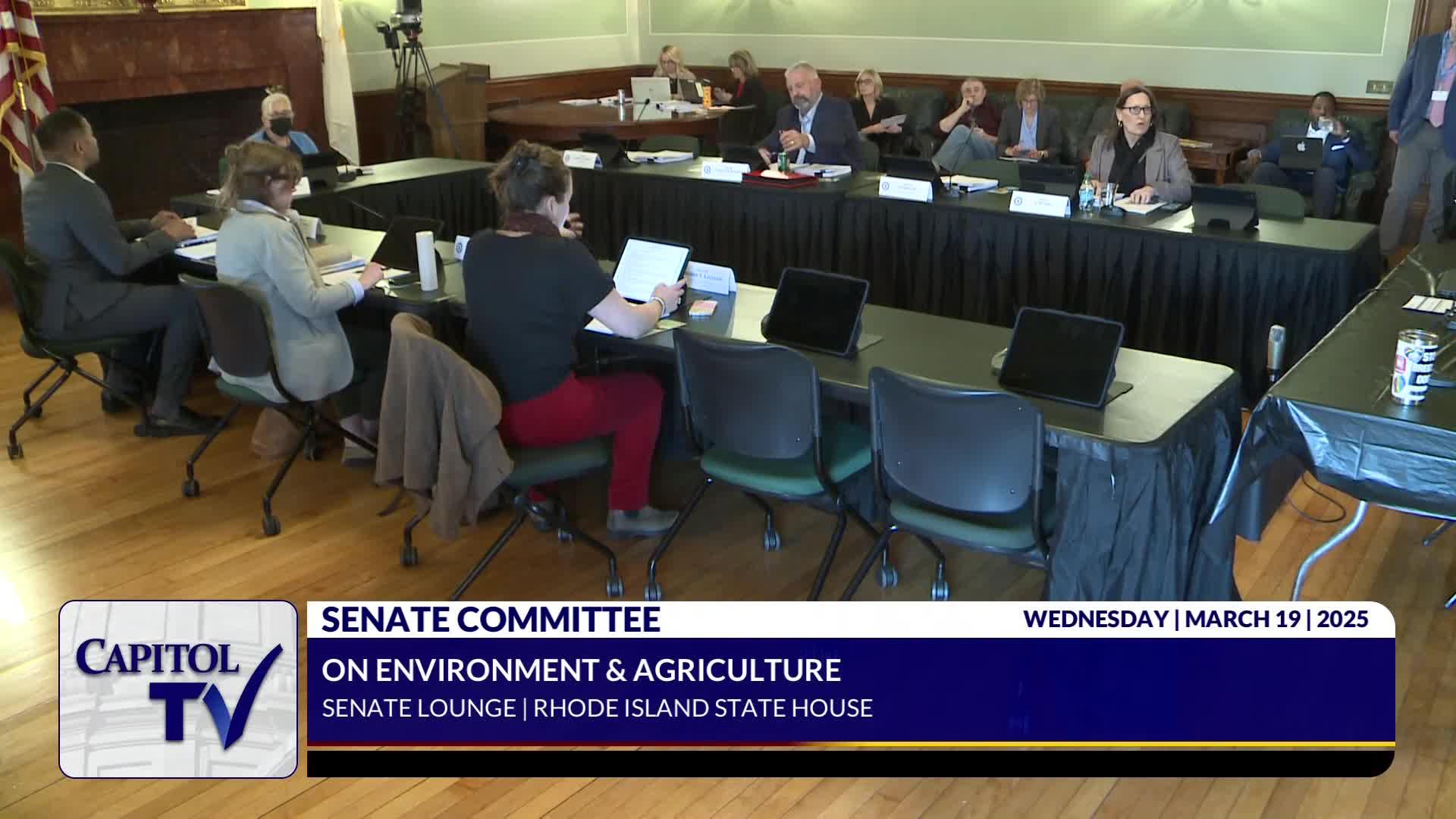
Summary
The Senate Environment and Agriculture Committee met to hear testimony on multiple bills touching animal welfare, public-health pesticide policy and veterinary practice standards, and voted to hold each item for further consideration.
The Senate Environment and Agriculture Committee met to hear testimony on multiple bills touching animal welfare, public-health pesticide policy and veterinary practice standards, and voted to hold each item for further consideration.
Committee members took testimony on a broad agenda that included Senate Bill 25 (ban on sale of products from farmed fur), SB 398 (ban on retail sale of parrots), SB 180 (ban on elective declawing of cats), SB 651 (ban on certain anticoagulant rodenticides), SB 646 (limits on pesticide/rodenticide use at schools), SB 648 (required client information sheets for veterinary prescriptions), SB 647 (veterinary telemedicine), SB 649 (pet insurance regulation), SB 403 (ban on sale of foie gras), SB 325 (definition of hobby breeders), SB 90 (allowing sale of raw milk in Rhode Island) and related measures. Each bill drew supporters and opponents; the committee ultimately voted to hold the items for revision or further study rather than advancing immediate committee votes.
Why it matters: the bills touch public health (rodenticides and school pesticide notifications), consumer protection (pet insurance and veterinary prescription information), local commerce (pet and fur retailers), and animal welfare (declawing, parrots, foie gras and breeder definitions). Several items also raise questions about enforcement authority and the limits of state regulation.
Key items discussed (summaries drawn from testimony at the hearing):
SB 25 — Ban on sale of new farmed-fur products Proponents: David Brunetti (resident/animal welfare advocate) and Haley Stewart (senior public policy manager, Humane World for Animals) urged a prohibition on the sale of new fur products derived from animals raised on fur farms, arguing those farms are “barbaric, inhumane” and largely unregulated. Brunetti said the bill would “help in the efforts to bring an end to this barbaric, inhumane industry.” Opponents including Mike Brown (Natural Fibers Alliance) and retail witnesses said the industry and supply chain are regulated or have certification systems and warned of impacts to small businesses and consumer choice. Backcountry Hunters and Anglers said its concerns about trapping and hunting exemptions had been addressed in this version. The committee accepted a motion to hold the bill for further work; motion by Senator Bridal, seconded by Senator DiMario. Outcome: held (roll call taken).
SB 90 — Sale of raw milk Sponsor Senator Rogers explained that the bill would allow sales of raw milk within Rhode Island; he said neighboring states allow it and some producers cross state lines to sell. The Department of Health submitted a written opposition; the Rhode Island Farm Bureau also submitted written opposition. Motion to hold the bill passed; outcome: held (roll call taken).
SB 325 — Hobby breeder definition (animals) Sponsor Senator Brito proposed tightening the definition of “hobby breeder” to reduce exemptions from state regulation. Wayne Kazarian (RISPCA) supported the change and recommended further statutory cleanup; rescuers and animal welfare advocates described impacts of uncontrolled breeding on shelters. The committee voted to hold for revision; outcome: held (motion by Senator Bridal, seconded by Senator DeMario).
SB 648 — Veterinary client information sheets (prescription transparency) Supporters, including Glenn DuFold (pet owner and policy advocate) urged a mandatory client information sheet with each veterinary prescription (citing California’s "Lizzie’s Law" and New York’s "Bowie’s Law" as precedents). The Rhode Island Veterinary Medical Association (Dr. Ralph Pratt) opposed parts of the bill as written because it would require veterinarians to supply written material when they prescribe to outside pharmacies; the association asked that pharmacies share responsibility for providing consistent consumer-facing materials. Testimony noted software and template solutions already used in other states and emphasized the goal of preventing avoidable adverse drug events in pets. The committee voted to hold; outcome: held (roll call taken).
SB 647 — Veterinary telemedicine Sponsor Senator Murray said the bill would allow veterinarians to establish a client-patient relationship through electronic means in certain circumstances to improve access (noting it should not replace necessary in-person exams). The Rhode Island Veterinary Medical Association opposed authorizing initial telemedicine-based establishment of the relationship, arguing in-person exams are essential to safe diagnosis. The committee voted to hold; outcome: held (motion by Senator DeMario, seconded by Senator Coleman).
SB 649 — Pet insurance regulation Jeff Taylor (North American Pet Health Insurance Association) testified in favor; the proposal is patterned on the NAIC model and would create statutory consumer disclosures and standards for the growing pet-insurance market. The bill was held for further drafting and coordination with the Department of Business Regulation; outcome: held (motion by Senator Coleman, seconded by Senator DiMario).
SB 403 — Foie gras (sale ban) Proponents including Robert Prakashanti (Farm Sanctuary) and Alyssa Danielson argued foie gras production involves force-feeding and induced liver disease and urged a sale ban. Written opposition was filed. Witnesses noted that no Rhode Island farms produce foie gras, so the proposed ban would affect only retail sales. The committee voted to hold the bill for additional consideration; outcome: held (roll call taken).
SB 646 — Restrict pesticide and rodenticide use on school grounds Sponsor Senator Vargas described a bill that would restrict the application of certain lawn-care pesticides and rodenticides on K–12 and daycare grounds, require schools to provide notice to parents and to submit integrated pest management (IPM) plans to the Department of Education and DEM, and to prioritize nonchemical alternatives ("smart traps", contraceptives and exclusion). The pest-management industry (New England Pest Management Association, BigBlueBug Solutions) testified in opposition, warning that vague emergency exemptions or overly prescriptive restrictions could impede timely response to serious infestations and public-health risks. Parents and health advocates and the Audubon Society raised concerns about toxicity, children’s exposures and environmental impacts. The committee voted to hold the bill; outcome: held (roll call taken).
SB 180 — Ban on elective declawing of cats Sponsor Senator Murray and multiple animal welfare groups and rescuers urged a ban on declawing except when medically necessary, calling the procedure an amputation equivalent. The Rhode Island Veterinary Medical Association asked that medical-exception procedures remain subject to veterinary oversight and cautioned against criminal penalties without a clear enforcement path; other witnesses and rescue groups supported a ban for convenience. The committee voted to hold the bill for further work; outcome: held (roll call taken).
SB 398 — Restrict retail sale of parrots in Rhode Island Proponents from Foster Parrots and other rescues described high surrender numbers (Foster Parrots reported requests for more than 1,000 surrenders in 2024 and many birds coming from nearby states) and testified that small and medium parrots often suffer in retail settings and are frequently surrendered. Pet-industry representatives and several Rhode Island pet retailers and long-time aviculturists opposed a retail ban, arguing legal, regulated breeders and pet stores provide education and consumer protection and that a ban would push buyers to unregulated markets. The committee voted to hold the bill; outcome: held (roll call taken).
SB 651 — Ban on second-generation anticoagulant rodenticides (‘‘SGARs’’) and phased restrictions Sponsor Senator Murray and conservation and wildlife witnesses (Audubon Society, Congress of the Birds and wildlife rehabilitators) urged restriction or a phased ban on widely used anticoagulant rodenticides, citing repeated findings of these chemicals in raptors, fish and other non-target species and the difficulty of reversing environmental contamination. Audubon and wildlife rehabilitators described positive tests in local wildlife and direct wildlife mortalities. Industry witnesses (New England Pest Management Association and licensed applicators) warned that removing these rodenticides without operational alternatives could worsen rodent-driven public-health risks and that integrated pest management must include professional options. Students and community advocates presented support for the proposed ban and discussed nonchemical control options and contraceptive pilot programs. The committee voted to hold the bill for further study and to pursue stakeholder work; outcome: held (roll call taken).
What the committee did: after extended public and stakeholder testimony, the committee accepted motions to hold each bill pending amendments, technical fixes and additional stakeholder meetings. Holding a bill is a common committee step that pauses advancement while staff and sponsors redraft language, gather data or resolve implementation concerns; it does not represent final legislative action on any measure.
Quotes from the record (selected, verbatim): "this barbaric, inhumane industry" — David Brunetti on farmed fur farms. "The bill before you today is very different from fur sales bills that you have seen in previous sessions." — Haley Stewart, Humane World for Animals. "We are entirely in favor of the language proposed to modify 4-19-217" — Wayne Kazarian, Rhode Island SPCA (on hobby breeder definition). "There's no safe way to use anticoagulant rodenticides." — Phoenix Wheeler, Audubon Society of Rhode Island. "The veterinarian will have something to fall back on" — Glenn DuFold (on written client information sheets).
Meeting context and next steps: testimony demonstrated clear disagreement between regulated industries (licensed pest-management professionals, retailers and some veterinarians) and conservation, public-health and animal-welfare advocates. Several bills will require drafting changes requested by professional regulators (for example, clarifying the therapeutic exceptions in the cat-declaw bill, adding pharmacy responsibilities to the veterinary-prescription disclosure bill, or clarifying emergency exemptions and IPM requirements in the pesticide/school bill). Committee members directed staff and sponsors to work with stakeholders and to return amended language for reconsideration.
Ending note: the committee’s holding of the bills preserves time for negotiated solutions to complex tradeoffs between public health, wildlife conservation, consumer protection and industry practice. Expect further drafts and stakeholder meetings to be scheduled before any of the measures reach a committee vote to advance to the Senate floor.