Get Full Government Meeting Transcripts, Videos, & Alerts Forever!
Get email alerts on the Healthcare Costs topic
No spam. Unsubscribe anytime.
Health insurance regulator: Rhode Island will raise primary-care spending targets and expand transparency efforts
Summary
Office of the Health Insurance Commissioner briefed the committee on rate reviews, the health spending accountability program and plans to increase primary-care funding required by pending regulations and statutes.
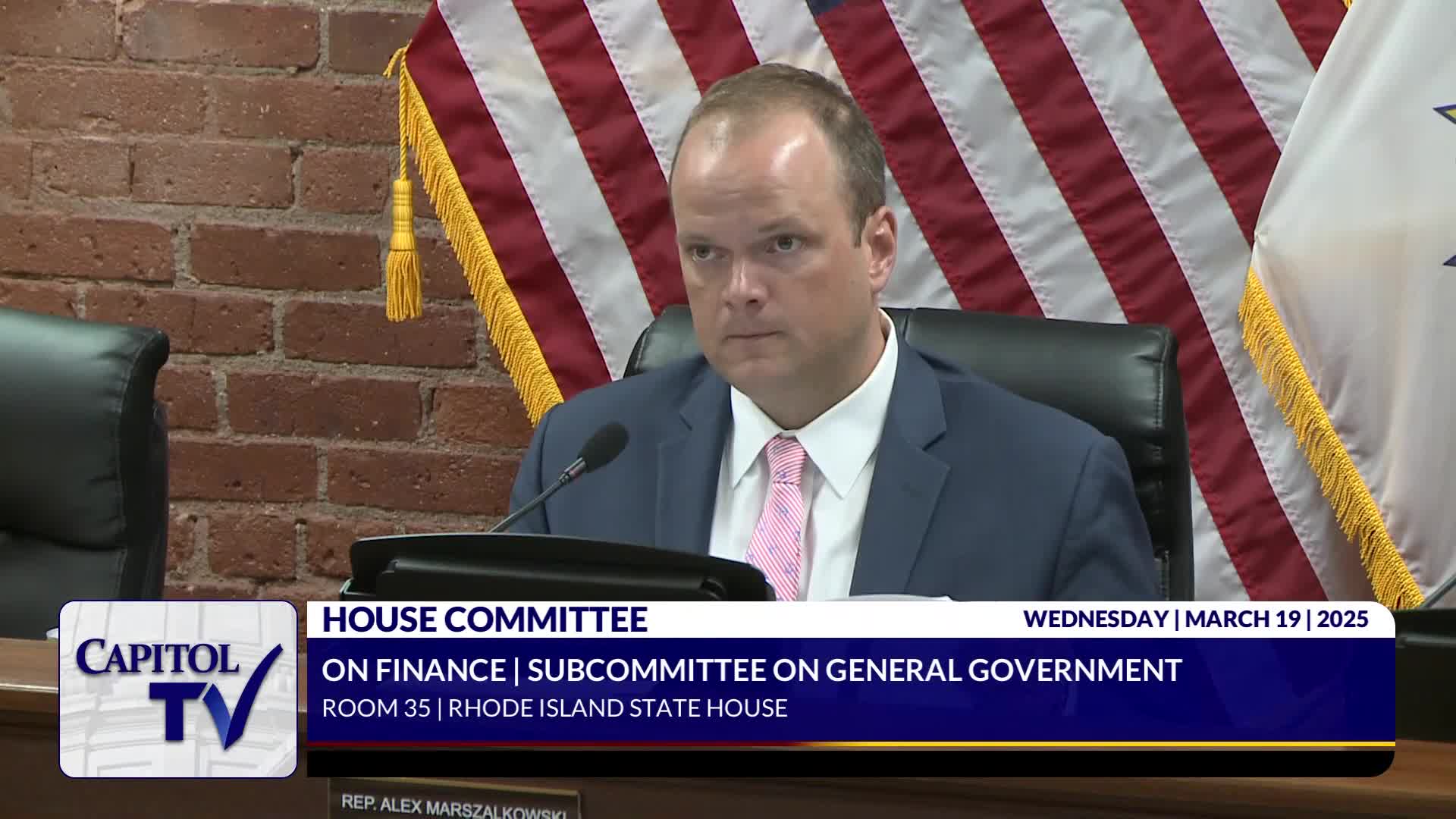
Corey King, Rhode Island's health insurance commissioner, told the House Finance subcommittee the Office of the Health Insurance Commissioner (OHIC) is expanding transparency and implementing policies aimed at increasing primary-care funding and constraining health spending growth.
Why it matters: Health care spending drives state budgets, employer costs and out-of-pocket expenses. OHIC's work on rate review, the all-payer claims database and the health spending accountability and transparency program informs policy levers aimed at slowing cost growth and redirecting resources to primary care.
Key points from OHIC: Commissioner King summarized OHIC's regulatory work — reviewing insurer filings, rate requests and market conduct — and said the office has reduced requested rate increases by more than $100 million over the last four years through its reviews and negotiations. He described the health spending accountability and transparency program, noting Rhode Island is among a small number of states pursuing cost growth targets to align health spending growth with the state's economic growth.
Primary-care targets: OHIC presented a forthcoming regulation requiring commercial payers to increase primary-care funding as a share of total medical spending from roughly 6.4% toward a 10% target over four years; OHIC said new regulations would be effective for commercial payers and that the mechanism supports directing more resources to primary care and measuring progress.
Other items: OHIC is conducting a dental loss‑ratio study and a report on physician-administered drugs; it also funds consumer assistance and a contracted call center (RIPEN) that helps consumers with complaints. Commissioner King said federal developments affecting Medicaid or federal staffing could influence OHIC's programs and funding that receive Medicaid match.
Ending: Committee members asked about recent rate trends, cross-subsidization from public to commercial payers and how OHIC benchmarks rates against neighboring states; OHIC offered to provide additional material and to follow up with specific comparative data.