Get Full Government Meeting Transcripts, Videos, & Alerts Forever!
Get email alerts on the Right To Education topic
No spam. Unsubscribe anytime.
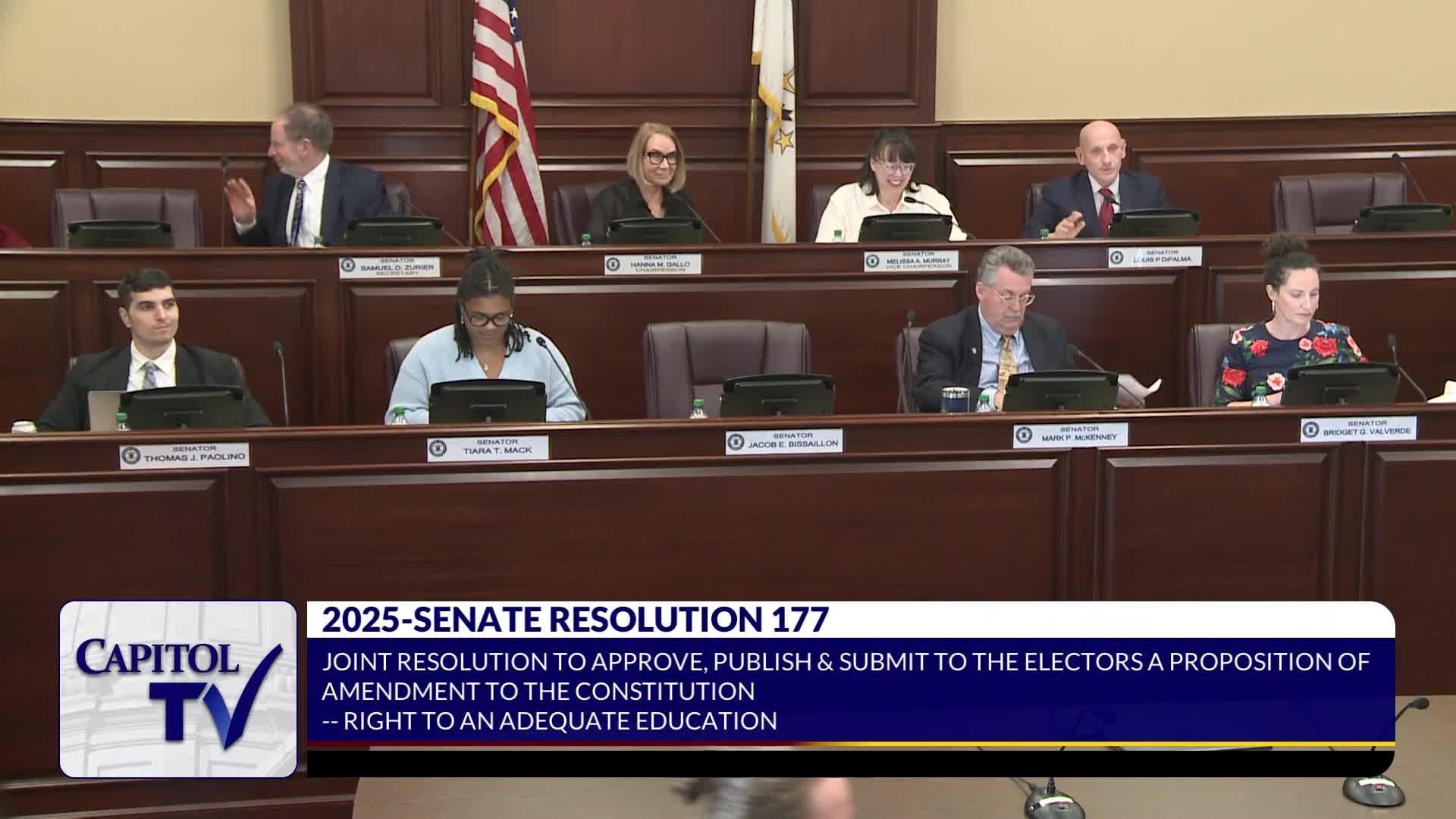
Senate committee hears joint resolution to submit constitutional amendment guaranteeing right to adequate education; resolution held
Summary
Sen. Acosta introduced a joint resolution (S-177) asking voters whether to add a judicially enforceable right to an adequate, equitable, meaningful education to the Rhode Island Constitution; the committee heard broad support from unions, education organizations and civic groups and held the measure for further action.
Senator Frank Acosta presented a joint resolution, S-177, proposing a state constitutional amendment to guarantee an "adequate, equitable and meaningful education" and to make that right judicially enforceable through a voter referendum.
Acosta said the resolution is intended to give Rhode Islanders the opportunity to decide whether to add a state-level, enforceable right to education after decades of litigation that found deficiencies but concluded courts lacked authority to order statewide remedies. Acosta said the amendment would be "judicially enforceable" and that the effort builds on long-running debates about educational equity in Rhode Island.
A coalition of education organizations and civic groups testified in support. Eric Hasselhorst of the National Education Association Rhode Island said NEARI "strongly support[s] this bill" and argued that a constitutional guarantee would help hold systems accountable. Tim Duffy of the Association of School Committees and Stephen Brown of the ACLU of Rhode Island also testified in favor, as did the League of Women Voters and local school committee members.
Witnesses described structural funding disparities and said a constitutional guarantee could provide accountability beyond existing legislative remedies. Several committee members praised the idea and referenced prior litigation and policy work; no final vote on the resolution was taken at the hearing and the committee held the resolution for further consideration.