Get Full Government Meeting Transcripts, Videos, & Alerts Forever!
Get email alerts on the Cannabis Regulation topic
No spam. Unsubscribe anytime.
Cannabis Control Commission aims to finalize adult-use regulations within weeks; social‑equity licenses prioritized
Summary
The Cannabis Control Commission told the House Finance subcommittee it has received hundreds of public comments on draft adult-use regulations and expects to finalize rules and open application windows for social‑equity and retail licenses soon, while warning against rushing implementation.
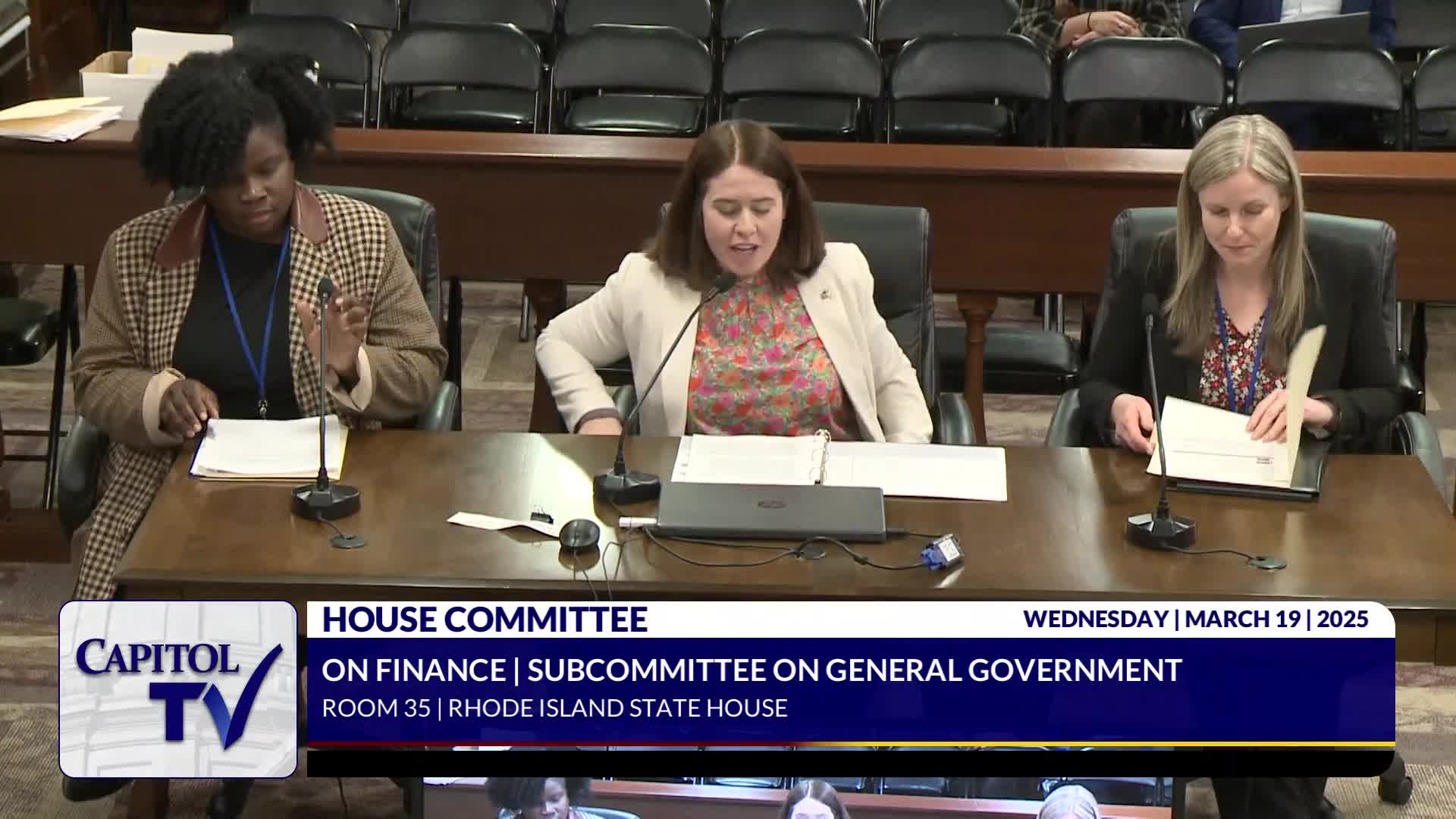
The Cannabis Control Commission told the House Finance subcommittee it is finalizing its first set of adult-use regulations and prioritizing social-equity licensing. The commission chair, joined by Administrator Michelle Reddish and other commission staff, described a months‑long regulatory process and said regulators were handling an unusually large package of public feedback.
Why it matters: The commission's regulations, once finalized, will govern retail adult-use cannabis licensing, social-equity program implementation and the transition of cannabis oversight from the Department of Business Regulation to the stand-alone commission. Those decisions affect licensing, municipal revenue shares, and the schedule for new retail stores entering the market.
Public comment and timeline: The commission reported it received 381 unique public comments on its draft regulations; fiscal staff said that was an unusually high volume. The chair said the administrative procedures timeline allows up to 180 days for final adoption, but the commission is working to complete its review sooner. At the hearing the chair said she hoped to finalize regulations within six to eight weeks and to open application windows shortly thereafter, while noting final store openings depend on applicants' readiness, zoning approvals and other factors outside the commission's control.
Social equity, worker co-ops and tax structure: Commissioners reiterated they will implement a social-equity licensing track and worker-cooperative licenses created by the 2022 law. Fiscal slides summarized the tax and fee structure: a 20% excise-like retail tax (of which 10 percentage points fund commission operations and 7 points are the state sales tax deposited to the general fund, plus 3 points directed to municipalities where deliveries occur). Fiscal staff projected roughly $24.3 million in cannabis-related collections under current assumptions but noted adult-use sales have not met earlier growth expectations; medical program participation has declined since adult-use sales began.
Social equity fund and uses: The Marijuana Trust Fund and a separately tracked social equity assistance account were addressed. Fiscal staff said the social equity assistance fund has a balance of about $2.1 million; the governor's budget does not program spending from that balance because the commission has not finalized how it will allocate the funds. Commissioners said their priority is to direct support — for example, grants or fee waivers — to certified social-equity applicants to offset startup costs.
Caution about rapid rollouts: The commission chair cautioned against rushing retail openings in a way that yields poorly drafted rules or legal challenges, saying Rhode Island "never envisioned a Dunkin' Donuts style cannabis market here" and that jurisdictions that rushed openings have faced litigation and injunctions. The chair said the commission is striving for a balance between timely openings and legally defensible regulations.
Ending: The commission said it will continue to report progress at public meetings, provide the committee with updates and pursue its stated goal of opening the social-equity application window as soon as feasible.