Get email alerts on the Student Privacy topic
No spam. Unsubscribe anytime.
Committee holds Student Computer Device Privacy Act after mixed testimony
Summary
S-232 would bar schools from accessing audio or video on student devices except for narrow exceptions; civil liberties groups supported the measure and a public commenter opposed it, arguing the bill left vague terms that could permit surveillance; committee held the bill.
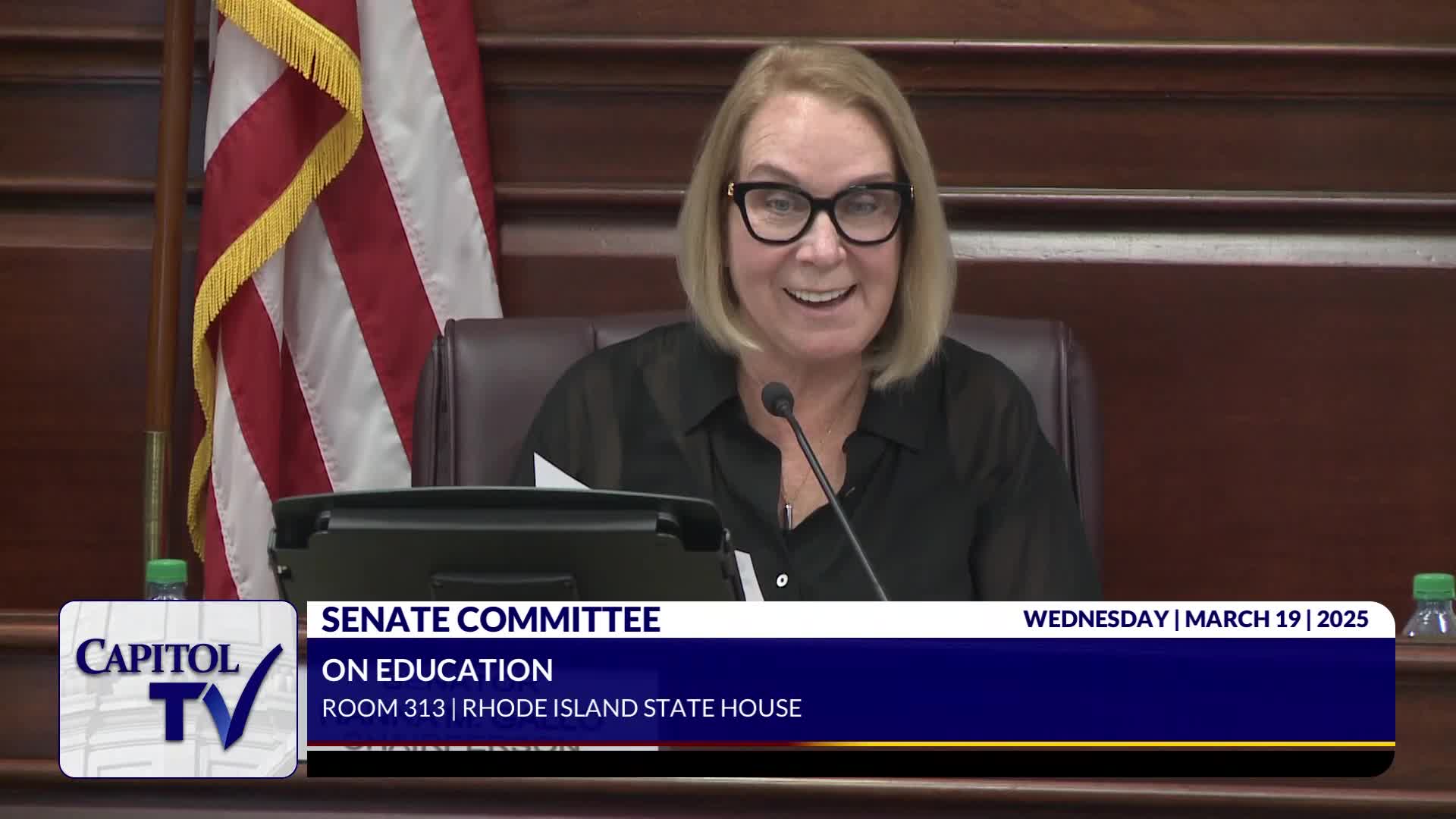
Senator Valverde presented S-232, the Student Computer Device Privacy Act, which would prohibit school districts and educational institutions from accessing audio or video recording or transmission from students' institutional or personal devices, subject to limited exceptions.
Valverde told the committee the bill "would prohibit educational institutions and school districts from accessing any audio or video recording or transmission from any students' institutional or personal device, with a couple of exceptions." She noted a House amendment (Sub A) added an exception for devices used in correctional facilities.
Angel Lopez testified in opposition, calling the bill as written vague on what constitutes "educational purposes" for accessing a personal device. Lopez warned the wording could enable surveillance of students engaged in reading, music listening or private conversations and said notification language applies only when activation is in response to an "immediate threat to life or safety." He urged stricter safeguards, clearer definitions, and an explicit ban on outsourcing access to third-party contractors such as student resource officers.
Madeline McGonigal of the ACLU of Rhode Island testified in support. She said the bill would standardize protections across districts and noted a 2020 ACLU report finding that 67% of districts had policies allowing access to student audio or video. McGonigal acknowledged that technical alert/notification mechanisms could be worked out in later drafts.
After questions from committee members about when protections apply to personal devices carried in pockets and whether districts can provide advance notification, the committee voted to hold S-232. The transcript records a voice vote and shows the motion carried.
AI generated
The text on this page is AI generated. Summaries, highlights, analysis, and video transcripts are all produced from the original source material.
AI can make mistakes, so if you spot one, and we will fix it for everyone.
Note: the source content is unaltered by us. Any content source we link to, be it a video, an audio recording, or a document, is presented exactly as its publisher released it. That publisher is usually a government body, sometimes an individual official or another organisation.