Get Full Government Meeting Transcripts, Videos, & Alerts Forever!
Get email alerts on the Civil Service Testing topic
No spam. Unsubscribe anytime.
Committee hears bill to ease merit‑system barriers for emergency and temporary hires; supporters cite hiring bottlenecks
Summary
H 5681 would allow temporary or emergency hires to be onboarded before civil‑service test completion and improve access to preparatory materials in Spanish and Portuguese; proponents said the change would help fill frontline vacancies in human services while union representatives urged caution and better-resourced multilingual testing.
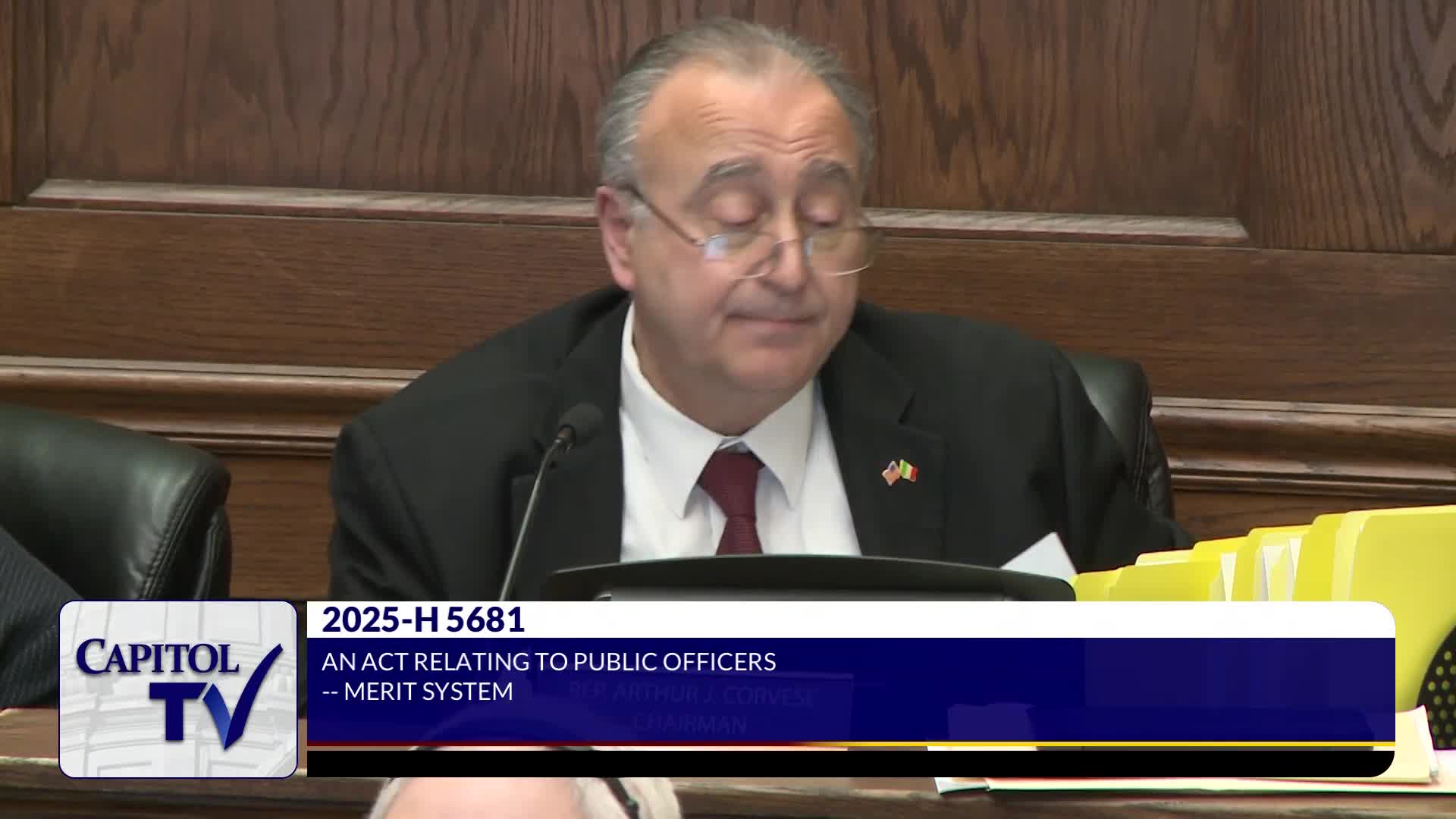
The House Labor Committee heard H 5681, a bill that would allow waivers of merit‑system testing requirements for temporary and emergency state hires and expand access to preparatory materials and testing in Spanish and Portuguese. Supporters described the measure as a practical step to address persistent recruitment gaps for front‑line public services, while union representatives urged targeted reforms and adequate safeguards.
Leader Lita Chippendale, who introduced the bill, told the committee that state agencies such as the Departments of Children, Youth & Families and Human Services have struggled to recruit bilingual staff and that lengthy, English‑only testing is a barrier. She cited an August 2023 social‑worker exam in which 314 people applied, 24 were eligible, eight passed and three accepted positions — a result she said illustrates a “3% success rate” for that hiring round and the need to broaden the applicant pool.
Chippendale said the bill would allow merit‑test waivers for temporary or emergency positions, permit broader eligibility (including applicants from other states) and require improved preparation resources, including study guides in Spanish and Portuguese. “When the state faces an urgent need for staffing, the hiring process should not be stalled by an outdated requirement,” she said.
Unions and civil‑service advocates supported improving access to multilingual testing but signaled reservations about broad, undefined waiver authority. Jim Cinerini of Rhode Island Council 94 said his organization supports the civil‑service system’s protective role and agreed there is room to expand multilingual testing and online administration, but warned that the bill’s current language lacks definitions for “temporary” and “emergency” and could create a “Pandora’s box.” Cinerini said the merit system protects against patronage and ensures minimum qualifications.
Committee members asked for clarity about who would make waiver decisions; Chippendale said personnel administrators for each department would determine whether a particular vacancy justified a waiver and would be responsible for ensuring language and competency requirements where appropriate.
The bill did not receive a final vote and will remain under committee consideration pending more precise language and possible pilot steps to expand multilingual test administration.