Get Full Government Meeting Transcripts, Videos, & Alerts Forever!
Get email alerts on the Apprenticeship Utilization Schools topic
No spam. Unsubscribe anytime.
Long hearing on bill to apply apprenticeship goals to K-12 school construction divides supporters and smaller districts
Summary
House Bill 3881 would require certain K-12 school construction projects that use state treasury funds to meet minimum apprenticeship utilization and outreach goals. Supporters said the measure would build jobs and pipelines into construction careers; school boards and rural contractors warned it could raise costs and exclude small local firms.
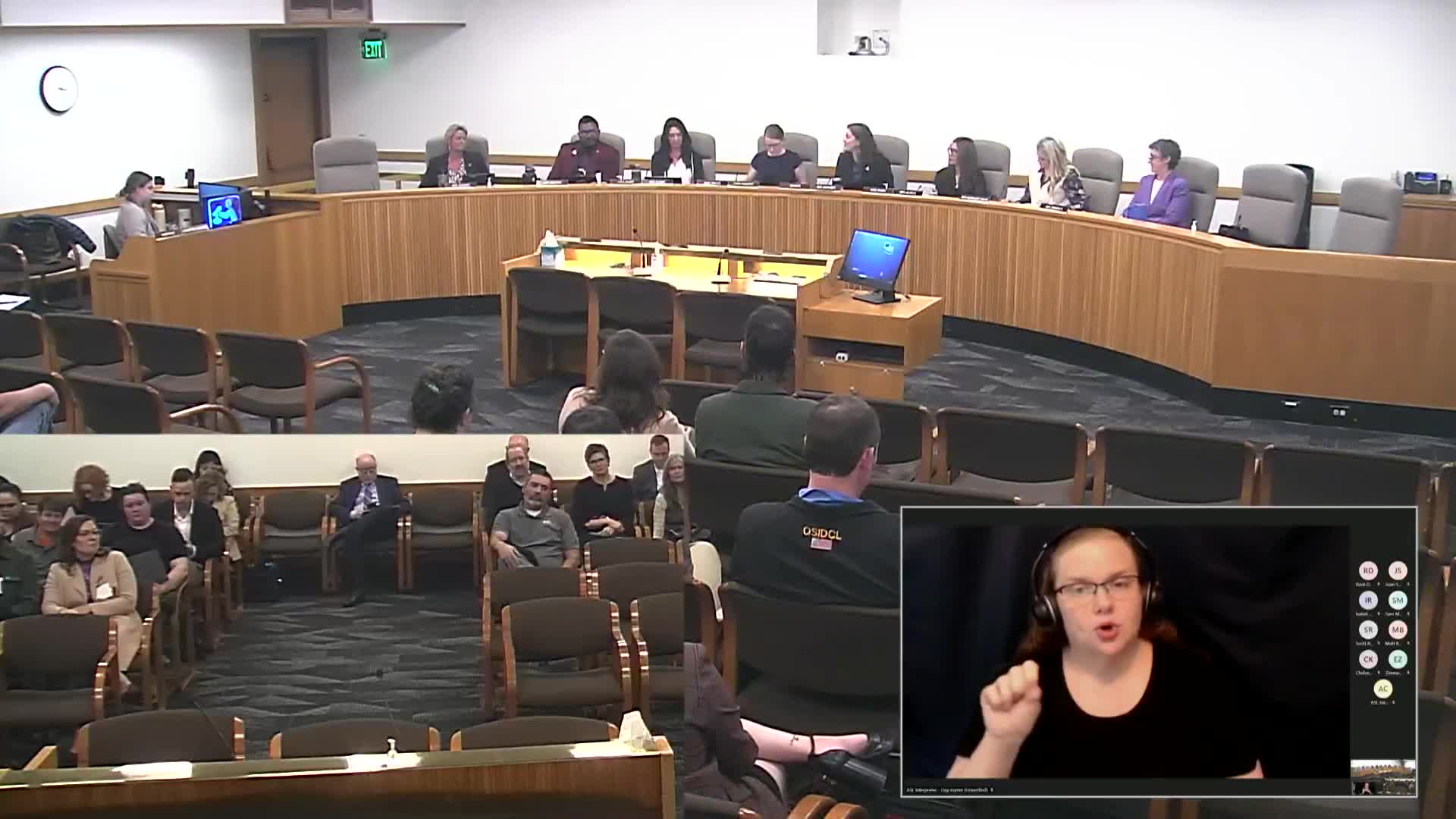
House Bill 3881, which would add school districts, education service districts and public charter schools to the list of qualifying agencies subject to apprenticeship-utilization and workforce recruitment goals on public improvement projects, drew lengthy testimony March 19 before the House Labor and Workplace Standards Committee.
Representative Ben Bowman, the bill sponsor, told the committee HB 3881 would align K-12 public construction projects with existing apprenticeship utilization goals that already apply to state agencies and many higher-education projects. "By passing this bill, we will create more consistency with basic workforce standards across public works projects and further align our infrastructure investments with supporting construction workforce development outcomes to help meet industry demands going forward," Bowman said, citing a projected 13% increase in construction jobs by 2033.
Union apprentices, training representatives and contractors testified in support, saying the bill would create consistent, paid on-the-job training hours for apprentices and improve recruitment and retention of women, people of color and veterans. Chris Hewitt, political director of the Oregon Laborers, said HB 3881 would require a minimum of 12% of work hours on qualifying projects to be performed by registered apprentices beginning in 2026, rising to 15% in 2027. Several union witnesses emphasized that registered apprenticeship standards typically require thousands of on-the-job hours and that consistent work assignments are a key factor in apprenticeship completion.
Apprentices and current journey workers described personal experiences of gaining paid training, certifications and long-term employment. "HB 3 8 8 1 would help to ensure the more consistent access to work opportunities building K through 12 school facilities," said Chelsea Shaffer, an apprentice who told the committee she began her training on Benson Polytechnic High School construction and later benefited from union-provided training and benefits.
Opponents and skeptics — including the Oregon School Boards Association, the Coalition of Oregon School Administrators (COSA), rural contractors and local school board members — urged caution. Scott Rogers, a construction manager who serves on the Athena Weston School District board, said the bill could exclude local firms in rural areas that lack access to registered apprenticeship programs and reduce competition. "Imposing an apprenticeship hiring requirement will place a burden on these smaller firms, and additionally, it may preclude them from being able to bid work on a project in their own community for their own district," Rogers said.
COSA and the Oregon School Boards Association said the bill imposes state-level workforce standards on projects funded locally through voter-approved general obligation bonds, and that many smaller districts lack internal capacity to meet added reporting and compliance requirements. Morgan Allen of COSA said the bill treats local bond-funded projects "like state dollars," pointing to differences between state-funded projects and local bond-funded work.
Contractors and business groups asked for exemptions or phased implementation for rural areas and specialty trades with limited apprenticeship pathways. Matt Bogatay, president of Bogatay Construction in Klamath Falls, urged flexibility and suggested phasing requirements or targeted investment to expand apprenticeship access in rural regions.
Several committee members asked proponents and opponents to submit follow-up information. Representative Sharf questioned whether apprenticeship-utilization requirements increase project costs; witnesses for apprenticeships said they found no empirical evidence that apprenticeships raised project costs and emphasized productivity and retention benefits. Vice Chair Elmer asked about project-labor agreements (PLAs); the bill allows a contracting agency to be exempt from the statute's requirements if it enters into a project labor agreement for a given project.
The hearing drew dozens of witnesses and substantial back-and-forth; the committee did not take a vote on the bill during the March 19 hearing. Committee members indicated they would seek additional information, including fiscal and implementation details and the availability of apprenticeship programs in rural counties.