Get Full Government Meeting Transcripts, Videos, & Alerts Forever!
Get email alerts on the Education topic
No spam. Unsubscribe anytime.
Committee hears testimony supporting law to require immediate academic accommodations after concussions
Summary
House Bill 3,007 would require Oregon school districts to implement immediate temporary accommodation plans for students diagnosed with concussions, and the House Education Committee heard broad expert and survivor support on March 19.
The House Education Committee on March 19 took testimony on House Bill 3,007, a bill requiring Oregon school districts to implement immediate temporary accommodation plans for students diagnosed with concussions or other brain injuries.
Sponsor Representative Courtney Neron said the 18-month, multi-stakeholder effort behind HB 3,007 responds to gaps in existing law that left some students without timely school accommodations while their brains healed. The bill would require districts to implement immediate and temporary plans (ITAPs), provide an initial period of physical-activity restrictions where needed, set a five-school-day timeline for developing a full ITAP, require two-month plan reviews, and trigger a referral to special-education evaluation if accommodations remain necessary after six months.
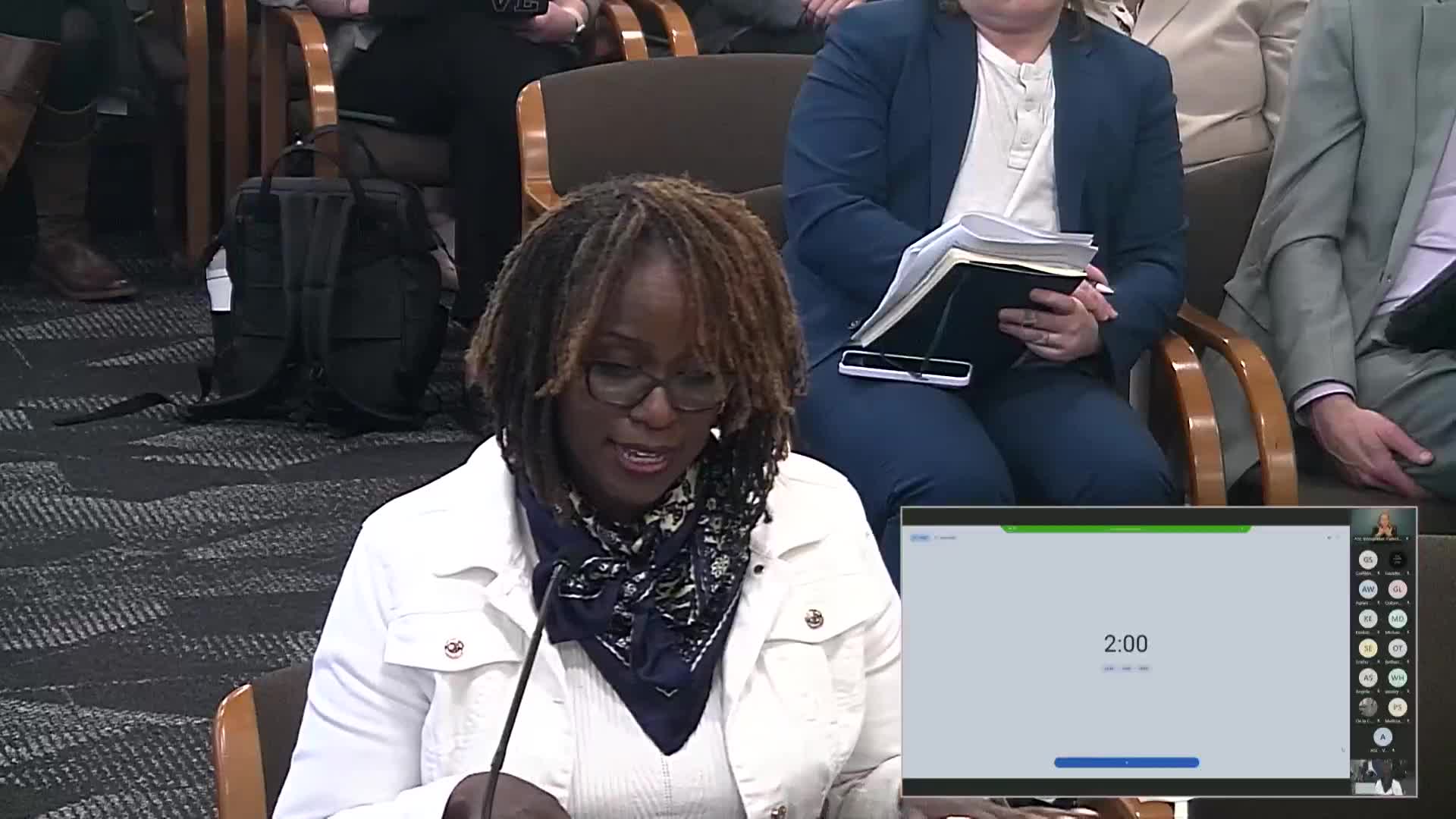
Survivors and clinicians: Multiple witnesses, including Gwendolyn Lancaster and Brandina Lancaster (survivor and parent), David Kracke (Oregon Brain Injury Advocate Coordinator), Sam Johnson (Oregon Athletic Trainer Society), Andrew Ellis (clinical psychologist), and Melanie Grenz (speech-language pathologist), testified in support. Witnesses described real cases in which student injuries were visible (a broken collarbone) and accommodated, but concussions — which are not externally visible — often did not prompt immediate academic accommodations. Several witnesses described the harms of delayed accommodations, including academic failure, social isolation and longer recovery. They urged the committee to make accommodations mandatory rather than optional.
What the bill requires and clarifies: Testimony described the bill’s main elements — required immediate accommodations following a diagnosed concussion, guidance and a sample form to be provided by ODE, communication protocols among school staff (teachers, nurses, counselors, coaches), and periodic reviews with a clear referral pathway to Special Education if needs persist.
Supporters’ rationale: Witnesses said existing law (House Bill 41 40, passed earlier) allowed but did not require accommodations; stakeholders argued that making them mandatory would prevent students from "falling through the cracks." Athletic trainers and clinicians said the bill strikes a balance between student safety, early activity where appropriate, and practical implementation by schools.
Ending: Supporters urged passage to ensure consistent school responses to concussions and other brain injuries so students can recover without losing academic ground. Committee members were invited to submit follow-up questions to staff and sponsors.