Get Full Government Meeting Transcripts, Videos, & Alerts Forever!
Get email alerts on the Adpc Reform Hb2929 topic
No spam. Unsubscribe anytime.
House Bill 2929 would expand and strengthen Alcohol and Drug Policy Commission, supporters say
Summary
Supporters told the committee HB 2929 would expand the Alcohol and Drug Policy Commission's membership, clarify its scope to include prevention and youth, and add accountability powers to align state agencies on substance use policy.
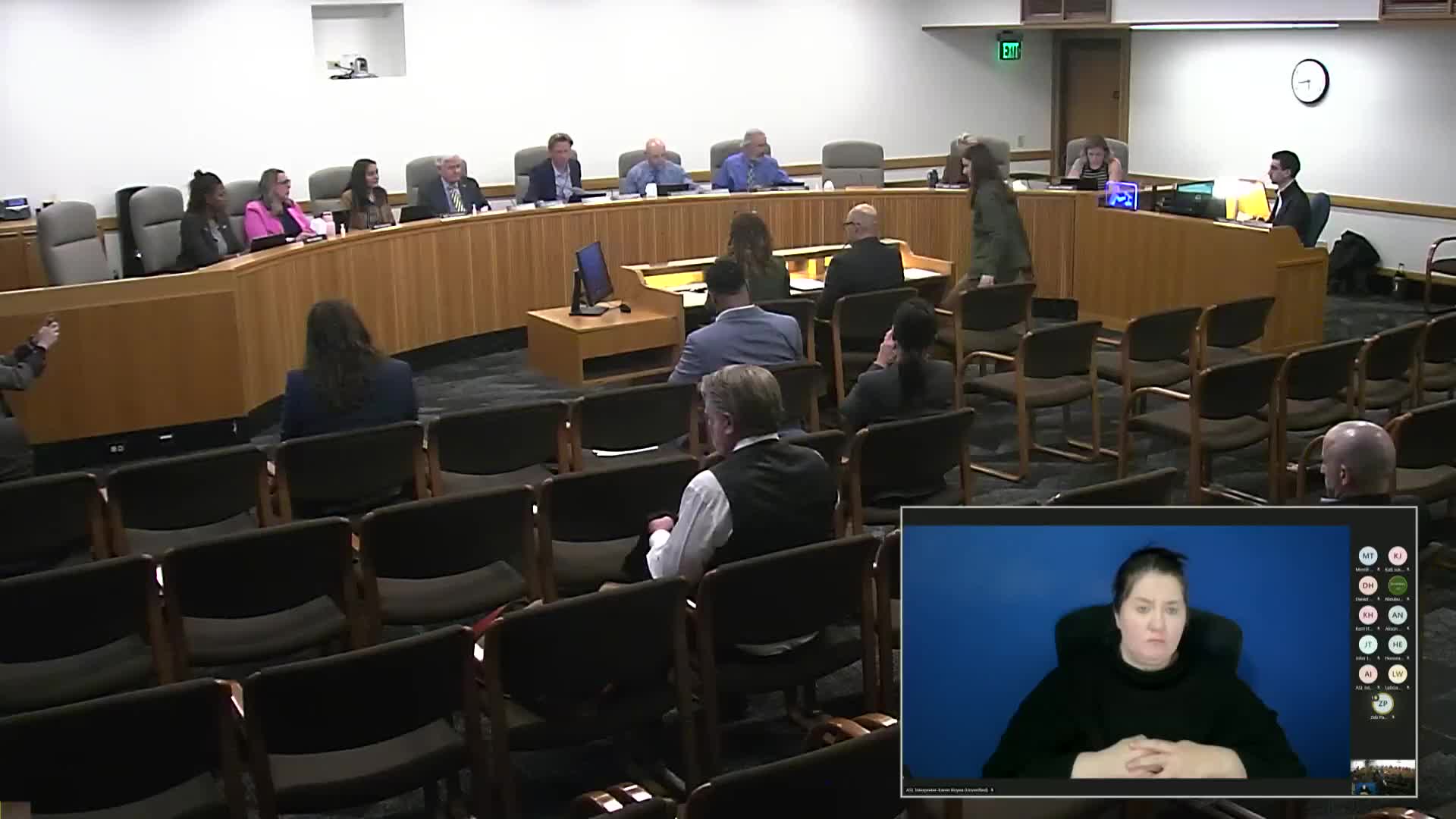
The Joint Committee on Addiction and Community Safety Response opened a public hearing March 19 on House Bill 2929, which would change the structure, membership and responsibilities of the Alcohol and Drug Policy Commission (ADPC).
Annalise Stolf, director of the ADPC, said the bill — and its dash-1 amendment — would expand commission membership to 21 voting members and add seats for local mental health programs, county juvenile departments, local public health, school districts, cities, law enforcement and a separate attorney seat. The bill would also allow the governor to appoint the commission chair (dash-1), clarify the ADPC’s scope to include substance use prevention and explicitly require every ADPC plan to address youth and families.
Stolf told the committee the dash-1 also formalizes a requirement that participating state agencies provide notice of rulemaking on issues related to substance use prevention, treatment and recovery support services, and strengthens the commission’s role in creating and holding agencies accountable to state policy. She said the ADPC should be accountable not only for drafting plans but for driving implementation.
Testimony in support came from a range of providers and public-health representatives. Fernando Peña, an ADPC commissioner and executive director of El Jaldin Recovery Services, described the commission as “an underutilized resource” and said the bill would allow the ADPC to act as a system planner, using data to target services such as opioid treatment program expansion. Sarah Lochner of the Oregon Coalition of Local Health Officials said adding a local public health seat is appropriate because local public health administers prevention programs and school health surveys and addresses communicable-disease impacts tied to substance use.
Advocates from Oregon Recovers, 4D Recovery and other provider groups said the bill would bring more diverse voices and lived experience into statewide planning and provide the staff capacity needed for long-term system change. Testimony also said the ADPC has begun emphasizing primary prevention and youth, and that statutory changes would lock that emphasis into the commission’s work.
Speakers asked the committee to pass HB 2929 alongside related legislation to ensure planning includes youth prevention and that ADPC’s plans are reported to the Legislature regularly. No formal vote on the measure was taken during the hearing.