Get Full Government Meeting Transcripts, Videos, & Alerts Forever!
Get email alerts on the Measure 110 Funding topic
No spam. Unsubscribe anytime.
Oversight council says it prioritized existing Measure 110 grantees; three denied awards approved on appeal
Summary
Members of the Oversight and Accountability Council told a legislative committee that the council prioritized continuity of services and culturally specific providers when distributing Measure 110 drug treatment and recovery funds, and OHA staff have approved three appeals from previously funded providers.
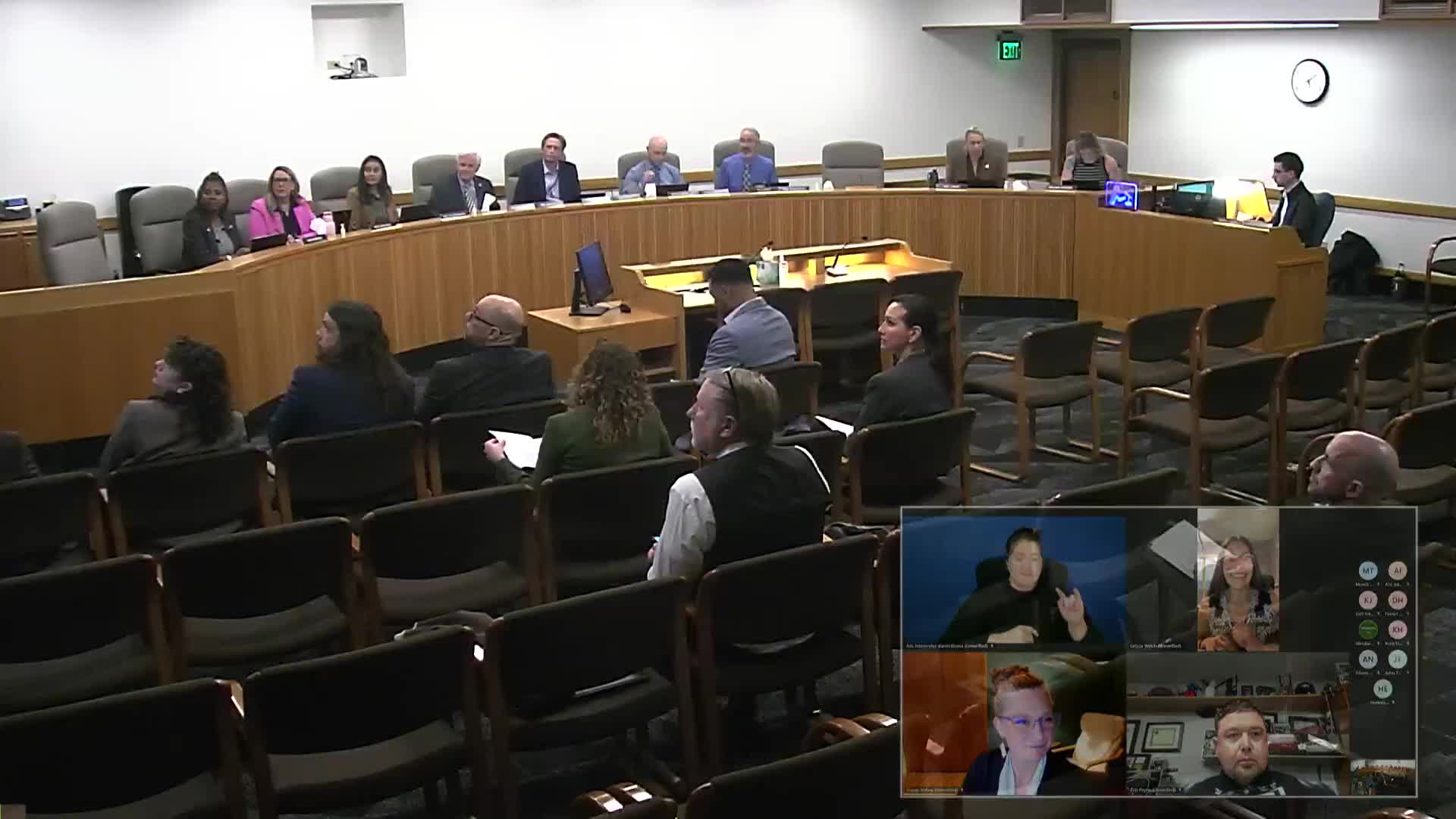
The Joint Committee on Addiction and Community Safety Response held an informational hearing March 19 to hear representatives of the Oversight and Accountability Council and Oregon Health Authority staff explain recent grant decisions under Measure 110 and the appeals process.
The Oversight and Accountability Council (OAC) member Leticia Welch said the council faced a large funding gap and therefore prioritized continuity for existing grantees and culturally specific services when allocating funds. Welch said $427,305,000 was available for the current grant cycle and that applicants requested more than $1.1 billion, making it impossible to fund all applicants at requested levels.
That context framed questions about whether OAC decisions excluded programs that participate in law-enforcement-led “deflection” efforts. Zebulai Payne, an OAC tri-chair, told the committee the OAC did not vote to exclude applications because they were part of deflection programs and that many funded providers do participate in deflection. Payne said some OAC members expressed concerns about particular applications but did not successfully move a motion to bar funding for deflection-related programs.
Abby Stamp of the Oregon Health Authority, who said the OAC delegated appeals decision-making to OHA, told the committee that existing grantees who appealed received approval of their appeals. Stamp specifically identified Washington County Health and Human Services and Lifeworks Northwest (a Washington County grantee) among those whose appeals were approved; committee testimony also named Josephine County’s Options for Southern Oregon as an appealed, previously funded entity. Stamp said most providers who received intent-to-award letters are entering contract negotiations and that OHA is reviewing cases where a significantly reduced award would impair an organization’s ability to deliver continuity of care.
Committee members pressed OAC and OHA witnesses for documentation about which counties or grantees had appealed, and for copies or links to the grant application materials, rubrics and intent-to-award letters that informed decisions. OAC and OHA witnesses said application materials and the scoring rubrics were posted on the state procurement page and that appeals were being reviewed under established timetables. The committee asked OAC and OHA to follow up with a list of appealed applicants and with clearer website links to the application parameters.
Committee members also questioned how the OAC defined “culturally specific” providers. Tri-chair Zebulai Payne and other OAC members said the behavioral health division’s certification for culturally and linguistically specific services sets a high bar and that the OAC used a different operational definition for this grant cycle; OAC members said they intend to define that term more clearly in future rounds to avoid ambiguity.
Members of the legislature emphasized concerns that limiting Measure 110 funds used by providers who partner with law enforcement could close pathways that keep people out of the criminal justice system. OAC members reiterated that preserving continuity of care and prioritizing culturally specific services drove their decisions, and that the council’s deliberations are public under Oregon’s public meeting laws.
The committee closed the informational hearing after asking OAC and OHA to provide follow-up materials, including the list of appealed applicants and clearer links to posted application documents.