Get Full Government Meeting Transcripts, Videos, & Alerts Forever!
Get email alerts on the Cannabis Youth Access topic
No spam. Unsubscribe anytime.
Committee hears parent concerns; bill would require 21+ minimum age for cannabis and hemp vape items
Summary
Senate Bill 908 would require OLCC rules to include a minimum age of 21 for consumption of marijuana items and industrial hemp vapor items; parents testified March 19 that labeling and marketing can make such products easy for children to mistake for ordinary foods or drinks.
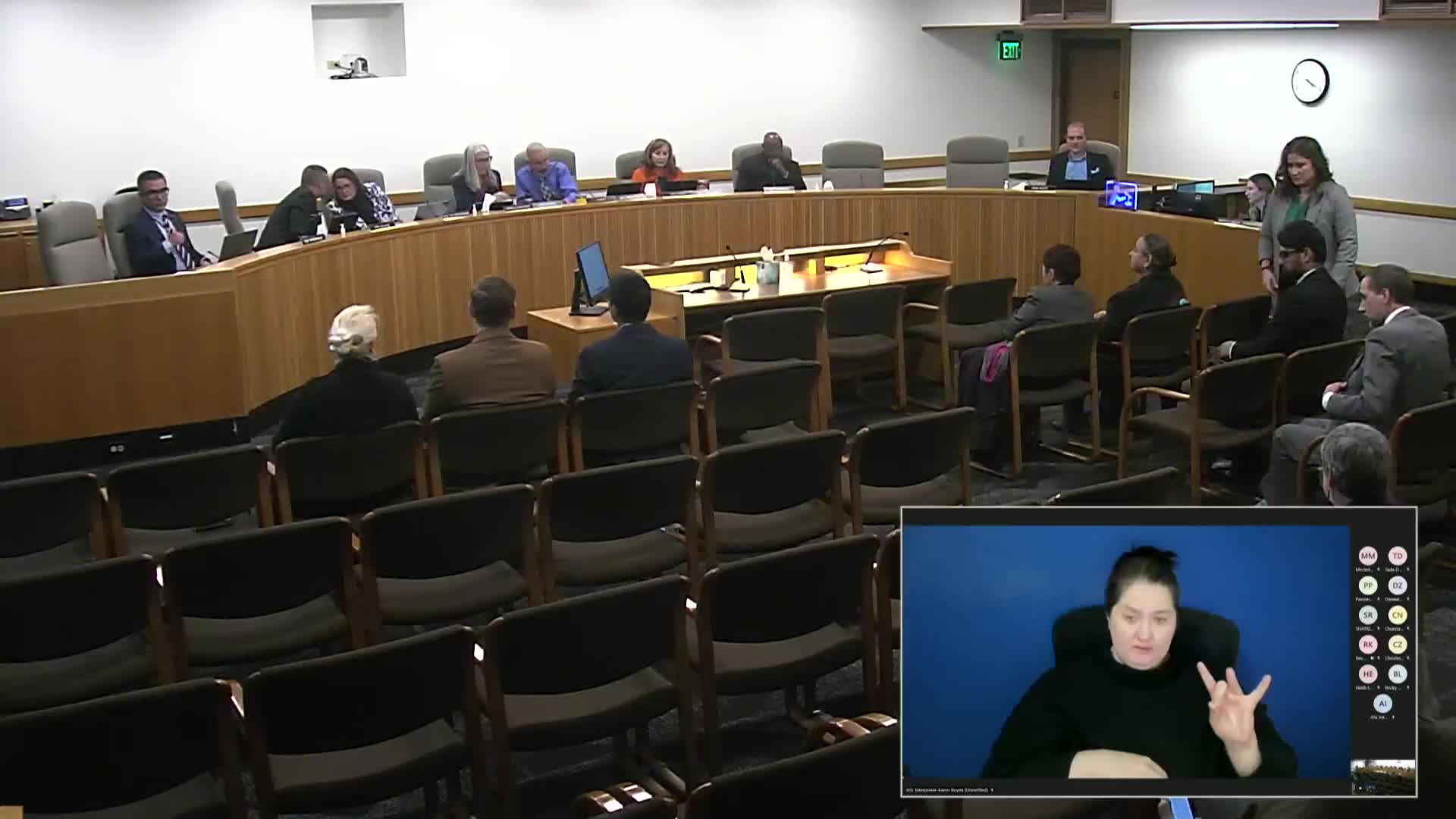
Senate Bill 908, which would require the Oregon Liquor and Cannabis Commission (OLCC) to include a minimum age of 21 for consumption of marijuana items and industrial hemp vapor items, was the subject of a brief public hearing March 19 before the Senate Committee on Judiciary.
Tisha (committee staff) summarized the measure for the committee: "The measure requires the Oregon Liquor and Cannabis Commission's rules to include the minimum age of 21 years for consumption of marijuana items and industrial hemp vapor items." Senator Gelser-Blowing introduced testimony from a parent who described two incidents in which children nearly consumed products containing cannabis or hemp ingredients because labeling and marketing were not obvious.
Heidi Eggert, a Washington County parent, described one episode in which a caregiver nearly gave a nine-year-old a refrigerated beverage that, when checked, contained CBD listed in small type on the ingredients list. In a second anecdote, she said a child saw a billboard advertising "cookies" and was drawn by the food reference without understanding cannabis imagery.
"There are likely many instances of people, unintentionally, consuming some of these products that are not intended for them," Eggert told the committee. The OLCC's government-relations director, Rosie Shatkin, said OLCC staff were already working on implementation of labeling requirements for intoxicating hemp products under a 2024 law (Senate Bill 4121) and offered to work with sponsors on details.
Chair Prozanski closed the public hearing on SB 908; no committee vote occurred during the March 19 meeting.