Get Full Government Meeting Transcripts, Videos, & Alerts Forever!
Get email alerts on the Lactation Accommodations topic
No spam. Unsubscribe anytime.
House hearing spotlights bill to extend workplace lactation protections to certain farmworkers
Summary
Witnesses told the House Labor and Workplace Standards Committee that House Bill 2541 would extend Oregon's existing lactation break and private-space protections to hand-harvest and piece-rate agricultural laborers currently excluded under state law.
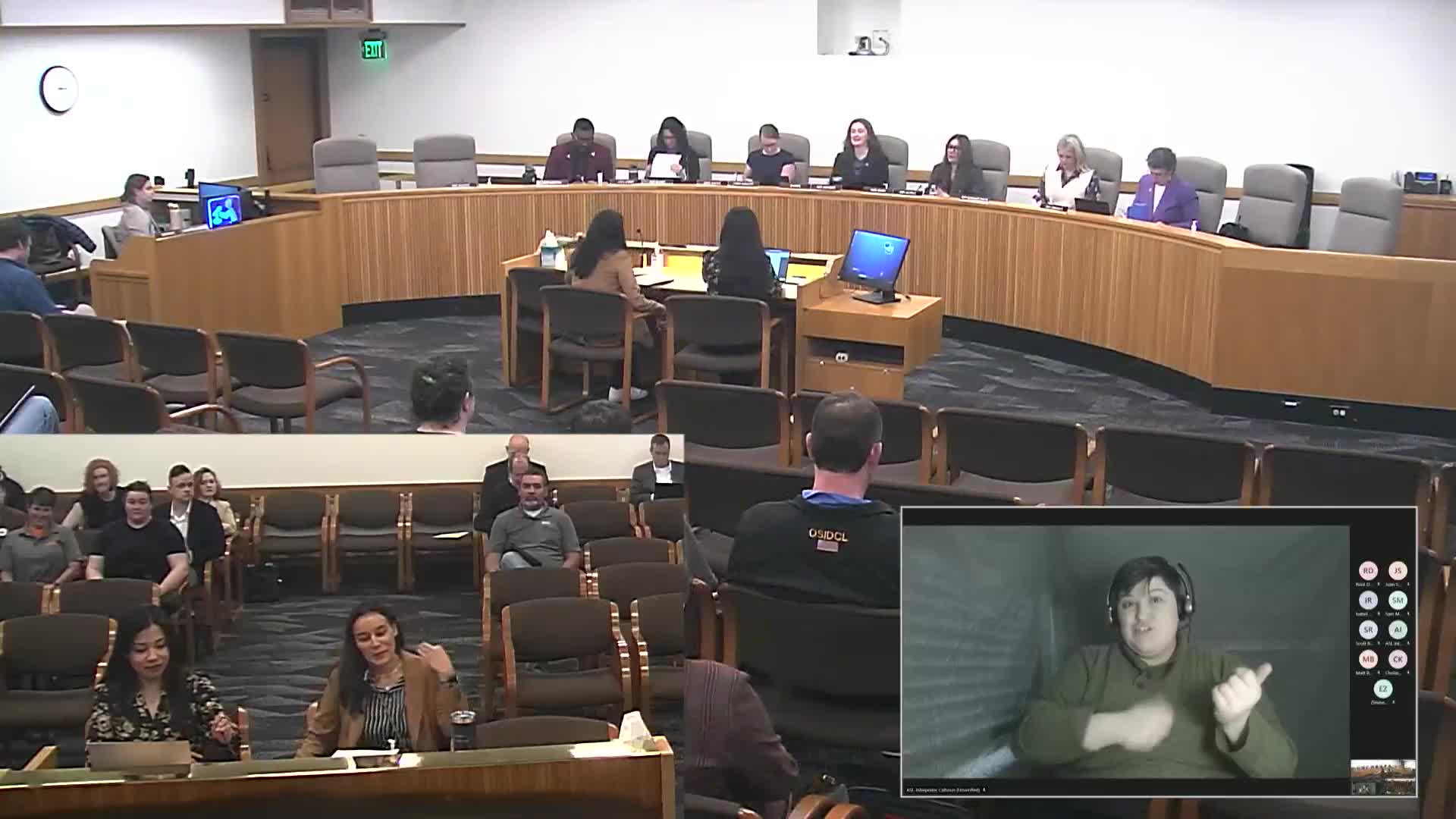
House Bill 2541, which would extend state workplace protections for expressing breast milk to a subset of farmworkers, drew support at a March 19 public hearing before the House Labor and Workplace Standards Committee.
Representative Andrea Vadarama, who identified herself as the sponsor and said she represents House District 47 in Outer East Portland, told the committee HB 2541 would provide an individual employed in agriculture as a hand-harvest or pruning laborer and paid on a piece-rate basis the same rights to express breast milk in the workplace that many other workers already have. "Without these rest periods, mothers may struggle to maintain breastfeeding, which can lead to health complications for both the mother and the child," Vadarama said.
Marta Sonato, testifying for the Oregon Law Center, described HB 2541 as a "simple, very narrow fix" to close a gap in current law. Sonato said Oregon law currently requires employers to provide reasonable breaks and a private space close to the employee's work area for milk expression, but a subset of farmworkers are excluded from those protections. "This bill before you is very simple. It's very narrow fix, that can really make a big difference in building healthier communities," Sonato said, adding that lactation breaks also benefit employers by reducing turnover and improving productivity.
During committee questions, Representative Sharf asked how accommodations would work when a worker is in the middle of a large field. Sonato and Vadarama pointed to existing exemptions for very small employers and offered examples BOLI (the Bureau of Labor and Industries) has provided, including modest workplace changes or using a nearby private vehicle as a lactation space. They emphasized that the worker's employer of record (including contract labor companies) would be responsible for providing accommodations.
Representative Bossard Davis and others noted that the statute that created the lactation protections in 2005 includes an undue-hardship exemption for employers with 10 or fewer employees, and said agricultural employers are not broadly exempt from the law. Vadarama said the bill responds to outreach and intake her office and legal aid groups have received from farmworker communities and public-health partners.
Committee members and witnesses repeatedly framed HB 2541 as a limited fix that would bring specific, identified categories of agricultural workers under protections that exist for most other employees. The committee did not take a vote on the bill during the March 19 hearing; the public hearing was closed at the end of testimony.
Votes taken later in the meeting addressed other bills on the committee agenda; HB 2541 remained in the public-hearing phase at adjournment.
The committee received written neutral testimony from Jenny Dressler, which the committee clerk noted during the hearing.