Get Full Government Meeting Transcripts, Videos, & Alerts Forever!
Get email alerts on the Energy And Environment topic
No spam. Unsubscribe anytime.
Senate panel hears plan to let gas utilities pilot shared thermal energy networks
Summary
Senate Bill 1143 would direct the Public Utility Commission to establish a pilot program allowing natural gas utilities to propose thermal energy network projects that provide heating and cooling.
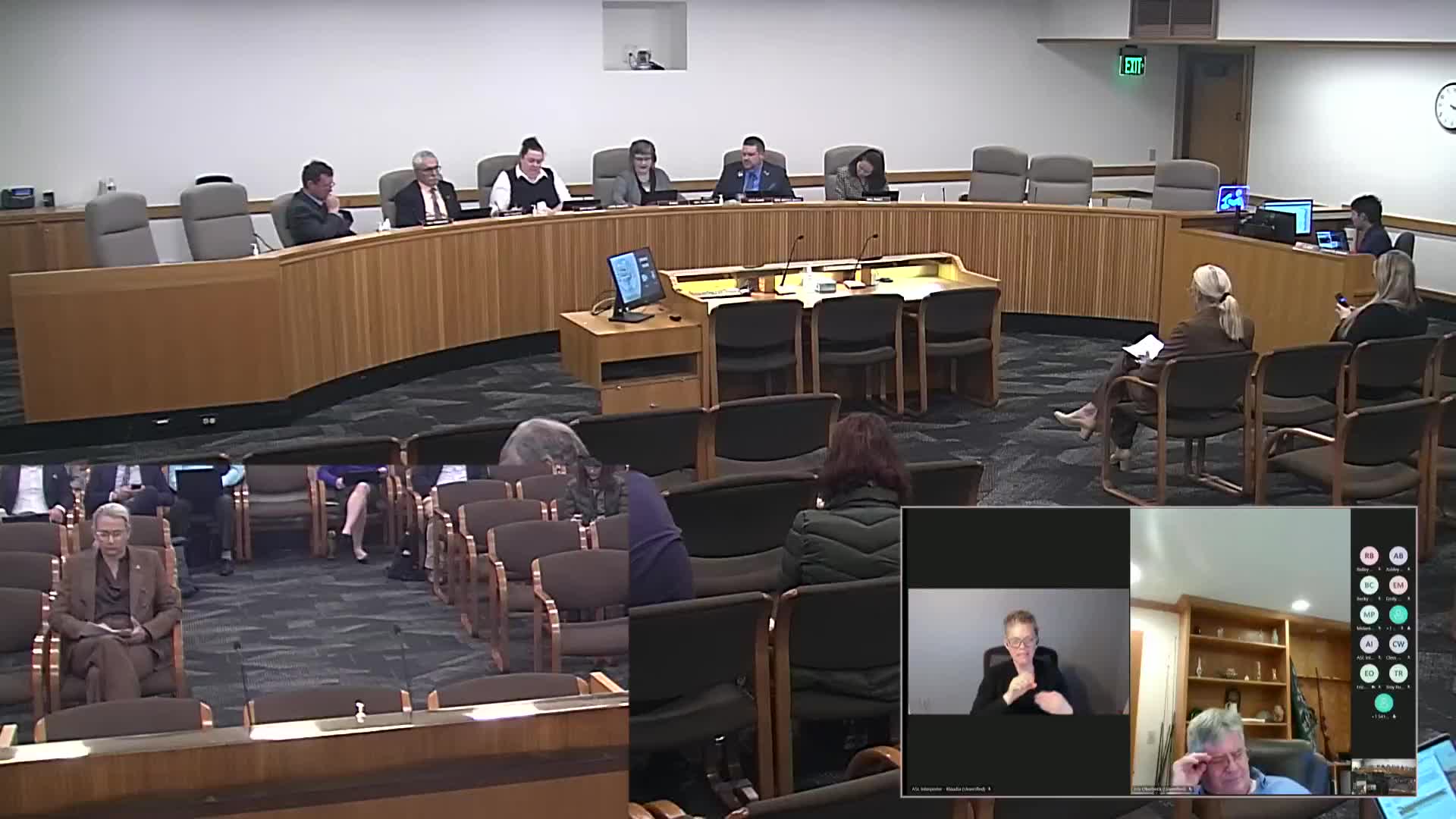
Senate Bill 1143 would direct the Public Utility Commission to establish a pilot program allowing each natural gas company to develop utility-scale thermal energy network projects to provide heating and cooling services to customers, Senator Kate Lieber told the Senate Energy and Environment Committee on March 19.
The bill would set processes for filing and evaluating proposals and clarifies that prudently incurred costs could be eligible for regulatory recovery; a dash-1 amendment on file adds certain labor requirements.
The measure drew broadly aligned testimony from utilities, climate and labor groups and independent researchers. “One of the most efficient means of providing heating and cooling is through through what's called a thermal energy network or a TENS,” Senator Kate Lieber said, describing TENS as “a shared network of pipes that make use of local thermal resources or stable temperature of the earth to deliver affordable, efficient, and clean thermal energy.”
Alan Spector, external affairs manager for Cascade Natural Gas, said Cascade supports SB 1143 and views TENS as “a great tool for decarbonization pathways and for business diversification opportunities.” Spector described Washington State’s recent legislation as a working example and said Cascade has hired a dedicated thermal energy network manager to pursue pilot opportunities.
Speakers described several technical approaches to TENS. Emily Moore, director of climate and energy at Sightline Institute, explained the most common approach is distributed ground-source systems: “If you go just 30 feet below the Earth, the temperature stays at a constant 50 to 60 degrees all year round across the entire United States,” she said, adding that the stable subsurface temperature can be used as a seasonal thermal store for both heating and cooling.
Witnesses outlined potential customer, workforce and climate benefits. Claire Prejota of Climate Solutions said TENS are “highly efficient” and can leverage waste heat from commercial operations. Nels Johnson of Northwest Natural and Fran Villatoro of BlueGreen Alliance said the technology could create clean‑energy jobs while using utility expertise in pipe networks. Chris Carpenter of UA Local 290 Plumbers and Steamfitters emphasized the labor amendment and said the unions want to ensure trained apprentices and certified journey workers participate under OSHA‑30 and registered training programs.
Witnesses and senators also discussed unanswered questions that pilots are intended to address: appropriate project scale (multifamily, campuses, small neighborhoods), how far networks can economically transport thermal energy, sources for heat and cold (ground, wastewater, industrial waste heat, abandoned mine water), and how costs and long‑term ownership would be handled by regulators.
Committee members asked technical and equity questions about cost recovery and long‑term rate impacts. Senator Golden cautioned that pilot approvals that allow regulatory cost recovery merit careful discussion about who ultimately pays for infrastructure. Senator Kate Lieber and witnesses responded that uncertainty about recovery is a key barrier to utility investment and that SB 1143 is intended to create a clear path for pilots so those technical and ratemaking questions can be answered by the Public Utility Commission and through pilot experience.
No committee vote was taken on SB 1143 during the March 19 hearing. Sponsors and supporters said they would provide additional technical details and follow up with committee members.