Get Full Government Meeting Transcripts, Videos, & Alerts Forever!
Get email alerts on the Housing And Homelessness topic
No spam. Unsubscribe anytime.
Bill to fund predevelopment grants and loans draws broad support from faith groups and nonprofits
Summary
House Bill 29,664 (dash-3) would let OHCS provide grants and loans for predevelopment costs tied to affordable housing projects, broaden eligibility to limited-equity cooperatives and nonprofits, and supporters — including faith leaders and community developers — urged passage at a lengthy public hearing.
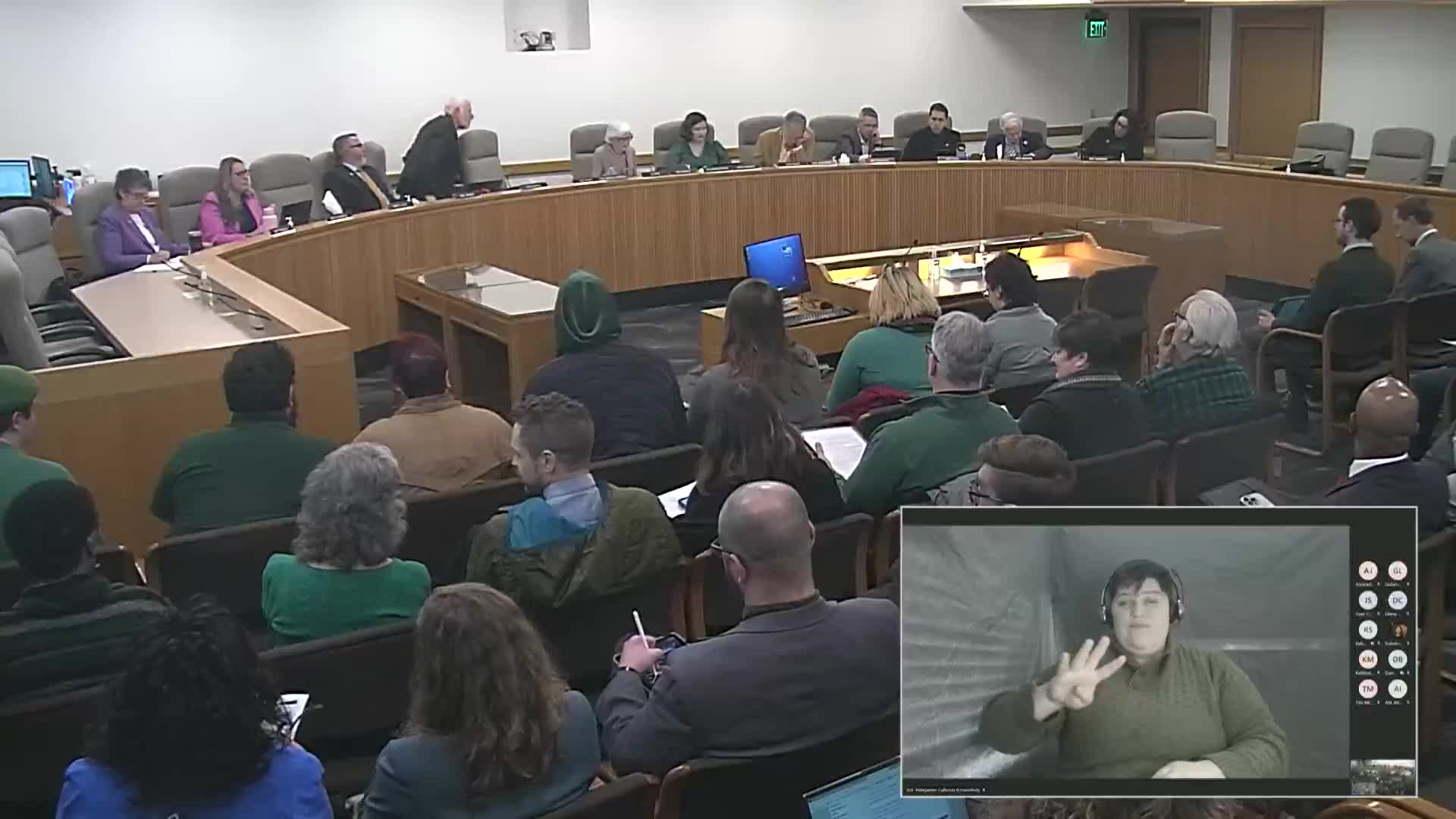
House Bill 29,664 with the dash-3 amendment, which replaces the base measure, received extensive public testimony on March 19 in the House Committee on Housing and Homelessness. The bill would establish a temporary OHCS-administered program to cover predevelopment costs — defined as professional services, studies, fees and community engagement — for new affordable housing projects and would authorize the department to award grants in addition to loans. The dash-3 amendment explicitly adds limited-equity cooperatives as eligible purposes and aims to make the predevelopment fund workable for small nonprofits, faith organizations and community landowners that lack capital for feasibility work.
Sponsor Representative Mark Gamba framed the bill as a way to unlock thousands of acres of land already inside urban growth boundaries — often owned by churches, nonprofits and other mission-driven entities — that could be suitable for affordable housing if up-front feasibility barriers could be funded. "These lands tend to already be located near residential neighborhoods in proximity to important services like grocery stores and connected to their local communities," Gamba said.
More than two dozen witnesses and organizational leaders testified in favor of the bill. Maria Elena Guerra of the Farmworker Housing Development Corporation said OHCS predevelopment funding has helped her organization build a pipeline of projects; she said the program enabled 200 units to move toward completion and urged expansion to allow grants. "HP 29 64 will open up the eligibility of Oregon Housing Community Service predevelopment program and will provide a grant option for nonprofits, housing developers, and any other nonprofit to engage in better partnerships and to make a reality the construction of more units," Guerra said.
DevNW’s Karen Sachs described typical predevelopment costs of $50,000–$100,000 per project and said grants would enable smaller nonprofit developers to move multiple projects through feasibility in parallel. Dan Bryant of Square One Villages and other presenters described successful projects using public and philanthropic support and urged allowing limited-equity co-ops to access funds.
Religious leaders — including David Eppelzheimer, an associate to a Lutheran bishop, Reverend Heather Riggs, Reverend Drew Hogan and others — urged lawmakers to help congregations convert underused land in central neighborhoods into housing, describing churches as major landholders with limited cash reserves and time to act before congregations dissolve. Reverend Paul Richards Kwan described a successful 54-unit senior development on church property as a model but said many congregations lack that capacity to replicate the work.
OHCS staffer Tanisha Rose answered technical questions about existing predevelopment programs at OHCS. Rose said the agency has two predevelopment-style programs: a loan-based predevelopment fund created after the 2023 session and a smaller project-feasibility grant program funded through an agricultural housing appropriation that reserves roughly $1.2 million for predevelopment grants targeted to rural and culturally specific organizations. Rose said approximately $7.2 million of about $9.7 million in the broader predevelopment loan pot has been disbursed and that the smaller project-feasibility pot remained largely available to eligible rural and culturally specific applicants under current rules. She said current program rules limit access to the early project-feasibility grant pot for organizations that meet specific criteria and that the bill would expand flexibility.
Speakers urged the committee to advance the bill so faith-based landholders and small nonprofit developers can fund community engagement, surveys, environmental reviews, and design work required to bring projects to shovel-ready status. Supporters argued the state investment would leverage private and philanthropic funds and speed production of affordable housing in established neighborhoods. No committee vote was taken on March 19; the committee closed the public hearing and adjourned.