Lifetime Citizen Portal Access — AI Briefings, Alerts & Unlimited Follows
Subcommittee hears permanency budget for Human Services; $284.1 million earmarked for adoption, guardianship and post‑permanency supports
Loading...
Summary
At a March 19 informational hearing on SB 55 26, the Department of Human Services outlined a $284.1 million permanency budget to fund adoption and guardianship assistance, post‑permanency services and efforts to reduce temporary lodging; committee members asked for follow‑up fiscal details on out‑of‑state placements and oversight staffing.
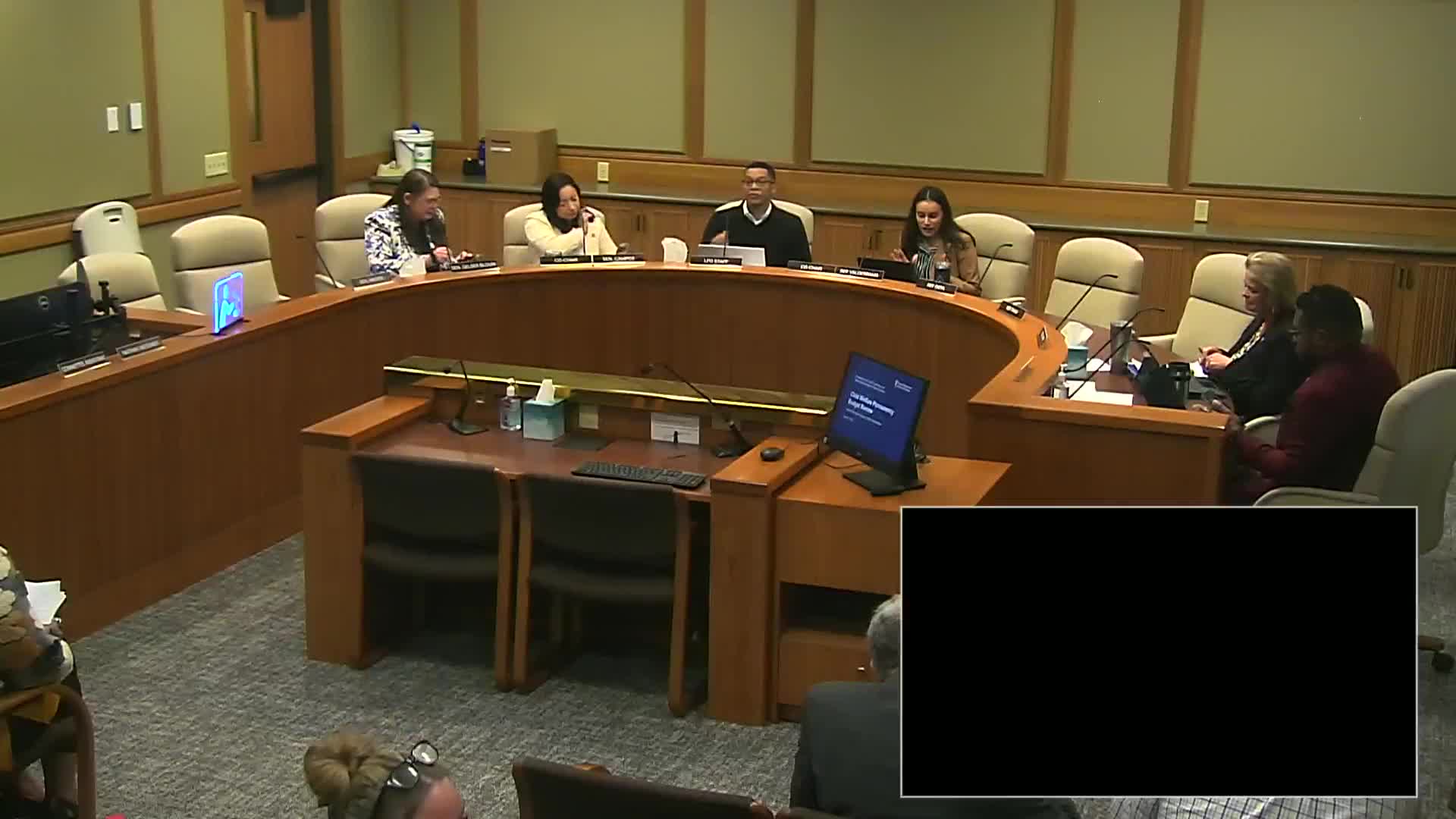
The Joint Interim Subcommittee on Human Services continued its informational hearing on SB 55 26 on Wednesday, March 19, focusing on the Department of Human Services' permanency budget and services for adoption and guardianship.
The permanency budget totals $284,100,000, department staff told the committee, with roughly $128,100,000 coming from federal sources (primarily Title IV‑E) and about $137,000,000 from the state general fund; another 6 percent is described as other funds, including adoption savings. The department said most spending is for post‑permanency services and supports.
The budget breakdown presented to the committee lists roughly $102,900,000 for adoption assistance and $21,400,000 for guardianship assistance, plus smaller federal and state buckets for foster care, Title IV‑B, Medicaid administrative funds and the adoption incentive grant. The department said the adoption incentive grant (currently about $800,000) funds intensive family search and engagement contracted services and that Medicaid administrative dollars (about $400,000) pay for health‑related services for families.
The department described post‑permanency services that the budget funds, including contracted adoption placement and supervision services, mediation for post‑adoption and guardianship communication agreements, legal assistance tied to finalization, and renegotiable adoption/guardianship agreements that can include OHP (Oregon Health Plan) coverage. The Oregon Post Adoption Resource Center was identified as a primary program serving adoptees and guardianship families, providing telephone supports, peer mentoring for adoptees age 12 and older, support groups, a lending library, clinician training (TAC), scholarships for therapeutic life‑story work and funding for camps and other activities for youth.
On cultural and tribal concerns, Senator Gelserblum raised questions about Native youth placed in guardianship arrangements that appear to lack ongoing tribal connection. Senator Gelserblum said such placements can result in a loss of tribal ties and asked what follow‑up the department performs on guardianships and how the department partners with tribes. Director Jill, Department of Human Services, acknowledged ongoing work and meetings with tribal representatives and said, “Active efforts should be continuing as long as we're engaging with those families,” and that the department would bring suggested improvements to its Indian Child Welfare Act advisory body.
Committee members pressed the department on several fiscal and oversight questions tied to out‑of‑state placements and poor conditions in some out‑of‑state programs. A senator asked for the total amount paid so far in settlements related to children placed out of state and the number of pending cases. Director Jill said those figures were not available at the hearing but that the department would provide written follow‑up and would need to coordinate with the Department of Administrative Services because some payments come from the DAS risk fund.
Members also asked for an analysis of additional staffing the agency would budget for oversight of children placed out of state and for any increases in licensing positions if certain investigations shift from child welfare caseworkers to licensing staff (a change discussed as part of related policy work). The director said the committee could expect written impact analysis and staffing detail in a follow‑up response.
The presentation included performance and outcome data. For calendar year 2024 the department reported 377 finalized adoptions and 469 finalized guardianships, noting this is the first calendar year in which finalized guardianships exceeded finalized adoptions. The department reported that 98.2 percent of adoptive placements in fiscal year 2023 proceeded to legal finalization without disruption. Of children who exited the child welfare system in the reported period, nearly 53 percent were reunified with parents; 11.9 percent did not achieve permanency and were recorded in other living arrangements. The department said 4,672 children were in care as of October 2023 and 26 of those experienced at least one day of temporary lodging (hotel placements), which the department characterized as rare but traumatic and a symptom of broader system capacity issues.
The department identified three priority areas: ensuring legal and relational permanency with timely permanency planning consistent with the Adoption and Safe Families Act timelines; building quality placement capacity and wraparound services to prevent disruptions; and increasing provider and behavioral health capacity to serve youth with complex needs. The department noted House Bill 38 35 (as described at the hearing) as a proposed statutory change intended to create narrow exceptions allowing out‑of‑state treatment options for specific circumstances (tribally requested placements, rural children seeking treatment across state lines, and children placed with relatives or adoptive families) and to permit limited extensions to placement time limits when a child requests to remain longer in a stable, supportive environment.
The hearing closed as informational; no committee votes or formal actions were taken. The department said it would provide several written follow‑up items to committee members, including fiscal figures on out‑of‑state placements and settlements, legal fees, and the staffing and licensing impacts tied to oversight changes.