Get Full Government Meeting Transcripts, Videos, & Alerts Forever!
Get email alerts on the Housing And Homelessness topic
No spam. Unsubscribe anytime.
Amended bill would lift some limits on real-estate professionals serving on small planning commissions; public hearing held
Summary
House Bill 3,136 would change conflict-of-interest limits for planning commissions: the dash-2 amendment keeps the existing restriction for commissions of five or fewer members but lifts that restriction for larger bodies; the committee held a public hearing on the amendment and received testimony from real-estate industry representatives.
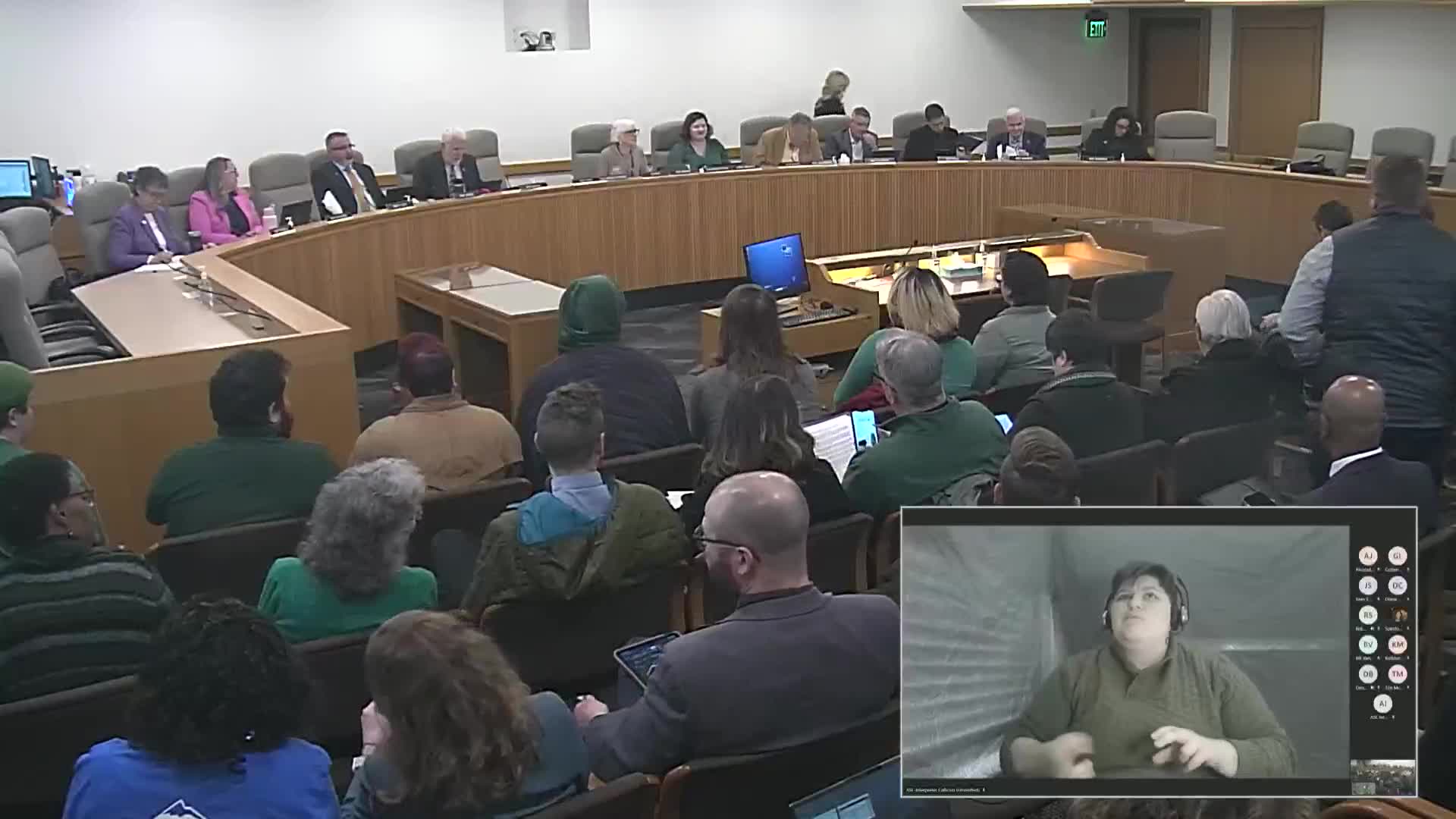
The House Committee on Housing and Homelessness held a public hearing March 19 on House Bill 3,136 with a dash-2 amendment that adjusts restrictions on how many voting members of county or city planning commissions may be engaged principally in buying, selling or developing real estate for profit.
Under current law, no more than two voting members of a planning commission may be engaged principally in the same occupational field, including real-estate professions. The dash-2 amendment restores the restriction for planning commissions with five or fewer members but removes the restriction for commissions with more than five members while keeping a general limit that no more than two people involved in the same kind of business, occupation, trade or profession may serve concurrently. Drew Johnson, testifying for Oregon Realtors, said the amendment preserves a limit for smaller commissions but allows larger commissions more flexibility. "Under the dash-2 amendment, planning commissions with 5 or fewer members will be subject to the current law limitation on the number of real estate professionals who can serve," Johnson said. "However, that limitation will be lifted for planning commissions with more than 5 members."
Committee members sought clarification about the practical effect of the amendment and whether it could allow a majority of planning commissioners to be real-estate professionals in larger commissions. Witnesses responded that the general occupational cap remains in place, preventing more than two members from the same specific occupation serving concurrently; however, the definition of "occupation" discussed during testimony encompassed a range of real-estate-related roles (brokers, developers, title professionals). The committee did not take a vote on HB 3,136 on March 19; testimony and the revised amendment were made part of the record for further consideration.
Oregon Realtors and allied witnesses said the change responds to concerns about small commissions where the existing cap can be binding; neighborhood and planning advocates may raise questions about perceived industry influence on land-use decisions. The committee scheduled no immediate work session; further committee action may follow.