Get Full Government Meeting Transcripts, Videos, & Alerts Forever!
Get email alerts on the Housing And Homelessness topic
No spam. Unsubscribe anytime.
Committee adopts amendment to create housing infrastructure program at Business Oregon; bill sent to Ways and Means
Summary
The House Housing Committee adopted a dash-2 amendment to House Bill 3,031 to create a Business Oregon program providing grants, loans and forgivable loans for infrastructure tied to housing development; the committee voted to refer the bill to the Joint Committee on Ways and Means.
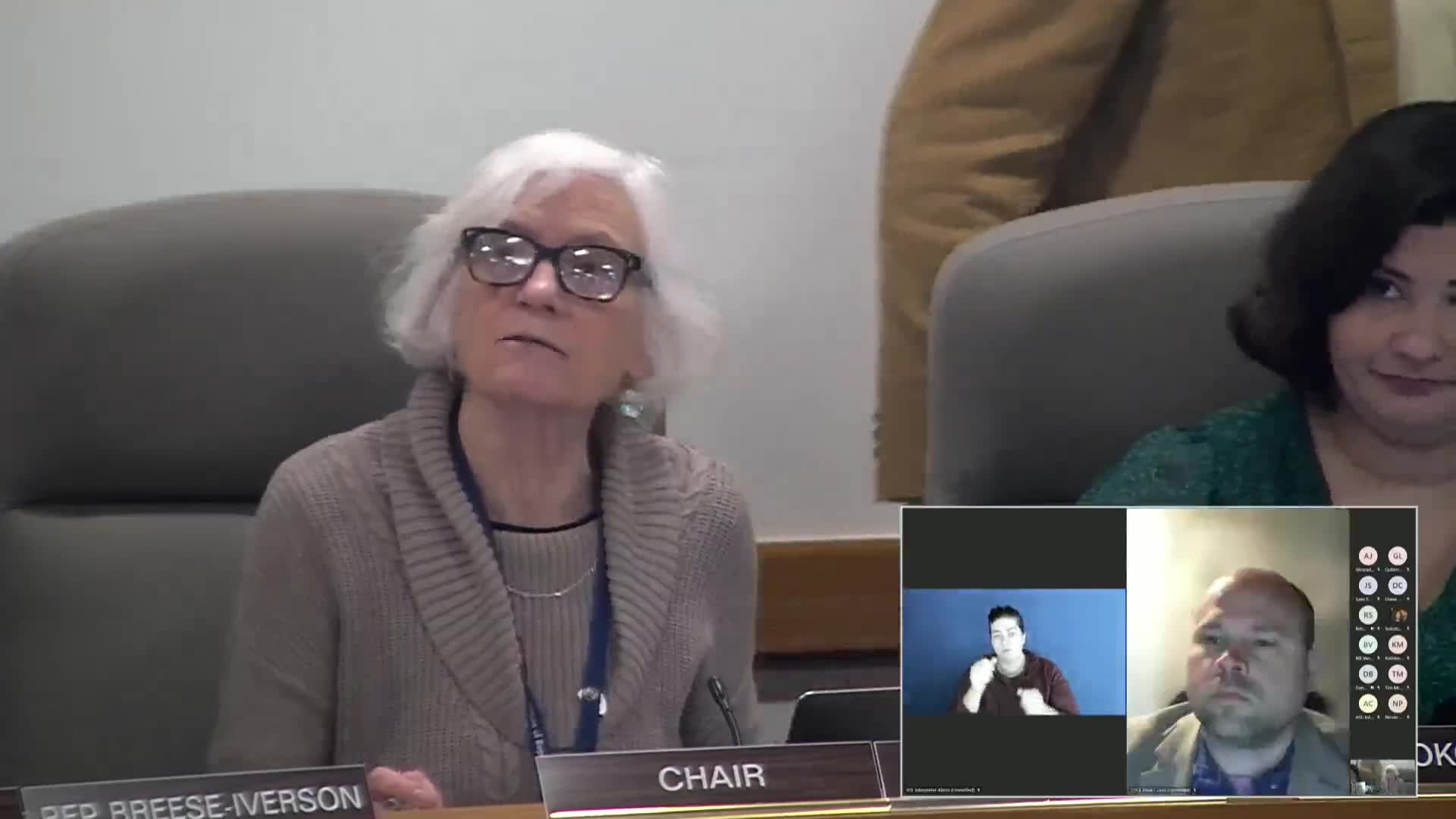
The House Committee on Housing and Homelessness on March 19 adopted a dash-2 amendment to House Bill 3,031 and sent the amended bill to the Joint Committee on Ways and Means with a due-pass recommendation.
House Bill 3,031, as amended, directs the Oregon Infrastructure Finance Authority at Business Oregon to establish a program to provide financial assistance — including grants, loans and forgivable loans — for infrastructure projects that primarily support housing developments. Eligible projects may include transportation, water, wastewater or stormwater infrastructure, system-capacity upgrades tied to specific housing developments, and site-development work on privately owned sites necessary for infrastructure improvements.
Nate Stice, who appeared virtually to describe the dash-2 amendment, said the updated language expands eligible entities to include intergovernmental agencies formed under ORS 190, creates a path for funding system-capacity projects such as pump stations if tied to specific housing developments, moves minimum-density requirements from mandatory thresholds to prioritization criteria, shortens the minimum covenant length from 30 years to 10 years while prioritizing longer covenants, and adds set-asides for rural and medium-sized communities. "We included language allowing for the use of the program for system capacity projects related to specific housing developments," Stice said.
Committee debate was brief. Representative Breeze Iverson moved adoption of the dash-2 amendment. A roll-call vote recorded on the amendment showed all members present voting "aye" and the amendment was adopted. Vice Chair Breeze Iverson then moved the bill as amended to the floor with a due-pass recommendation and referral to the Joint Committee on Ways and Means; the motion passed on a roll-call vote with the majority voting aye and one member recorded as excused.
The committee’s summary and debate stressed that Business Oregon will work with the Housing Accountability and Production Office (HAPA) to develop prioritization criteria informed by state housing needs, readiness, environmental and climate goals and other factors. The bill contains no immediate revenue impact and the Legislative Fiscal Office recommended referring the measure to Ways and Means for further fiscal review.
Because the bill authorizes both grants and loans and creates prioritization for rural communities and capacity projects tied to housing developments, committee members noted it may enable infrastructure work that unlocks new housing in areas that currently cannot absorb development costs upfront.