Get Full Government Meeting Transcripts, Videos, & Alerts Forever!
Get email alerts on the Youth Mental Health topic
No spam. Unsubscribe anytime.
Montana bill would create 'residential treatment center' license for youth mental‑health programs
Summary
A committee hearing on Senate Bill 191 featured proponents saying a new residential treatment center license would keep more Montana children in-state and opponents warning it could weaken existing oversight developed after documented abuses. DPHHS said it does not intend to reduce protections when writing rules.
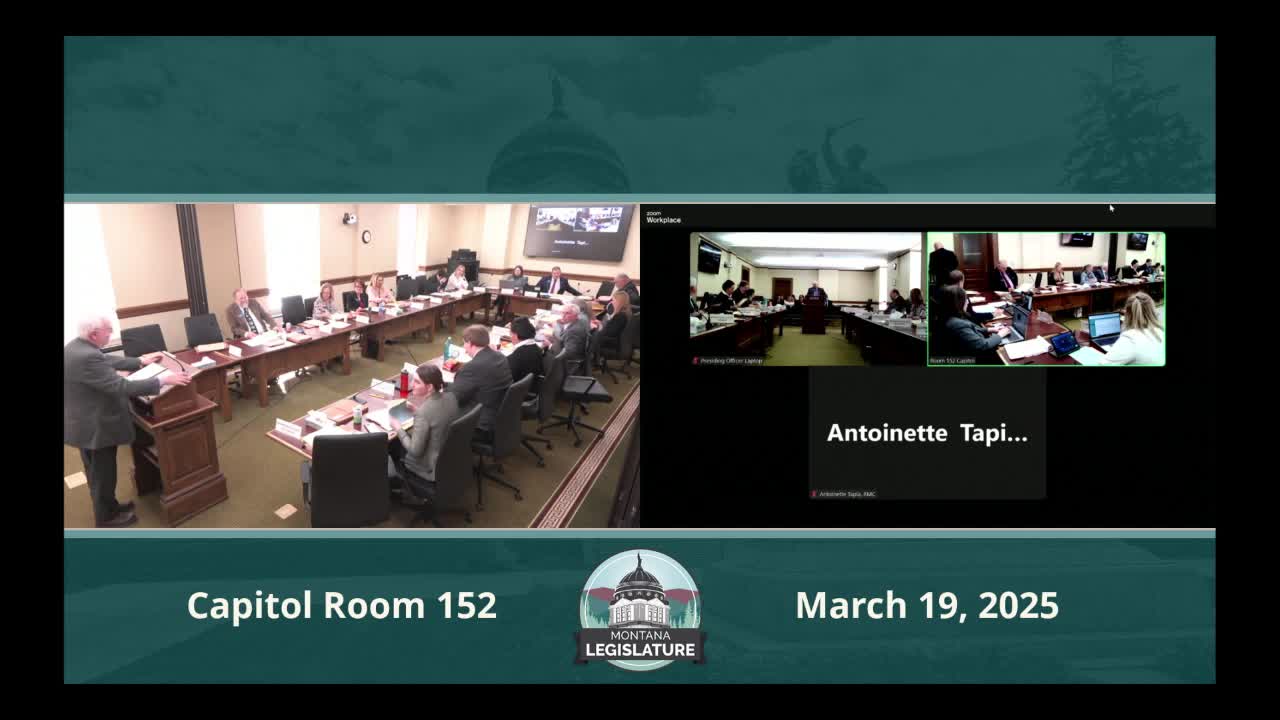
Sen. Cuff, sponsor of Senate Bill 191, told the House Health and Human Services Committee the bill would create a residential treatment center licensure category intended to fill a gap in Montana’s youth mental‑health system and allow more children to receive in‑state care.
“This bill will allow more Montana kids to be able to stay within the state and get this sort of treatment,” Sen. Cuff said during his opening testimony.
The bill would add a licensure type for residential mental‑health facilities that serve youth under 19 and sit between high‑acuity psychiatric residential treatment facilities and less intensive private alternative residential programs (PARP). Proponents said that because the new license would be recognized as a health‑care facility, private insurers would be more likely to reimburse for in‑state care.
“SB 191 provides an excellent opportunity to increase services to youth and families,” said Julie Fink, who testified she worked for the state for 30 years and formerly oversaw licensure for residential behavioral health facilities. Fink described gaps in Montana’s current continuum: acute psychiatric hospitals, psychiatric residential treatment facilities, therapeutic group homes and PARP programs, and said many families cannot afford out‑of‑state care.
Charles Denow, representing Turning Winds, a residential treatment program in Lincoln County, said insurers sometimes do not recognize PARP licenses and that the new designation “creates the right type of license that the Montana insurers want us to have, and we'll be able to keep more of those Montana kids in Montana.”
Opponents urged caution. Jennifer Shaw, a former educator who testified she has repeatedly raised concerns about the troubled‑teen industry, said she feared the bill would allow programs to avoid hard‑won protections and oversight adopted in recent legislative sessions.
“This piece of legislation is not only redundant if passed, it will undermine the current licensure framework that exists by allowing programs to avoid the current hard fought for guidelines,” Shaw told the committee, adding she has repeatedly testified on abuses she said occurred at some programs.
Committee members asked DPHHS and other informational witnesses how protections in current PARP statutes and administrative rules would compare with rules written for the new license. Tara Wooten, licensure bureau chief in the Office of Inspector General, and department staff said the agency’s stated intent is not to write rules that provide less protection than existing PARP rules.
“Child safety is definitely our number one priority at the department,” a department spokesperson testified, and DPHHS said it would likely base new administrative rules on existing PARP and therapeutic‑group‑home rules while using the administrative‑rule process (including public comment) to shape final requirements.
Committee members pressed for specifics; DPHHS staff said that while the bill creates the statutory licensure category, the administrative rules that implement it would be developed only after a law is in place, and that the department could incorporate existing statutory protections into rulemaking.
Witnesses gave some quantitative context: one witness said there are about seven programs of the similar type in Montana (testimony referenced "seven" facilities), and department staff said the bill would not itself add the residential treatment center as a Medicaid benefit. Supporters argued the change would let insurers cover in‑state step‑down care and reduce out‑of‑state placements; opponents argued the state should instead migrate existing statutory protections to any new designation rather than create a separate category that could be used to avoid those rules.
Sen. Cuff closed by reiterating his view that the bill would create a higher licensure standard and that the intent is to keep Montana children in Montana when clinically appropriate. The committee took no final vote on SB 191 during the hearing.