Get Full Government Meeting Transcripts, Videos, & Alerts Forever!
Get email alerts on the Underground Storage Tank Fees topic
No spam. Unsubscribe anytime.
DEQ-backed bill would raise cap on underground storage tank fees; industry says it can work with department
Summary
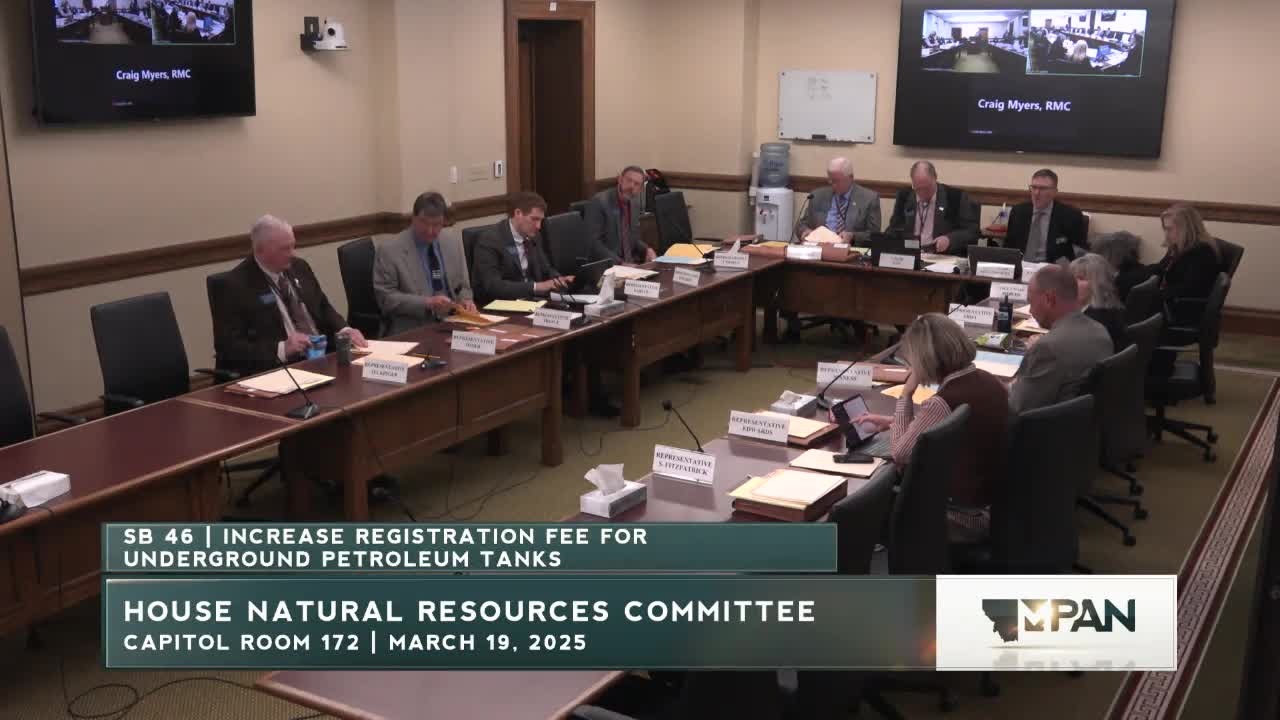
Senate Bill 46 would increase statutory caps on annual underground storage tank registration fees so DEQ can pursue a rule change to cover growing program costs; DEQ and petroleum marketers said they have worked together on a path forward.
Senate Bill 46 would raise the statutory cap for Montana's underground storage tank (UST) annual registration fees, allowing the Department of Environmental Quality to pursue rulemaking to increase fees and cover rising operating costs.
Senator (sponsor) opened the hearing on behalf of DEQ and DEQ's Waste Management and Remediation Division Administrator, Amy Steinmetz, testified that inflation and added federal regulatory requirements have stretched the UST program’s budget. "In fiscal year 24, the program operated at a loss of $233,000," Steinmetz said, adding that the program had funded operations for two decades through a combination of the annual registration fee, construction fees and federal grants.
Steinmetz told the committee that the statute already authorizes DEQ to set annual registration fees in rule and sets a statutory cap. The bill would increase the cap for small tank registration fees from $36 to $100 and for large tanks from $108 to $300; she emphasized the bill itself does not immediately raise fees but would enable DEQ to work with stakeholders in rulemaking to set an appropriate fee.
"This bill on its own does not raise fees," Steinmetz said. "It simply raises the cap so that DEQ can work with stakeholders on rulemaking to set a reasonable fee."
Brad Longcake, representing the Montana Petroleum Marketers and Convenience Store Association, testified the group's members operate the tanks regulated by the program and said the association had worked closely with DEQ over the interim. Longcake said his members were prepared to collaborate in rulemaking and supported the bill as a way to preserve program operations.
No opponents appeared at the hearing. Committee members asked technical questions about billing and timing; Steinmetz replied that fees are billed on an annual cycle and that DEQ has been working to streamline permitting and inspection processes to reduce program costs.
Why it matters: Montana’s UST program regulates permitting, inspections and leak‑prevention for more than a thousand facilities statewide. DEQ officials said fee revenues and federal grants no longer fully cover program costs and the change would allow the agency to pursue a fee increase in rule to maintain operations and protect public health.
What’s next: The hearing concluded with the committee closing testimony; no committee vote to advance Senate Bill 46 was recorded at the hearing.