Get Full Government Meeting Transcripts, Videos, & Alerts Forever!
Get email alerts on the Data Privacy topic
No spam. Unsubscribe anytime.
Montana resolution urges federal protection of residents' digital data amid agency changes
Summary
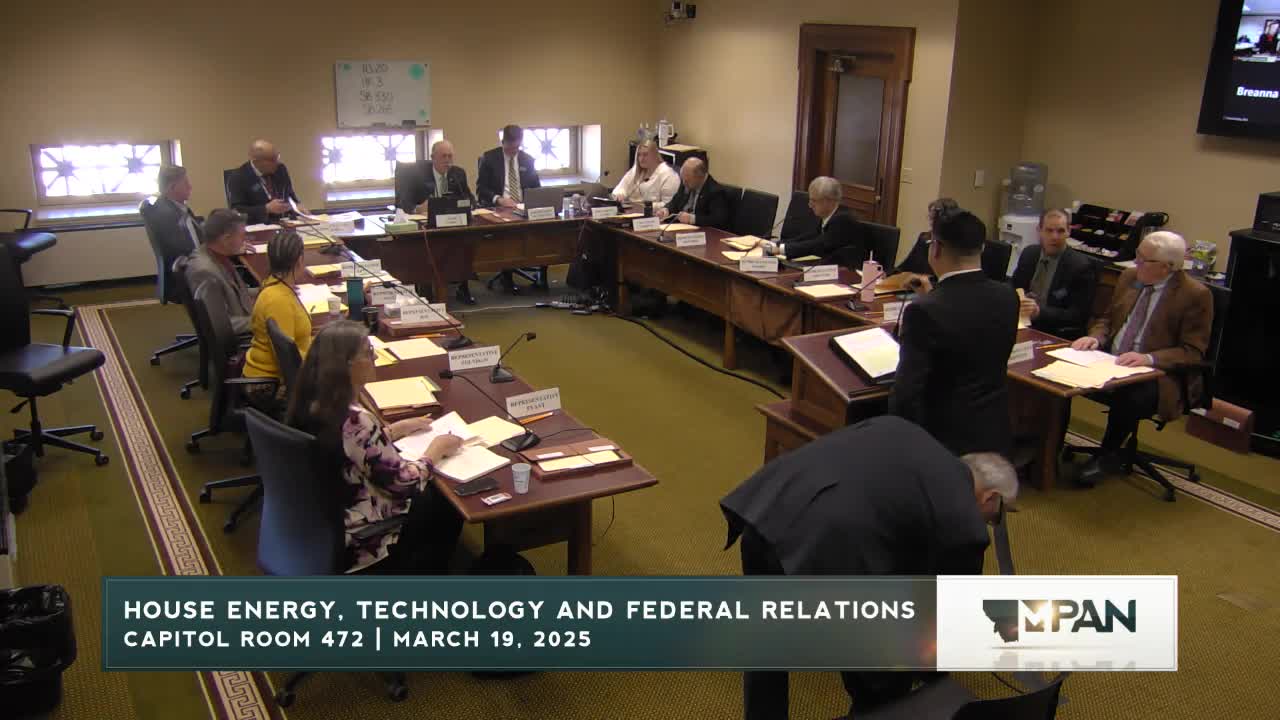
Representative Donovan Hawke presented HR 3 asking Montana's congressional delegation and the president to protect Montanans' personally identifiable information from misuse by a newly formed federal entity; the ACLU and tribal representatives testified in support.
Representative Donovan Hawke introduced House Resolution 3, which calls on Montana's congressional delegation — and at the committee's suggestion the president — to act to protect Montanans’ personally identifiable information from potential misuse by what witnesses and the sponsor referred to as the Department of Government Efficiency.
Hawke said constituents had expressed “uncertainty and concerns” about federal changes and data‑sharing across a range of agencies. He listed several federal agencies mentioned in testimony, including the Centers for Medicare & Medicaid Services, Consumer Financial Protection Bureau, Department of Defense, Department of Education, FAA, FEMA, IRS, National Institutes of Health, NOAA and the Treasury Department.
Patrick Yawaki, who said he represented the Blackfeet, Fort Belknap and Chippewa Cree communities, told the committee tribal governments have seen staff and funding cuts and said recent federal staffing and contracting actions left personal data more vulnerable. “Everyday Montanans deserve more protection, respect for the constitution, and prevention from attacks on their own personal information,” Yawaki said.
Henry Seaton of the ACLU of Montana testified in favor of HR 3 and urged clearer oversight of federal programs. He said Montana has led with state privacy protections such as genetic‑data ownership laws and protections against geofence warrants and that HR 3 is consistent with “bipartisan” Montana values on privacy.
Committee members raised technical and drafting questions. Representative Millett suggested wording changes to direct the resolution also to the president and to make the title reflect urging executive action. Hawke said he was open to amendments and to clarifying language and offered to obtain specific information about what categories of personally identifiable information are held by the federal entity at issue.
The hearing concluded with the sponsor asking the committee to consider the resolution and any amendments the committee deemed appropriate.