Get Full Government Meeting Transcripts, Videos, & Alerts Forever!
Get email alerts on the Brownfields Cleanup topic
No spam. Unsubscribe anytime.
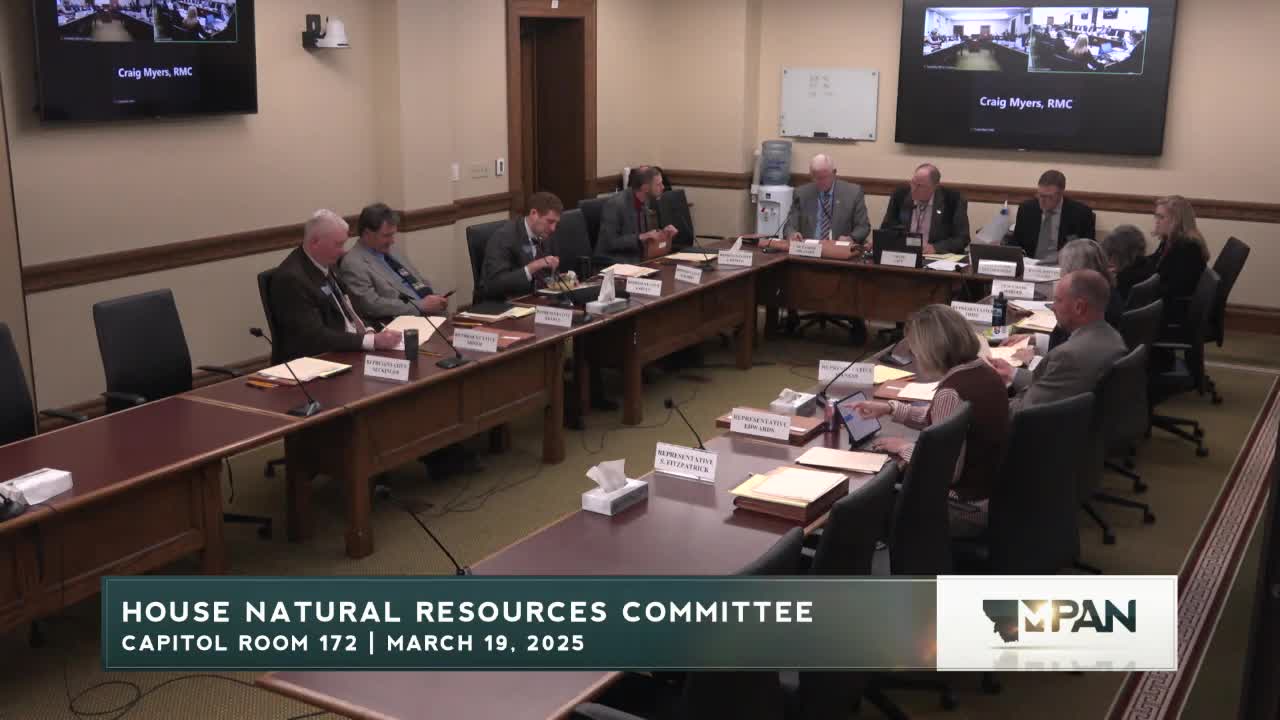
House committee reopens debate on Brownfields Revitalization Act, asks for fiscal note
Summary
Lawmakers took House Bill 808 off the table, considered an amendment to transfer state funds into a new brownfields cleanup account and asked for an updated fiscal note before moving ahead.
The House Natural Resources Committee voted to take House Bill 808 off the table and considered an amendment that would transfer state money into a new Montana Brownfields Revitalization Act fund to support cleanup of petroleum and hazardous-substance sites.
The committee's executive staff, Jason (staff), summarized the bill as establishing a brownfields program to enable cleanup of petroleum and hazardous-substance sites and noted the bill as drafted included a statutory appropriation and an existing fund. Amy Steinmetz, Waste Management and Remediation Division administrator at the Department of Environmental Quality, told the committee that federal brownfields funds have been the program’s primary revenue source.
"Brownfields federal funds have been the sole source of funding for the Brownfields program in the state," Steinmetz said, and added that the department receives about $700,000 per year in federal support while larger supplemental awards have come at times through the Infrastructure Investment and Jobs Act.
Committee members debated the amendment, which would transfer specified amounts from the general fund into the brownfields fund (the amendment document referenced a $1,000,000 figure). Representative Maness expressed budget concerns, saying the Legislature is working under tight fiscal limits and "we don't need to be adding more to that." Representative Konar described the measure as a stopgap to let appropriations review funding choices and said she would support it so appropriators can weigh it against other priorities.
Representatives asked whether an updated fiscal note had been prepared for the amendment. Committee staff said the fiscal note on file covered the original bill language but not the amendment's fund transfer; Representative Henkel said that lack of a fiscal note made it difficult to evaluate the appropriation. After additional procedural motions and a voice vote on the amendment, committee members agreed to request another fiscal note. Representative Engel moved to table the bill at one point, then rescinded the motion.
At the end of the discussion the chair directed staff to add the bill back into members' packets and to request the updated fiscal note; the committee took no final action to advance the bill to the next stage during the hearing.
Why it matters: Brownfields cleanup programs enable redevelopment of contaminated properties and can affect public health, environmental cleanup priorities and local economic development. Lawmakers and DEQ staff agreed the program needs funding certainty, but several members said a clear fiscal analysis is necessary before committing limited state dollars.
What’s next: The committee requested a fiscal note that reflects the amendment's transfers and returned HB 808 to members' packets for further review before any final vote.