Get Full Government Meeting Transcripts, Videos, & Alerts Forever!
Get email alerts on the School Safety Early Warning topic
No spam. Unsubscribe anytime.
Senate committee pauses bill to standardize school “early warning” reporting after privacy and implementation concerns
Summary
Senator Taylor’s bill to require LEAs to implement a centralized, computer‑based early‑warning system for students drew extensive testimony on both sides. Disability advocates and The Arc raised privacy and data‑breach risks; mental‑health experts supported early intervention. Sponsor agreed to revise and rolled the bill for one week.
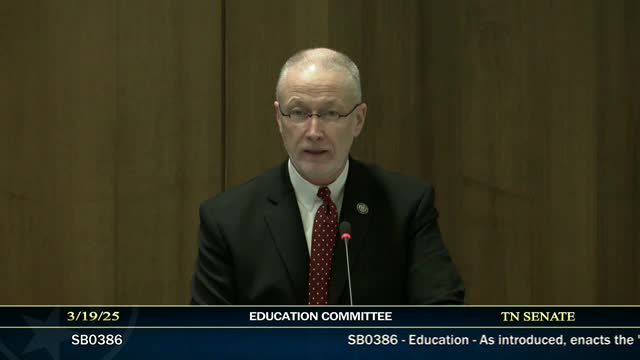
Senate Bill 3 86 — a measure to require each local education agency to implement a centralized, computer‑based system for reporting and tracking early warning signs of student distress — was rolled one week after extended committee debate and testimony from advocates, educators and experts.
Sponsor Senator Janice Taylor (transcript: Senator Taylor) described the bill as a tool to aggregate disparate observations — attendance, behavioral incidents, anecdotal reports — into a single LEA database so administrators and counselors could detect trends and identify students who may need intervention before a crisis. The bill would permit LEAs to define their own categories of concern and specifically bars the state department from receiving student‑level records; it would, however, require LEAs to adopt a system and could include withholding state funds for noncompliance as drafted.
Witnesses and civil‑rights groups raised sharp concerns. Zoe Jamail of Disability Rights Tennessee said the bill, as written, “does not prescribe any behavioral interventions, point to existing ones, or require teacher training” and warned that the proposed system could “undermine parental rights, duplicate or bypass existing interventions, increase exclusionary discipline, stigmatize mental illness, and create privacy risks” if the data were breached. Robbie Faulkner of The Arc Tennessee said similar team approaches in his district used free tools and relied on staff relationships to build trust; he warned that a mandated statewide data system could erode that trust.
Dr. Amy Grosso, an education mental‑health expert, supported the idea of gathering disparate observations so that staff could assemble a more complete picture of students “before a crisis” and said the goal was prevention rather than punishment. Committee members expressed concern about retention policies, who would have access to student‑level records and how long items would be kept.
After hearing testimony and discussion, Senator Taylor agreed to prepare revisions addressing retention, training, and funding concerns and asked to roll the bill one week to allow the sponsor to bring an amendment. The committee agreed and the bill was rolled.