Get Full Government Meeting Transcripts, Videos, & Alerts Forever!
Get email alerts on the Property Tax Classification topic
No spam. Unsubscribe anytime.
Committee sends contested residential property-classification bill to summer study after fiscal-note dispute
Summary
Representative Rudd’s bill intended to clarify single-family residential assessment practice was sent to summer study after extended debate, public testimony and disagreement over a comptroller fiscal note that committee members said misstates current practice.
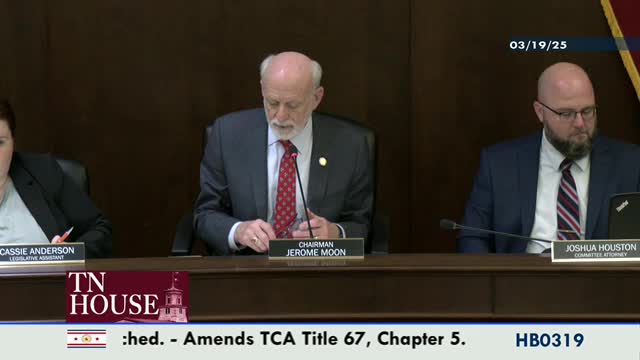
Representative Rudd presented House Bill 319 to the Cities & Counties subcommittee on March 19, 2025, describing the measure as a cleanup to reaffirm long-standing state practice that single-family homes should be assessed using residential standards rather than commercial rates.
Why it matters: The bill addresses how residential rental houses are classified for property-tax purposes. Opponents said a recent comptroller/DPA interpretation would reclassify many owner-occupied and single-family rental houses as commercial, producing substantial local tax increases; the comptroller’s fiscal note cited a possible statewide revenue effect (transcript cites approximately $78 million) that committee members disputed.
Sponsor’s explanation: Representative Rudd told the committee the bill restores the assessment approach that the state and most counties have followed since 1973 and that recent DPA directives and a Memphis judge’s decision have created an inconsistent patchwork of classifications across counties. The sponsor said the bill does not target short-term rentals or timeshares and clarified that townhomes and owner-occupied condominiums are treated as residential under current practice.
Public testimony and concerns: Multiple witnesses appeared. - Bruce McNealage, housing owner/operator, testified that reclassifying single-family rental homes as commercial would raise operating costs and likely be passed through to tenants as rent increases. - Jim Dooley, former county assessor, said in his 40 years a single-family property had not been assessed commercially and recommended the bill move forward. - David Connors, representing the Tennessee County Services Association, said the Comptroller’s Division of Property Assessments (DPA) had identified a large number of properties currently assessed at commercial rates; he warned that the amendment’s section 3 would require local governments to adjust tax rates to make up lost revenue, effectively mandating rate changes across jurisdictions.
Committee debate and procedural outcome: Committee members questioned the inconsistency between the DPA fiscal note and their knowledge of county practice. Representative Rudd and other members said only a handful of counties had acted on the DPA directive and that many counties continued to follow the prior practice. Given the contested fiscal assumptions and the proximity of reassessment schedules, the committee voted to send HB 319 as amended to summer study so legal and fiscal issues can be further vetted.
Next steps: The committee’s decision to send the bill to summer study pauses immediate statutory change and directs further review by staff and stakeholders. If work over the summer resolves the contested fiscal and legal questions, the sponsor may recalendar the bill for future action.
Provenance: Quotations and descriptions above are taken from the committee transcript of March 19, 2025, including sponsor remarks, witness testimony and the recorded motion to send the bill to summer study.