Get Full Government Meeting Transcripts, Videos, & Alerts Forever!
Get email alerts on the Education Enrollment Immigration topic
No spam. Unsubscribe anytime.
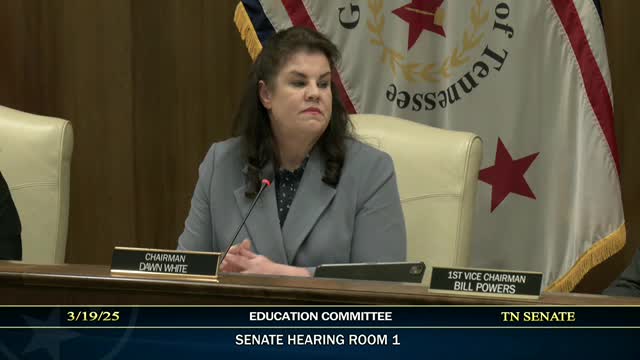
Senate education committee keeps bill requiring proof of lawful presence for K-12 enrollment in committee
Summary
A bill that would require school districts to collect proof of lawful presence for students at registration — and allow districts to charge tuition for children not lawfully present — failed to win committee approval after debate over constitutionality and equity.
Senator Bolling’s proposal to require documentation of lawful presence in the United States for K‑12 enrollment and to require those unable to provide such documentation to pay tuition failed in the Tennessee Senate Education Committee on a 3‑to‑5 vote, leaving the measure in committee.
The bill, introduced as Senate Bill 10 44, would have required local education agencies to collect proof of lawful presence when a child is registered for school and permit a district to charge the full tuition per child, per year, when a parent or guardian could not or would not provide that proof.
Senator Bolling, the bill sponsor, framed the measure as focused on “equity and opportunity.” He told the committee that Tennessee’s constitutional requirement to provide a public‑school system should not extend, he said, to “those who are not lawfully present in The United States and Tennessee,” and that requiring tuition from those students would prevent additional demands on LEA resources.
Opponents and several committee members questioned the bill’s necessity and how it would interact with prior legislation. Committee members asked whether the measure simply duplicated or conflicted with other recent bills on school enrollment and what the legal exposure or administrative burden on districts might be.
The amendment the committee adopted clarified acceptable documentary forms, but the final vote fell short. The chair announced the committee result: with five no votes the bill “stays in committee.”
The measure’s proponents argued the tuition requirement would protect local resources; detractors warned of practical and legal complications and expressed concern about access to education. The committee did not vote to advance the bill to the Senate calendar.