Get Full Government Meeting Transcripts, Videos, & Alerts Forever!
Get email alerts on the Library Funding topic
No spam. Unsubscribe anytime.
Highland council approves library fee changes, continues review of regional catalog agreement
Summary
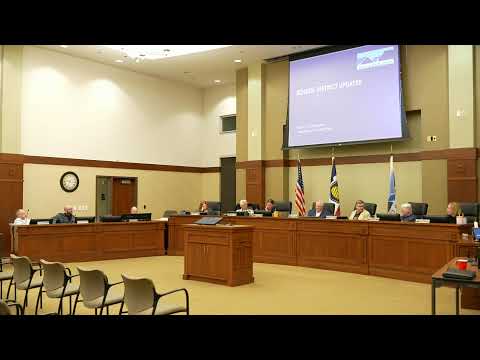
Highland City Council voted 5–0 on March 18 to eliminate overdue fines and raise the annual nonresident library fee to $90, while deferring final approval of an interlocal agreement to join a three-city library consortium so attorneys can clarify cost-sharing language.
Highland City Council on March 18 voted to change the city fee schedule for the Highland Library and continued work on a proposed interlocal agreement with neighboring cities to operate a shared catalog and material‑sharing service.
The council unanimously approved eliminating overdue fines and raising the annual nonresident library fee from $70 to $90, with the new schedule set to take effect April 7, 2025. The council did not finalize an interlocal cooperation agreement that would let Highland, American Fork and Pleasant Grove share circulation records and allow patrons to return materials at any participating library; attorneys asked for one more round of edits to clarify how ongoing costs would be apportioned among participating cities.
Donna (Library staff) told the council she supported the fee changes even if the consortium agreement took additional time, saying, "I would be in favor of it going forward regardless, because I don't know how long it's gonna take them to sort out this ILA." City attorney Rob Patterson told council members the draft interlocal would not create a separate legal entity but instead would establish a board of library directors to oversee shared services; staff said the outstanding edits focus on the method for allocating shared costs so no city is unexpectedly liable.
Library leaders and council members framed the immediate fee changes as operational steps while the larger financing question remains unresolved. Library staff said the library's current materials budget is about $40,000 a year and that digital services depend heavily on outside funding: "Two thirds of the cost of Libby is provided by the state through federal grants, through the IMLS," a library presenter said, noting recent federal funding uncertainty could require local systems to pay more for e‑content.
Council discussion also reviewed a recent fund study commissioned by the library. Consultant Fred Philpott modelled several scenarios for maintaining current service levels; councilors and staff discussed a range of options, including a dedicated property‑tax increase. Donna summarized a midrange scenario discussed in the study: a 40% increase in the dedicated library tax "would be about a dollar 75 per month per household," she said, and would align resident contributions with the new nonresident fee. No formal proposal to place a tax increase on a future ballot was adopted; council members asked staff for more detail on timing, outreach, and how use of existing fund balance would be presented to residents.
For now, the operational changes are in place: the council's vote to eliminate overdue fines and raise the nonresident fee passed 5–0 (roll‑call recorded by the clerk). The interlocal agreement was continued to a future meeting so attorneys can finalize cost‑sharing language; staff said a special meeting might be scheduled if partner cities finalize their edits and the consortium needs to go live before the council's next regular meeting.
The library board recommended the fee changes and staff said the board supports the library moving to a fine‑free model with automatic renewals and a process to mark long‑overdue items as lost and bill patrons for replacement or block accounts until resolved. Council members signaled support for additional information before any decision on a dedicated tax — including clearer projections, outreach plans, and the potential effect of state and federal grant changes.
The council directed staff to return with a final interlocal agreement and more detail on funding options during the budget process.