Get Full Government Meeting Transcripts, Videos, & Alerts Forever!
Get email alerts on the Public Safety Funding topic
No spam. Unsubscribe anytime.
Highland considers major public-safety funding choices as departments seek wage and staffing increases
Summary
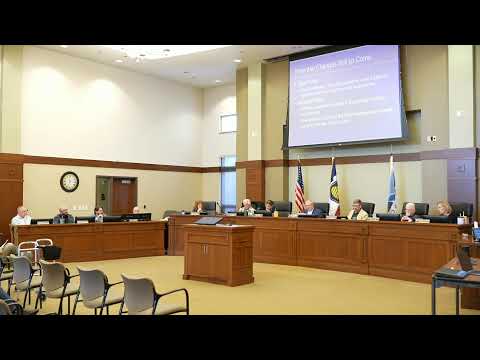
Public safety departments requested significant ongoing increases driven by wages and staffing changes. Staff presented two revenue options to keep property- and sales-tax support for public safety at the council’s target: a roughly $7.50-per-month public-safety fee or a 38% property-tax-rate increase.
City staff told the council that public-safety budget requests for FY26 are the largest single driver of proposed general-fund increases and that pay and staffing changes are the main components of the request.
Erin and finance staff said the police request is driven mainly by wages; the fire department seeks wage increases and changes to some positions to create engineer classifications for apparatus staffing and maintenance. Staff described a plan to increase daily firefighter staffing toward a 9-to-10 person target to improve first-response capacity. Staff said the department hopes to secure a grant to pay toward the third position needed to reach an 8-person minimum on shift but that any grant would be temporary and the city would eventually need to pick up the ongoing cost.
Mortensen presented two revenue options the council could use to keep the share of property and sales tax allocated to public safety at or below the council’s target (75%):
- A 49% increase in the monthly public-safety fee, equivalent to roughly $7.50 per household per month; or - A 38% increase in the city’s property-tax rate, which the staff estimated would raise about $121 per year for the median Highland home (median assessed value used in staff’s estimate was noted during the presentation).
Mortensen said the total assessment increase staff is trying to cover is about $636,000. He warned that fee‑based options carry legislative uncertainty because the state legislature has been considering or changing rules on municipal fees.
Staff also explained the council’s stated policy goal to keep property- and sales-tax support for public safety at or below 75% of those revenue sources and that, without new revenue, the proposed public-safety request would push that share above the target in the tentative budget.
Council members asked whether the Lone Peak public-safety district had reserves that could be used short term; staff said the district has reserves (about $2 million) but cautioned using one-time reserves to cover ongoing costs. Staff offered alternatives for phasing increases and reviewing fee vs. tax trade-offs before final adoption.
No formal decision was made; council members were asked to provide direction as staff refines options for FY26 adoption.